

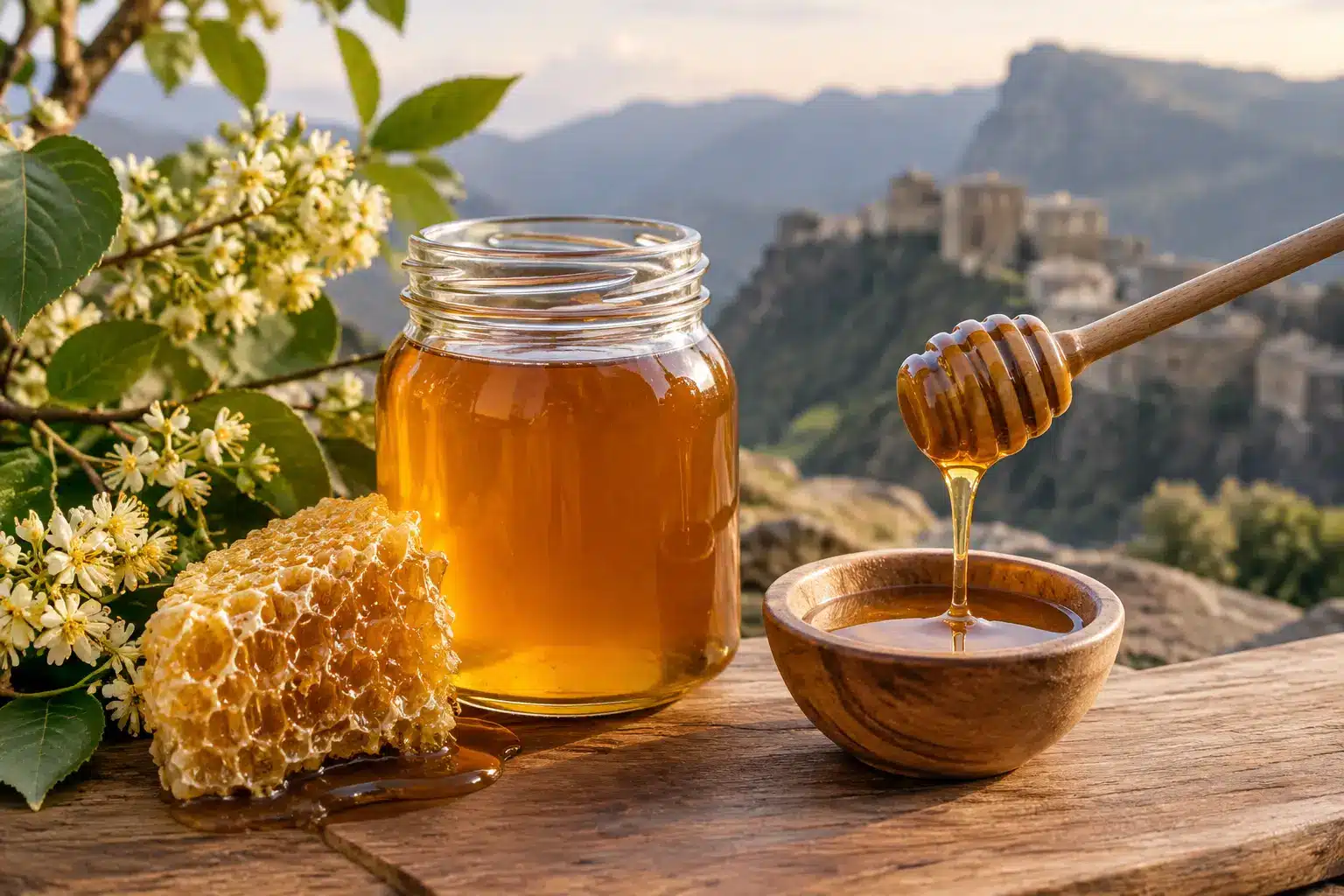
A thoughtful honey aroma review begins before the first spoonful. Open a jar of authentic Yemeni Sidr honey and pause. Its fragrance is part of the experience: warm, deep, botanical, and naturally distinctive. For many honey lovers, that first aroma is the moment they recognize they are holding something far removed from a standard supermarket blend.
Sidr honey is Nature’s Gold, gathered from bees that forage around Yemen’s revered Sidr trees. Its aroma carries the character of that landscape, the flowering season, and the careful work of traditional harvesters. It should invite you in, not overwhelm you with perfume or leave no impression at all.
What Should Genuine Sidr Honey Smell Like?
Authentic Sidr honey does not have one identical scent from every jar, because honey is a living expression of place. Still, high-quality Yemeni Sidr often presents a rich floral aroma with earthy, woody, and caramel-like notes. Some jars may smell lightly herbal or warm and fruity, while others offer a deeper scent that recalls dried dates, toasted sugar, or resinous tree blossoms.
The key is balance. The aroma should feel natural and layered rather than sharp, artificial, or one-dimensional. A good Sidr honey fragrance has presence, but it does not smell like added flavoring. It is subtle enough to remain elegant and clear enough to signal the honey’s botanical origin.
Its color and texture may shape expectations, but aroma deserves its own attention. Darker honey can smell especially full-bodied, while a lighter harvest may seem brighter and more floral. Neither quality alone proves that a honey is better. The harvest, nectar flow, storage conditions, and regional microclimate all play a role.
Why the Aroma of Sidr Honey Is So Distinctive
The Sidr tree, also known as jujube, is central to the identity of this rare honey. In Yemen, bees gather nectar in landscapes shaped by sun, mountain air, and generations of beekeeping knowledge. That origin gives Sidr honey a signature character that many people find more complex than everyday clover or generic wildflower honey.
Aroma comes from naturally occurring volatile compounds in nectar and honey. These delicate compounds are influenced by the blossoms available to bees, the timing of the harvest, and the way honey is handled after collection. Raw, minimally handled honey tends to preserve more of its original fragrance than honey exposed to excessive heat or heavy filtration.
That is why purity matters beyond the ingredient label. A jar labeled simply as honey can still vary enormously in fragrance and flavor. When honey is blended from multiple sources or processed aggressively for uniformity, its natural aromatic personality can become muted. Genuine Yemeni Sidr honey is valued precisely because it does not need to be made ordinary.
Expect Variation, Not a Manufactured Scent
Premium honey should not smell identical year after year. A drier season, a different flowering window, or a change in the local nectar profile can create gentle differences between harvests. This variation is not a flaw. It is often a sign that the product has retained its connection to nature.
For shoppers accustomed to highly standardized foods, this can be a welcome adjustment. One jar may lean more floral, another warmer and darker. What matters is that the aroma remains clean, pleasing, and true to honey, without signs of artificial fragrance or poor storage.
How to Evaluate Honey Aroma at Home
You do not need specialized equipment to appreciate Sidr honey properly. Start at room temperature, when the fragrance has room to develop. Honey that is very cold can seem almost scentless, while honey heated too much loses some of the delicate notes worth noticing.
Remove the lid and smell from a few inches above the jar first. Then bring the jar closer and take a gentle breath in. Avoid a forceful sniff, which can make any sweet food seem harsh. Let the scent settle before deciding what you notice.
Look for these natural qualities:
- A warm floral or botanical character that feels connected to nectar and blossoms
- Gentle earthy, woody, caramel, or dried-fruit notes that add depth
- A clean sweetness without a candy-like or perfumed smell
- A fragrance that becomes clearer as the honey warms slightly in the jar or on a spoon
Next, taste a small amount. Aroma and flavor should feel related. A beautifully fragrant honey that tastes flat may have been stored poorly, while a mild aroma paired with a rich, lingering taste may simply reflect that particular harvest. The goal is not to search for one fixed scent. It is to recognize integrity and natural complexity.
A Simple Spoon Test
Place a small spoonful of Sidr honey in a clean ceramic or glass spoon. Warm it for a moment in your hand, then smell it before tasting. This concentrates the experience and helps separate the honey’s natural aroma from the scent of the jar or lid.
Take a small taste and allow it to rest on your tongue. Notice whether the floral and earthy notes return through your nose as you taste. This is where authentic honey often shows its depth. The finish may be smooth, lingering, and gently warming rather than overly sugary.
Aromas That Deserve a Closer Look
Not every unusual aroma means a jar is bad. Honey can develop stronger notes with age, and raw honey naturally changes somewhat over time. However, a sour, yeasty, or alcoholic smell can suggest fermentation, especially if the jar also shows foam, bubbling, or a noticeably fizzy texture.
A burnt smell may indicate that honey was exposed to too much heat. A strongly artificial vanilla, syrup, or candy-like scent should also raise questions, particularly when the product claims to be pure and unprocessed. Aroma alone cannot confirm authenticity or expose every type of adulteration, but it is a valuable first impression.
Storage makes a difference. Keep honey tightly sealed in a cool, dry cabinet away from direct sunlight. Refrigeration is usually unnecessary and can speed crystallization. Crystallized honey is still real honey and is not a sign of spoilage. If you prefer a smoother texture, place the closed jar in warm water gently rather than overheating it.
Aroma Is One Part of the Authenticity Story
A memorable scent is meaningful, but it should be considered alongside origin, ingredient transparency, appearance, taste, and the seller’s sourcing practices. True quality is never reduced to one sensory detail. The finest Sidr honey earns confidence through the complete experience: a clear origin, a naturally rich aroma, a satisfying taste, and a purity promise that does not rely on additives.
At Yemen Honey Store, our focus is on bringing authentic Yemeni Sidr honey straight from the heart of Yemen to American homes. That heritage matters because it gives customers more than a sweetener. It offers a traditional food with a rare sense of place, suited to a morning spoonful, warm tea, family recipes, or a thoughtful gift.
Let Your Senses Slow Down
The best way to enjoy Sidr honey is not to rush past its fragrance on the way to its sweetness. Open the jar, notice the floral warmth, and let its character speak for the land and blossoms behind it. A true honey aroma is a quiet reminder that purity has a presence all its own.