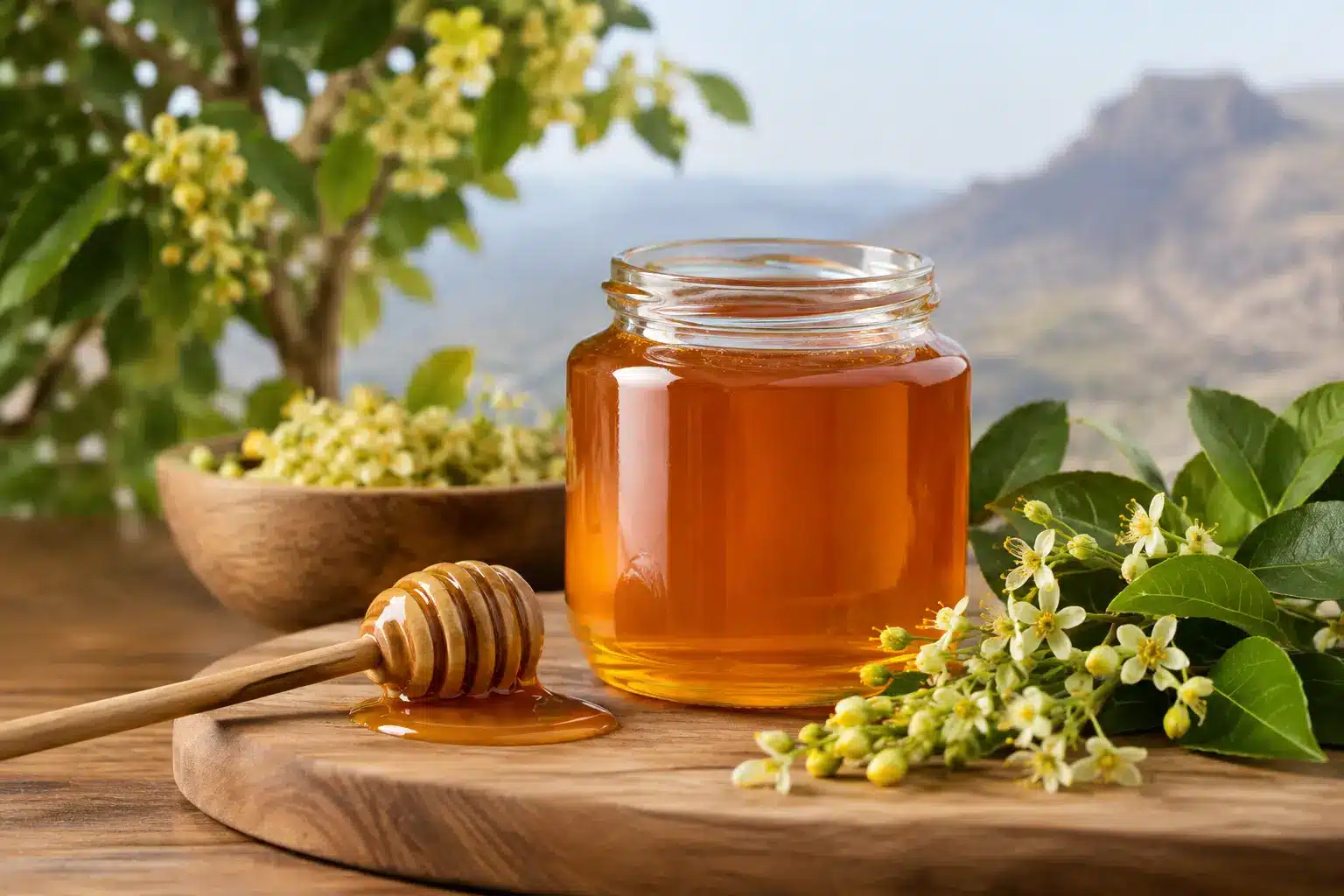
A jar of genuine Sidr honey should offer more than sweetness the moment you open it. Learning how to identify Sidr aroma helps you notice one of the most memorable signs of this rare Yemeni treasure: a deep, naturally warm fragrance shaped by Sidr trees, traditional harvesting, and the land where the bees forage.
Sidr aroma is not a perfume and should never feel artificial. It is often rich, earthy, floral, and gently herbal, with a complexity that lingers after the lid is closed. For families, wellness-minded shoppers, and anyone seeking Nature’s Gold straight from the heart of Yemen, that character is part of what makes authentic Sidr honey so special.
What Does Authentic Sidr Honey Smell Like?
Pure Sidr honey commonly has a full, rounded aroma rather than the light candy-like smell found in many supermarket honeys. When you first open the jar, pause before tasting. Hold it a few inches from your nose and take a gentle breath. A true Sidr honey fragrance may bring forward warm herbal notes, dried flowers, sun-warmed earth, and a subtle richness that can feel almost caramel-like without smelling like added flavoring.
Many people also notice a distinctive woody quality. This does not mean the honey should smell smoky, burnt, or sharp. Think of it as the natural depth of nectar gathered near ancient Sidr trees, also known as jujube trees. The scent is present, yet refined. It invites another smell rather than overwhelming the senses.
Aroma varies from jar to jar because honey is an agricultural food, not a factory-made product. The region of Yemen, the flowering season, weather conditions, and the proportion of Sidr nectar available to the bees can all influence the final fragrance. One harvest may seem more floral; another may lean warmer, darker, or more herbaceous. Variation can be a mark of nature, not a flaw.
How to Identify Sidr Aroma Step by Step
Start with honey that is at room temperature. Cold honey releases less fragrance, so a jar taken directly from a refrigerator will not give you a fair impression. Do not heat it aggressively to force a stronger aroma. Excessive heat can change honey’s natural character and reduce the qualities careful sourcing is meant to preserve.
Open the jar and smell from a short distance first. Then bring it closer and take two or three light breaths. Strong sniffing can fatigue your sense of smell, especially if you have been around coffee, perfume, cooking spices, or scented candles.
Next, place a small spoonful on your tongue. Let it rest for a moment before swallowing. With authentic Sidr honey, the aroma and flavor should feel connected. The herbal-floral scent usually continues into a rich taste, often with mellow sweetness and a gentle earthy finish. If the honey smells intensely like vanilla, fruit syrup, or candy but tastes flat, it deserves a closer look.
Finally, smell the empty spoon after tasting. This simple step can reveal the honey’s lingering character more clearly. Quality Sidr honey often leaves a soft, warm botanical impression rather than a harsh sugary smell.
Use a Clean Spoon and a Neutral Setting
Aroma is delicate. A wet spoon, crumbs, tea residue, or a strongly scented kitchen can interfere with what you notice. Use a clean, dry spoon and assess the honey away from fragranced soaps, candles, and cooking odors.
If you are comparing two honeys, smell them separately with a short break between samples. Plain water and a few minutes of fresh air can reset your palate better than trying to judge several jars at once.
Aromas That Should Make You Pause
Not every unusual scent proves a honey is fake. Honey can absorb nearby odors if it has been stored carelessly, and fermentation can occur when moisture levels are too high. Still, certain aromas are worth treating as warning signs.
A sharp sour smell, similar to beer, vinegar, or fermented fruit, may point to fermentation. A distinctly burnt or cooked odor can suggest the honey was heavily heated. Chemical, plastic-like, or strongly perfumed notes are also inconsistent with the clean, natural profile expected from unprocessed Sidr honey.
Be cautious with honey that has almost no aroma at all, especially if it tastes like plain sugar syrup. Some mild honeys are naturally subtle, but genuine Sidr honey is prized in part for its presence and depth. A very weak aroma does not automatically mean poor quality, yet it should encourage you to look more closely at the product’s origin and handling.
Aroma Is a Clue, Not a Complete Authenticity Test
Sidr aroma is meaningful, but it cannot verify purity by itself. A skilled seller can describe honey beautifully, and a scented product may seem convincing at first. Real confidence comes from considering aroma alongside sourcing, ingredient transparency, appearance, taste, and the seller’s connection to Yemen.
Look for a clear statement that the product is 100% honey, with no added syrups, artificial flavors, or unnecessary ingredients. Ask where it was harvested and whether the seller can speak plainly about its Yemeni origin. Authentic specialty honey deserves transparent answers, not vague claims about “premium” or “raw” honey with no harvest story behind them.
Color can support your evaluation, but it is not a fixed rule. Sidr honey is often amber to dark golden brown, sometimes with a beautiful reddish or greenish cast under natural light. Yet color changes with season and floral conditions. Do not reject a jar only because it is lighter or darker than one you tried before.
Texture is also variable. Pure honey can be thick and glossy, and it may crystallize over time. Crystallization is a natural process, not proof of adulteration. Likewise, honey that remains smooth is not automatically inferior. Temperature, nectar composition, and storage all play a role.
Why Yemen’s Landscape Shapes the Scent
The Sidr tree has deep cultural and agricultural significance in Yemen. In remote landscapes where these trees grow, bees gather nectar in an environment that gives Sidr honey its recognizable identity. The result is not merely a sweet pantry staple. It is a heritage food with a fragrance that carries a sense of place.
That is why authentic Sidr honey feels different from a generic blend. Blended honey may be made from many floral sources and processed for uniformity. Genuine Yemeni Sidr honey is valued precisely because it is less uniform. Its aroma can reflect the harvest season, the surrounding vegetation, and the work of beekeepers who preserve traditional methods.
At Yemen Honey Store, we believe that origin should be more than a label. It should be something you can appreciate with every spoonful: in the color, the full-bodied taste, and the unmistakable natural aroma of honey carefully sourced from Yemen.
Store Sidr Honey So Its Aroma Stays True
Even remarkable honey can lose some of its fragrance when stored poorly. Keep the lid tightly closed, store the jar in a cool, dry cupboard, and protect it from direct sunlight. Avoid leaving it beside the stove, dishwasher, or a window where repeated heat can affect its delicate aroma.
Do not store honey in the refrigerator unless necessary. Cooler temperatures can make it harder to pour and can mute the scent you want to experience. Room-temperature storage is usually best for enjoying Sidr honey at its most expressive.
When you open a fresh jar of Yemeni Sidr honey, give yourself a quiet moment before adding it to tea, toast, or a favorite wellness routine. That warm herbal fragrance is not an extra detail. It is one of the most personal ways to recognize the care, landscape, and tradition held within every golden spoonful.