
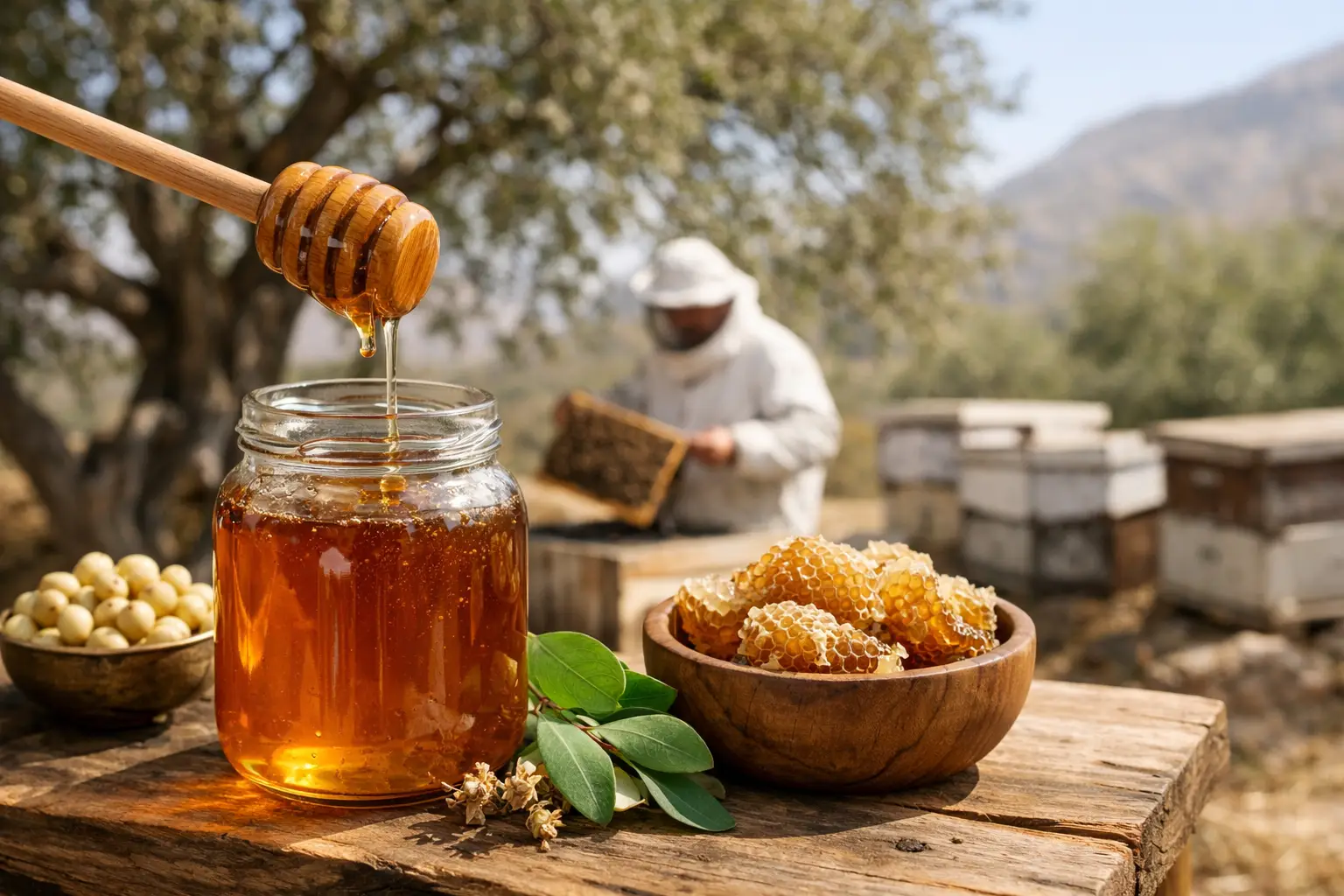
A jar can say “Sidr honey” and still leave the most meaningful question unanswered: where did it truly come from? Finding an authentic sidr honey source means looking beyond a beautiful label and choosing honey with a clear connection to Yemen’s Sidr trees, traditional beekeeping, and careful handling from harvest to jar.
For families and wellness-minded shoppers, this matters because real Yemeni Sidr honey is not a commodity sweetener. It is Nature’s Gold – a rare, richly flavored honey shaped by the terrain, climate, flowering season, and heritage of the land where it is gathered. When the source is transparent, every spoonful carries more than sweetness. It carries a genuine story of origin.
What Makes Sidr Honey So Special?
Sidr honey comes from bees that forage on the blossoms of the Sidr tree, also known as the jujube tree. These hardy, ancient trees grow across parts of the Middle East, but Yemen is especially revered for its Sidr honey. In Yemen’s valleys and mountainous regions, the trees flourish in landscapes where traditional beekeeping knowledge has been passed through generations.
The result is honey known for its deep amber color, full-bodied aroma, and caramel-like, herbal richness. Its flavor is often less floral and light than common clover honey. A true Sidr honey may taste warm, complex, and lingering, with natural variation from one harvest to the next.
That variation is part of its character. Honey is an agricultural food, not a factory formula. Rainfall, temperature, flowering conditions, and the precise harvest location can influence color, texture, and taste. A source that promises every jar will look and taste exactly the same may be offering consistency, but not necessarily the living character people seek from a rare, single-origin honey.
What an Authentic Sidr Honey Source Looks Like
A trustworthy source does not treat “Sidr” as a vague marketing word. It tells you where the honey was harvested and speaks clearly about its Yemeni origin. The more specific a seller can be about sourcing, the easier it is to understand what you are buying.
Look for a direct statement that the honey is sourced from Yemen, not merely packed there or inspired by Yemeni traditions. Authenticity begins with geography, but it also includes the path the honey takes after harvest. Premium Sidr honey should be presented as pure honey, without added syrups, artificial flavors, preservatives, or unnecessary fillers.
The ingredient list should be simple: honey. If a product includes blends, sweeteners, flavorings, or vague descriptions such as “honey product,” it does not offer the same confidence as a single-ingredient jar. This is especially relevant in a market where honey can be diluted or blended to lower costs.
An authentic source also understands that raw, unprocessed honey deserves thoughtful handling. Excessive heat and aggressive filtration can alter honey’s natural aroma, color, and delicate character. While producers may strain honey to remove natural hive particles, a source focused on quality should be able to explain its approach rather than rely on broad claims alone.
Origin Should Be Clear, Not a Mystery
Yemeni Sidr honey is prized because its origin is meaningful. The country’s rugged landscapes, ancient Sidr groves, and traditional harvest practices give the honey a cultural and culinary identity that cannot be copied by a generic label.
When evaluating a source, ask whether the product description identifies Yemen plainly. If the origin is hidden behind phrases like “Middle Eastern honey” or “premium imported honey,” pause before purchasing. Those phrases are not proof of poor quality, but they do not provide the origin transparency that a premium honey deserves.
It also helps to understand that Sidr trees grow outside Yemen. Honey from other regions can be enjoyable and may have its own merits, but it is not automatically equivalent to authentic Yemeni Sidr honey. The distinction is not about dismissing other origins. It is about buying the product you intended to buy and paying a fair price for its real provenance.
At Yemen Honey Store, the focus is straightforward: bringing authentic Yemeni Sidr honey Straight from the Heart of Yemen to customers in the United States. That kind of focus matters. A specialist source has every reason to protect the story, purity, and reputation of the honey it offers.
Questions Worth Asking Before You Buy
A premium honey purchase should feel reassuring, not confusing. Before choosing a seller, look for answers to a few practical questions:
- Is the country of origin clearly identified as Yemen?
- Is the product made with 100% pure honey and nothing else?
- Does the seller explain how the honey is sourced or harvested?
- Is the honey described as unprocessed or minimally handled, with details that support the claim?
- Does the price make sense for a rare imported product with limited seasonal availability?
These questions are not meant to turn buying honey into a complicated investigation. They simply help separate genuine sourcing from vague packaging. A trusted seller should make core information easy to find because transparency is part of the product’s value.
Why Price Can Be a Useful Signal
Authentic Yemeni Sidr honey is often more expensive than supermarket honey. That is not a luxury markup without reason. Harvesting from remote regions, working within seasonal supply, protecting purity, transporting a delicate food product, and bringing it to the US all contribute to the final price.
An unusually low price should invite a closer look. It may reflect a smaller jar, a promotion, or a different harvest region. But it can also suggest blending, unclear sourcing, or a product that uses the Sidr name more loosely than expected.
Higher price alone is not proof of authenticity, either. The best value comes from a source that pairs fair pricing with clear origin, honest ingredient information, and respect for the honey’s traditional heritage. You are paying not only for sweetness, but for the care required to preserve a rare food from its place of origin.
Use Your Senses, But Do Not Rely on Them Alone
Real Sidr honey is often recognized by its deep golden to amber appearance, thick texture, and memorable aroma. Yet color and thickness cannot confirm authenticity on their own. Natural honey changes with temperature, season, and storage conditions. A darker jar is not always better, and a lighter jar is not automatically diluted.
Crystallization is another point of confusion. Pure honey can crystallize over time, especially in cooler temperatures. This is a normal natural process, not necessarily a flaw. Some Sidr honey remains smooth for long periods while other batches may become more textured. Neither condition tells the complete story of source or purity.
Instead, let your senses support the sourcing details. If the origin is clear, the ingredient list is clean, and the seller communicates openly, the honey’s aroma, flavor, and texture become part of a rewarding experience rather than a guessing game.
From the Spoon to Your Daily Ritual
Once you have found a genuine source, Sidr honey earns its place in everyday life with very little effort. Enjoy a spoonful in the morning, stir it into warm tea, drizzle it over yogurt, or use it to add depth to oatmeal and toast. Its rich flavor also makes it a thoughtful gift for hosts, loved ones, and anyone who appreciates food with heritage.
Many people choose Sidr honey as part of a natural wellness routine. Honey contains naturally occurring sugars for quick energy and has long held a valued place in traditional food cultures. Still, it remains a sweetener and should be enjoyed thoughtfully, especially by those managing sugar intake. Honey should never be given to children under one year old.
The best way to protect its flavor is simple: keep the jar tightly sealed, store it in a cool, dry place, and avoid leaving it in direct sunlight or excessive heat. There is usually no need to refrigerate it. If it crystallizes, gently warming the jar in lukewarm water can soften it without rushing the process.
A truly authentic Sidr honey source gives you something rare: confidence that the honey on your table began in the landscapes you came looking for. Choose the jar that tells its origin honestly, honors the traditions behind it, and lets Yemen’s remarkable Sidr trees speak through every golden spoonful.