

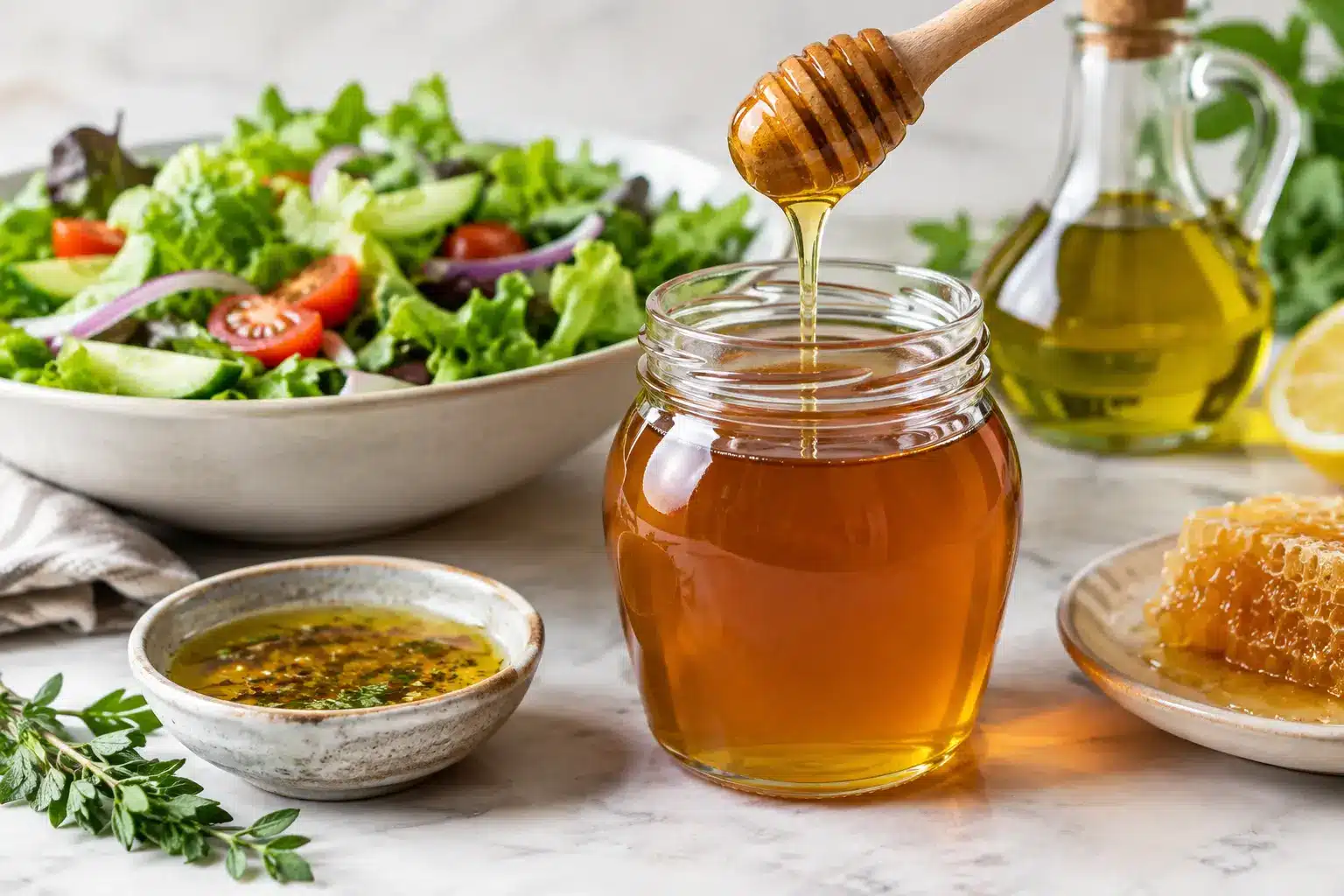
A good salad dressing should make fresh ingredients taste more like themselves, not bury them under sugar or sharp vinegar. That is why the best honey for salad dressings is one with real character, clean purity, and enough depth to stand beside olive oil, citrus, herbs, and spices. Pure Yemeni Sidr honey brings all three to the bowl.
Unlike a thin, one-note sweetener, Sidr honey carries a naturally rich flavor shaped by Yemen’s ancient Sidr trees and traditional harvesting practices. Its warm, complex profile turns a simple vinaigrette into something worthy of a carefully prepared meal.
Why Honey Works So Well in Salad Dressing
Honey has an important job in a vinaigrette. It softens the sharp edge of vinegar or lemon without making the dressing taste like dessert. It also helps oil and acid come together more smoothly, creating a dressing that clings to greens, roasted vegetables, grains, and proteins instead of separating at the bottom of the bowl.
The difference between a good dressing and a forgettable one is often balance. Extra-virgin olive oil brings fruitiness and body. Vinegar adds brightness. Salt makes flavors clearer. Honey rounds everything out. When the honey has a clean, distinctive taste, it adds more than sweetness – it gives the dressing a fuller finish.
This is especially useful with ingredients that can lean bitter or earthy. Arugula, kale, radicchio, Brussels sprouts, walnuts, goat cheese, tahini, and roasted carrots all benefit from a touch of honey’s natural warmth. The key is choosing honey that complements those ingredients rather than overpowering them.
What Makes the Best Honey for Salad Dressings?
Not every honey belongs in the same dressing. A mild honey can disappear in a bold balsamic vinaigrette, while an aggressively floral variety may compete with delicate cucumber, herbs, or white wine vinegar. The right choice depends on the style of salad, but a few qualities matter almost every time.
First, look for purity. Honey with no additives, syrups, artificial flavoring, or unnecessary processing gives you a truer flavor and more predictable result in the kitchen. When the ingredient list is simply honey, you know exactly what is balancing your vinaigrette.
Next, consider texture. A dense, naturally rich honey blends beautifully when whisked with acid before the oil is added. If your honey has crystallized, there is no need to discard it. Place the jar in gently warm water until it loosens, then stir it well. Avoid high heat, which can dull the honey’s delicate character.
Finally, choose flavor with purpose. Clover honey is mild and familiar, so it can work in a simple everyday dressing. Orange blossom honey is bright and floral, a lovely partner for citrus salads. Wildflower honey varies widely by origin and season. Each has its place, but for a dressing with deeper flavor and a luxurious finish, Yemeni Sidr honey is in a class of its own.
Why Yemeni Sidr Honey Belongs in Your Vinaigrette
Sidr honey is often treasured for its origin, rarity, and unmistakable taste. It is gathered from the nectar of Sidr trees that grow in Yemen’s rugged, untouched landscapes, where honey harvesting is deeply connected to heritage and traditional knowledge. The result is Nature’s Gold: rich, aromatic, and beautifully layered.
In salad dressing, Sidr honey does not simply add sweetness. It brings notes that feel warm, rounded, and naturally caramel-like, with a gentle earthiness that plays well with savory ingredients. A small spoonful can give a lemon dressing more depth, soften a mustard vinaigrette, or make a tahini dressing taste especially complete.
Its intensity is a strength, but it also means restraint matters. Start with less than you think you need. For many dressings, one teaspoon of Sidr honey is enough for two to four servings. You can always add another half teaspoon after tasting, especially when using a very tart vinegar or a generous amount of Dijon mustard.
For shoppers who value transparent sourcing and an unprocessed ingredient, authentic Sidr honey offers a meaningful alternative to mass-market honey blends. Yemen Honey Store brings this heritage-rich honey straight from the heart of Yemen to American kitchens, where it can be enjoyed in both everyday recipes and special-occasion meals.
Dressings That Let Sidr Honey Shine
A classic honey-Dijon vinaigrette is the easiest place to start. Whisk Sidr honey with Dijon mustard, fresh lemon juice, a pinch of sea salt, and black pepper. Slowly whisk in extra-virgin olive oil until glossy. Spoon it over peppery arugula with sliced pear, toasted pecans, and crumbled cheese. The honey’s richness makes the peppery greens and tangy cheese feel balanced rather than competing.
For roasted vegetable salads, use apple cider vinegar or sherry vinegar. Their rounded acidity pairs especially well with Sidr honey’s darker, more complex flavor. This dressing is excellent on roasted carrots, sweet potatoes, beets, or squash, particularly when finished with parsley, feta, or toasted pumpkin seeds.
Sidr honey also brings unexpected depth to tahini dressing. Stir tahini with lemon juice, a small spoonful of honey, grated garlic, salt, and enough cold water to create a pourable texture. The result is creamy without dairy and deeply satisfying over chopped kale, chickpeas, cucumbers, and roasted cauliflower.
For a lighter spring salad, let the honey stay in the background. Combine champagne vinegar or white wine vinegar with Sidr honey, olive oil, finely chopped shallot, and fresh dill. Toss it with butter lettuce, radishes, snap peas, and avocado. Here, the honey should soften the vinegar, not become the headline.
A Simple Method for Better Honey Dressing
The order of mixing matters. Begin by whisking the honey with vinegar or citrus juice, salt, mustard, and any minced garlic or shallot. This gives the honey time to dissolve into the acidic ingredients. Then add the olive oil in a slow stream while whisking steadily.
Taste only after the dressing has come together. If it feels too sharp, add a little more honey. If it feels too sweet or heavy, add a few drops of acid and a pinch of salt. If it tastes flat, the answer may be black pepper, fresh herbs, or mustard rather than more honey.
A useful starting ratio is three parts oil to one part acid, then one teaspoon of Sidr honey for every three tablespoons of oil. This is a guide, not a rule. Lemon juice may need more honey than mellow balsamic vinegar, while a salad with naturally sweet fruit may need less.
When to Choose a Milder Honey Instead
Sidr honey is a beautiful choice for dressings with bold greens, nuts, cheese, roasted vegetables, mustard, tahini, or warm spices. Still, it is not the only right answer. For an extremely delicate salad of baby greens, melon, and fresh herbs, a lighter honey may allow the subtle ingredients to lead.
The same applies when a recipe already contains several sweet elements, such as ripe peaches, dried fruit, candied nuts, or a sweet balsamic glaze. In those cases, use a smaller amount of Sidr honey or choose a less intense variety. Great cooking is not about making every ingredient noticeable. It is about giving each ingredient a clear role.
Keep a jar of pure Yemeni Sidr honey near your olive oil and favorite vinegars. One thoughtful spoonful can bring brightness, depth, and a memorable golden finish to the salads you make most often.