
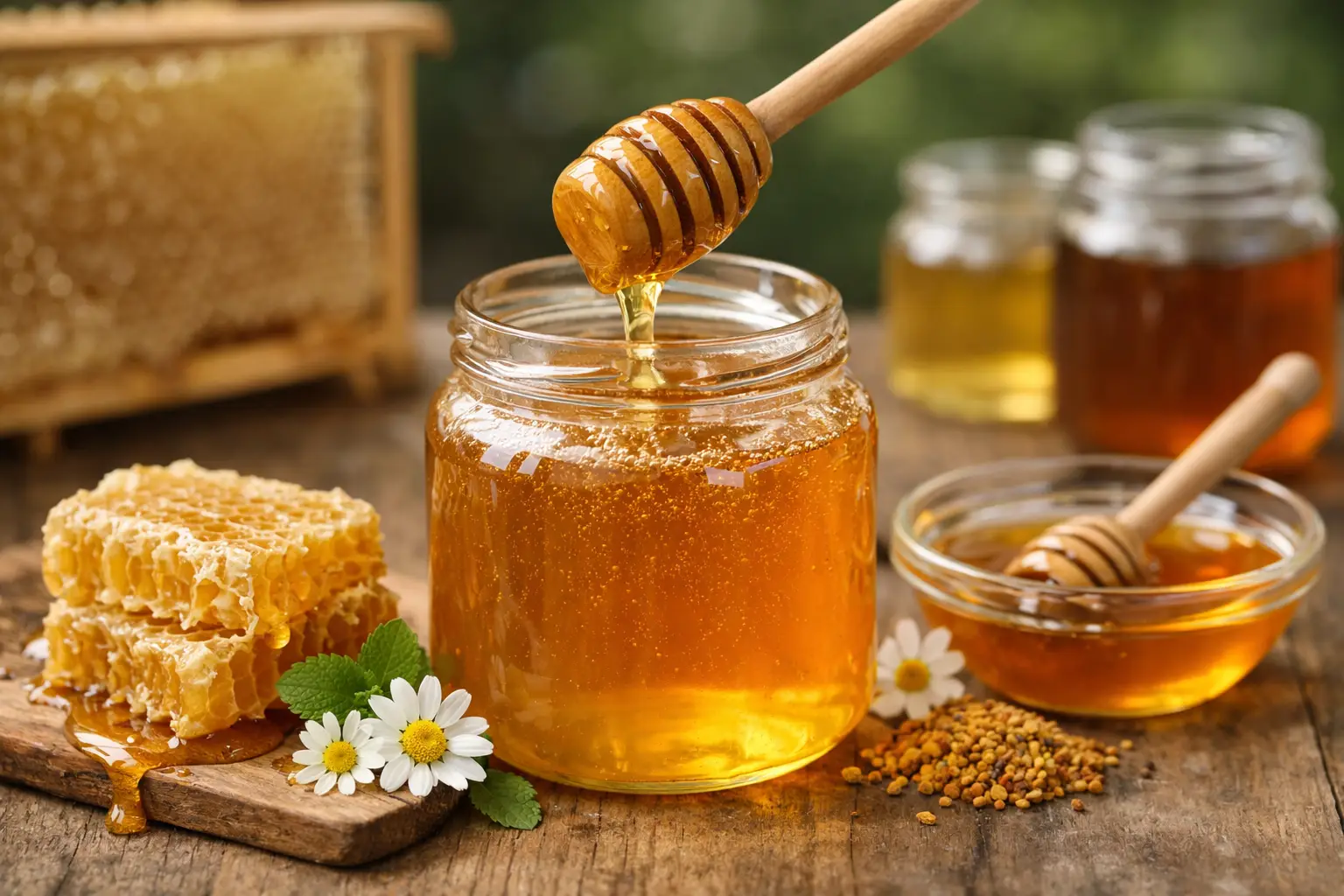
A spoonful of exceptional honey should taste like more than sweetness. It should carry the character of the flowers, the season, and the land where bees gathered their nectar. This guide to unprocessed honey benefits explains why many families are moving away from anonymous supermarket blends and choosing honey that remains close to its natural state – especially rare, heritage-rich varieties such as Yemeni Sidr honey.
Unprocessed honey is often valued for what has not been done to it. It is not heavily heated, stripped of its naturally occurring compounds, or diluted with unnecessary ingredients. For people who care about clean food, honest sourcing, and a more meaningful daily ritual, that distinction matters.
What makes honey unprocessed?
Honey begins as a remarkable natural food. Bees collect nectar, transform it through enzymes, and store it in the hive. Once harvested, responsible producers may strain honey to remove pieces of wax or other natural hive matter, but they avoid aggressive processing that can change its flavor, texture, and character.
Unprocessed honey is generally handled with minimal intervention. It is not heavily pasteurized or extensively filtered for a perfectly uniform appearance. Because labeling standards and practices vary, the word “raw” can mean different things from one seller to another. The clearest sign of quality is transparency: a honey should have a known origin, a straightforward ingredient list, and a producer willing to explain how it was collected and handled.
For a premium jar, “100% honey” is the starting point, not the finish line. The floral source, harvesting tradition, and path from hive to jar all shape what you receive.
The real benefits of unprocessed honey
It preserves honey’s natural character
When honey is exposed to high heat or aggressive filtration, it may lose some of the qualities that make single-origin honey distinctive. Minimally handled honey retains its natural aroma, rich color, and complex flavor profile. Depending on the nectar source, you may notice caramel, herbs, dried fruit, warm spice, or a gentle floral finish.
That sensory depth is a benefit in its own right. A small spoonful of deeply flavored honey can satisfy in a way that a bland sweetener often cannot. It brings presence to everyday foods, from warm oatmeal and yogurt to tea, cheese boards, and simple toasted bread.
It contains naturally occurring compounds
Honey naturally contains carbohydrates, small amounts of amino acids, organic acids, minerals, and plant-derived antioxidant compounds. It also contains enzymes produced by bees, including glucose oxidase, which is part of honey’s naturally complex composition.
The exact nutritional profile varies widely by floral source, climate, soil, storage, and processing. Darker honeys often contain higher levels of certain antioxidant compounds than lighter varieties, though color alone is not a guarantee of quality. Authentic unprocessed honey offers a whole-food alternative to refined sugar, but it is still a concentrated source of sugar and should be enjoyed thoughtfully.
It can be a gentler choice for everyday sweetness
Many households use unprocessed honey as a way to replace highly refined sweeteners in familiar recipes. Its natural intensity means a little can go a long way. Stir it into plain yogurt, drizzle it over fruit, or use it to round out a simple vinaigrette.
Honey is not a low-calorie food, nor is it a cure-all. Its value lies in choosing a minimally handled, flavorful ingredient with a meaningful origin instead of relying only on empty sweetness. For people building a more intentional pantry, that is a practical and satisfying shift.
It supports comforting wellness rituals
Warm water, tea, lemon, and honey have long held a place in family kitchens. A spoonful can soothe the throat and make a warm drink more comforting when the air is dry or a seasonal cough appears. Research has also found that honey may help ease cough symptoms for some children over one year of age.
A necessary safety note: never give honey, including raw or unprocessed honey, to infants under 12 months old. For adults and older children, honey can be a welcome part of a wellness routine, but it should not replace professional medical care for persistent, severe, or concerning symptoms.
Why origin matters as much as processing
A jar can say “natural” and still reveal very little about its story. Honey is one of the foods most affected by origin. The nectar source influences taste, color, and composition, while the harvesting landscape determines whether the honey reflects a specific place or a broad commercial blend.
Yemeni Sidr honey is treasured because of its connection to the Sidr tree, which grows in Yemen’s rugged, sun-warmed landscapes. Harvested through traditions passed down across generations, true Sidr honey is known for its deep amber color, thick texture, and rich, memorable taste. Its rarity is tied not only to the tree, but also to the care and limited conditions behind each harvest.
This is why single-origin honey deserves attention. It gives you a clearer relationship with your food. Rather than buying a generic blend sourced from multiple regions, you can choose honey with a recognizable botanical and geographic identity – straight from the heart of Yemen.
How to choose authentic unprocessed honey
Price alone does not prove authenticity, but unusually cheap “premium” honey deserves a closer look. True specialty honey requires careful harvesting, responsible handling, and dependable sourcing. Those realities are reflected in a product’s story and often in its price.
Look for a clearly named country and floral source. “Packed in” is not the same as “harvested in,” so seek direct language about where the honey originated. The ingredient list should be simple: honey. There should be no corn syrup, added flavors, artificial colors, or vague blends presented as a rare varietal.
Texture can offer clues, but it should never be used as the only test. Natural honey may remain liquid, become thick, or crystallize over time. Crystallization is normal and does not mean honey has gone bad. In fact, it is common in minimally processed honey because natural sugars gradually form crystals.
Authentic Sidr honey can vary slightly in color and consistency from one harvest to the next. That variation is not a flaw. It is part of the honest beauty of a food shaped by nature rather than manufactured to look identical every time.
Getting the most from your honey at home
Store honey tightly sealed at room temperature, away from direct sunlight and excess heat. Refrigeration is usually unnecessary and may encourage faster crystallization. If your honey becomes firm, place the sealed jar in warm water and let it loosen slowly. Avoid boiling water or microwave heat, which can damage its delicate flavor and naturally occurring qualities.
Use a clean, dry spoon each time. Introducing water or food particles can affect freshness over time. Properly stored honey has a very long shelf life, but its most vivid aroma and flavor are best enjoyed while the jar is fresh.
For daily use, let the honey remain the star. Add it to warm, not scorching, tea; pair it with tahini, nuts, or fresh fruit; or savor it by the spoonful when you want a small moment of Nature’s Gold. Yemeni Sidr honey is also a thoughtful gift for hosts, families, and anyone who appreciates food with a true sense of place.
A premium choice worth savoring
The greatest benefit of unprocessed honey may be the standard it sets. It asks us to look beyond sweetness and choose foods with integrity: real ingredients, careful handling, and a source we can name with confidence. Yemen Honey Store brings that promise to American tables with authentic Sidr honey shaped by Yemen’s heritage and natural landscape.
Choose honey slowly, taste it attentively, and let every spoonful remind you that the finest foods do not need to be complicated. They simply need to be genuine.