A jar of honey can carry far more than sweetness. It carries the landscape where bees forage, the care of the beekeeper, the handling of the harvest, and the honesty of every hand between the hive and your table. This ethical honey sourcing guide helps you look beyond a beautiful label and choose honey with genuine respect for nature, heritage, and purity.
For those seeking authentic Yemeni Sidr honey, sourcing matters especially deeply. True Sidr honey is shaped by the nectar of Sidr trees, traditional beekeeping knowledge, and a region whose natural heritage cannot be copied by a factory or recreated with a flavoring. Nature’s Gold deserves a careful journey.
What Ethical Honey Sourcing Really Means
Ethical sourcing is not a single stamp, marketing phrase, or promise that a product is “natural.” It is a standard of care. It asks whether bees are treated as living pollinators rather than production machines, whether beekeepers receive fair value for skilled work, whether the honey remains pure, and whether a seller can clearly explain where it came from.
With honey, this matters because the global market can be difficult to read. Some products are heated heavily, filtered until much of their natural character is removed, or blended with honey from multiple regions. Others may be diluted or sold with vague origin claims that make it impossible to understand what is actually in the jar.
Ethical honey should be traceable enough to tell a believable story. That does not mean every small producer will have glossy packaging or a large corporate certification program. It means the path from hive to customer is known, respected, and described with care.
The Ethical Honey Sourcing Guide: Five Signs to Look For
1. A clear, specific origin
“Imported honey” is not an origin. Neither is a broad label such as “Middle Eastern honey” when the seller cannot name a country, region, or floral source. A trustworthy product gives you meaningful details: where it was harvested, what blossoms the bees visited, and why that place shapes the honey’s character.
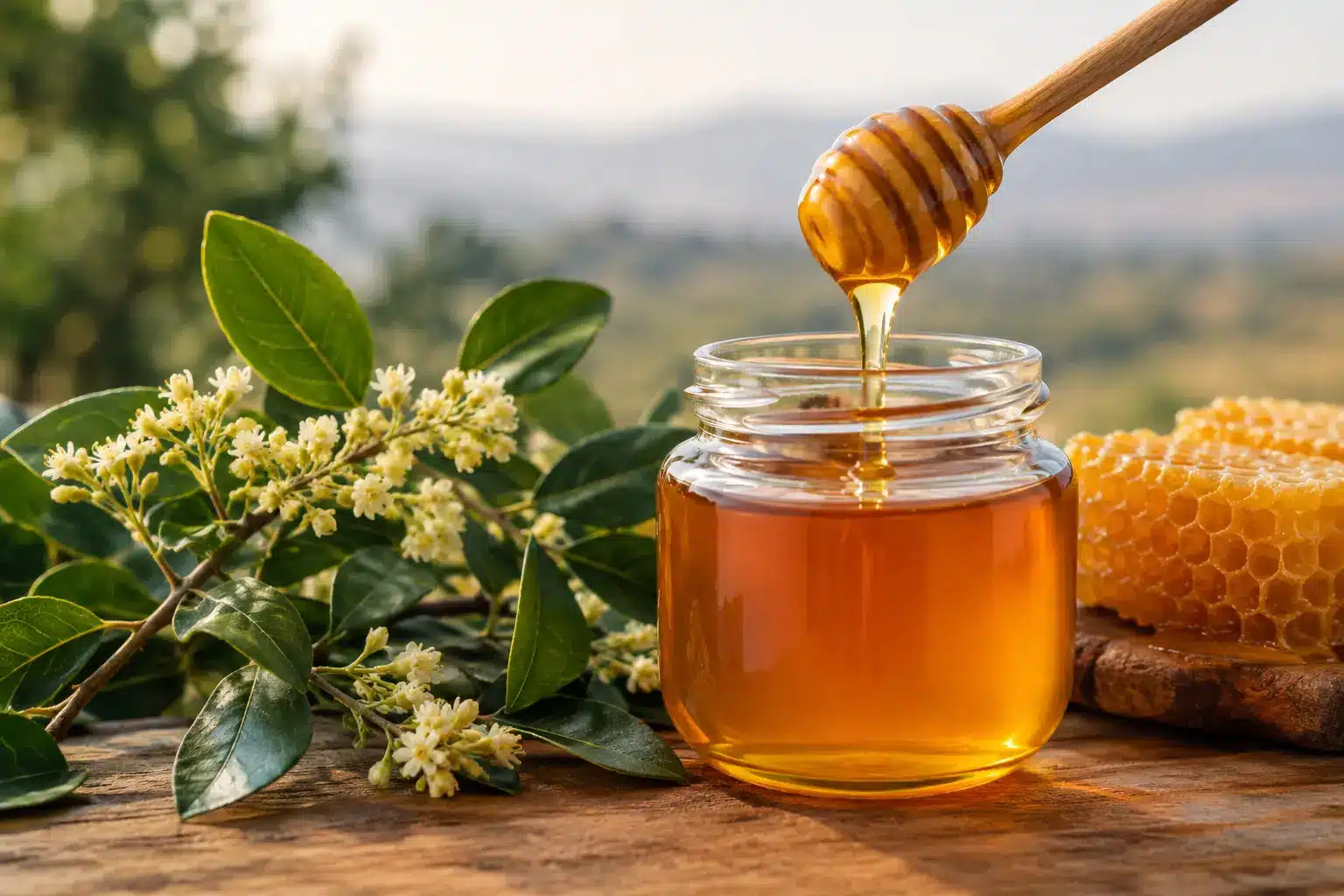
Authentic Sidr honey should be connected to Yemen and the Sidr tree, also known as the lote tree. Its deep amber color, rich aroma, and full, caramel-like flavor come from a distinctive landscape and nectar source. The exact shade and taste can vary by season, rainfall, and harvest area. That variation is often a sign of a natural food, not a flaw.
Be cautious of claims that sound precise but offer no substance. If a seller says honey is rare, wild, or premium, ask what makes it so. A real answer includes origin and handling, not just luxurious language.
2. Purity without unnecessary processing
Pure honey has one ingredient: honey. There is no need for added sugar, syrups, artificial flavors, colors, or preservatives. A premium jar should not need shortcuts to taste rich or look golden.
Processing is more nuanced than many labels suggest. Filtering can remove visible particles, while gentle warming may sometimes be used to make bottling possible when honey crystallizes. These practices are not automatically unethical. The concern is excessive heat and aggressive processing that prioritize uniform appearance over the honey’s natural qualities.
Look for brands that speak plainly about their product being unprocessed or minimally handled, and that do not hide behind vague claims. Raw honey is a term consumers often seek, but transparency about origin, ingredients, and handling is more useful than a fashionable word alone.
3. Respect for bees and the forage around them
Bees need sufficient honey stores to support their colonies. Responsible beekeeping recognizes that the hive comes first, particularly during periods when forage is scarce. Ethical harvesting is not simply taking honey from a hive. It is harvesting with restraint and attention to colony health.
The surrounding environment matters, too. Bees thrive where forage is diverse and natural habitats are protected. In Sidr-producing regions, the health of trees, rainfall patterns, and local ecosystems all affect the harvest. A smaller harvest in a difficult season may be disappointing commercially, but it can reflect a more responsible approach than forcing production at any cost.
No customer can inspect every hive from afar. Still, you can support suppliers who value the natural cycle of the bees and do not make impossible promises of endless supply. Seasonal foods should be allowed to be seasonal.
4. Fair recognition for traditional beekeepers
Yemeni Sidr honey is not merely a specialty ingredient. It represents generations of knowledge: where hives can be placed, when flowers bloom, how honey is collected, and how it is protected after harvest. Ethical sourcing should honor that expertise rather than treating it as a background detail.
Fairness is not always visible as a number on a label. It shows up in whether the producer relationship is direct, whether local beekeepers are recognized as essential partners, and whether the product’s price reflects careful labor and limited supply. Exceptionally cheap “Sidr honey” should invite questions. A rare, origin-specific honey cannot be produced, transported, tested, packaged, and sold responsibly at the price of a generic blend.
Paying more is not a guarantee of ethics, of course. But bargain pricing paired with unclear sourcing is rarely a reassuring combination. Value comes from purity, traceability, and respectful trade, not from a gold-colored jar alone.
5. Honest communication from the seller
The best ethical claims are specific and modest. A responsible seller can tell you what they know, acknowledge natural variation, and avoid turning honey into a miracle cure. Honey is a treasured traditional food and a beautiful addition to many wellness routines, but it should not be presented as a replacement for medical care.
Honesty also includes food safety. Honey should never be given to infants under one year old. Adults and families can enjoy it in tea, warm water, breakfast bowls, baking, or simply by the spoonful, while appreciating it as the natural food it is.
Questions Worth Asking Before You Buy
A thoughtful purchase begins with a few straightforward questions. Where exactly was this honey harvested? Is it single-origin or blended? What is the floral source? Are there any added ingredients? How is the honey handled after harvest? Can the company describe its relationship with beekeepers or suppliers?
You do not need a perfect answer to every question. Small-scale food systems can be complex, especially when a product travels from a remote growing region to the United States. What you should expect is clarity, consistency, and a willingness to explain. Evasion, generic language, and exaggerated health promises are reasons to pause.
Photos of hives or mountains can be meaningful, but they are not proof by themselves. Origin details, ingredient transparency, and a consistent sourcing story carry more weight than dramatic imagery. Certifications can also be helpful, yet they should be considered alongside the full picture. Not every responsible small producer can afford formal certification, and certification alone cannot replace traceability.
Why Sidr Honey Calls for Extra Care
Sidr honey holds a special place because it is tied to a recognizable tree, a particular region, and a living Yemeni heritage. Its appeal is not only its smooth, complex sweetness. It is the sense of place in every spoonful.
That reputation also creates risk. When a honey is sought after, imitation and broad labeling become more tempting. A jar called “Sidr-style” or “Sidr blend” may be enjoyable, but it is not the same as clearly identified Yemeni Sidr honey. Read the description closely and choose sellers that distinguish between genuine origin honey and products inspired by its flavor or reputation.
At Yemen Honey Store, this standard begins with a simple commitment: offering authentic Yemeni Sidr honey valued for its natural purity, traditional roots, and direct connection to the heart of Yemen. The goal is not to make nature look factory-perfect. It is to preserve what makes the harvest worth seeking in the first place.
Make Your Honey Purchase Part of a Better Food Story
Ethical sourcing asks us to slow down before we buy. Choose honey because its origin is clear, its ingredients are simple, and its story respects the people and pollinators behind it. Store it at room temperature, keep the lid closed, and do not worry if pure honey changes texture over time. Crystallization is a natural process, not evidence that honey has gone bad.
When you choose traceable Sidr honey, you are choosing more than a sweetener for your pantry. You are making room for careful beekeeping, traditional knowledge, and a rare taste of Yemen to be enjoyed with the respect it deserves.