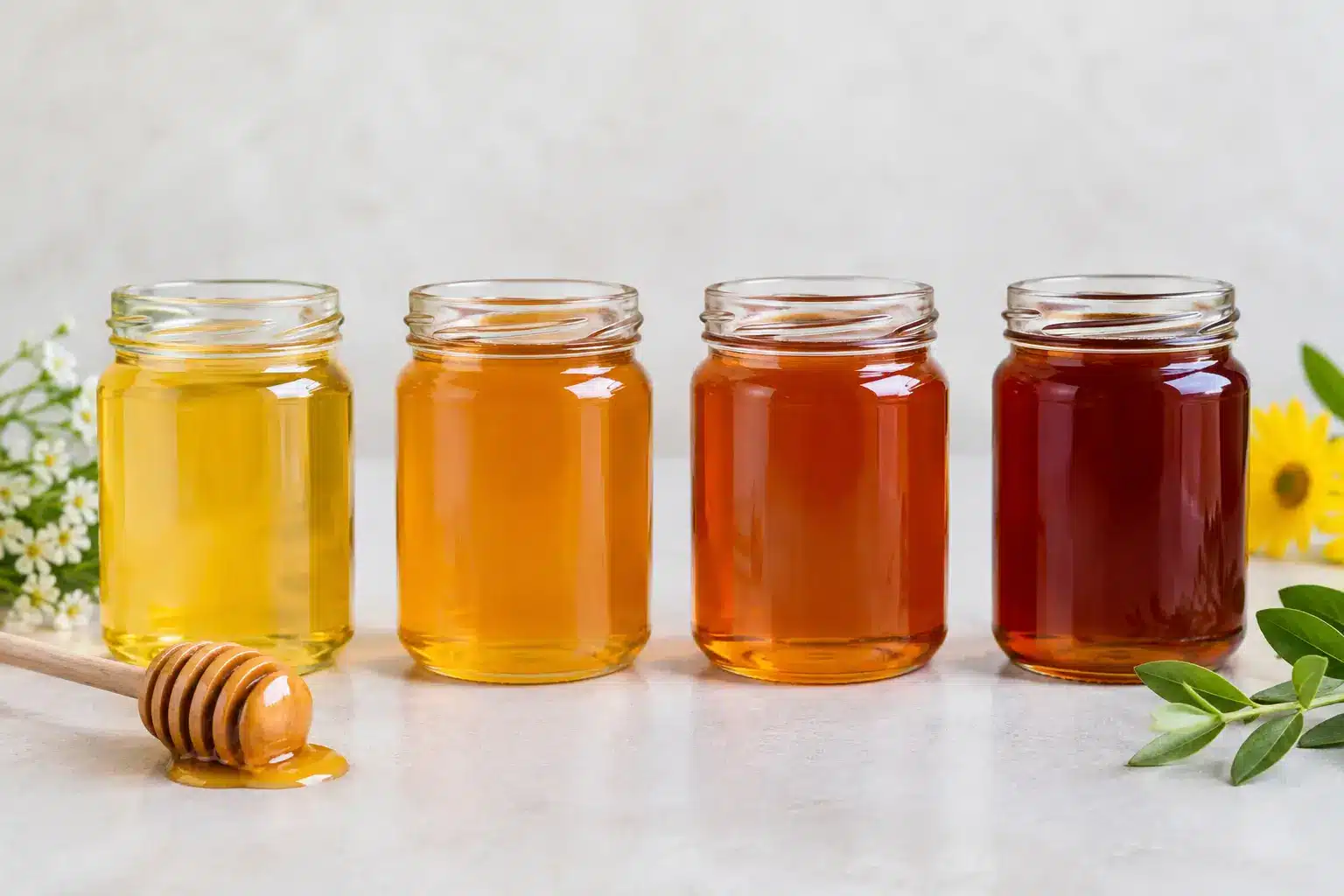
A jar of honey can glow pale gold, shine amber, or pour in a deep, earthy brown. That difference is not a flaw to be corrected. It is part of honey’s identity. Understanding why honey color varies helps you look beyond appearance and appreciate what is inside the jar: the flowers visited by bees, the landscape around them, the season of harvest, and the care taken from hive to table.
For those who seek honey with a real sense of place, color is one of the first clues that nature has left behind. It cannot tell the whole story on its own, but it can point you toward a honey’s likely flavor, intensity, and floral character.
Why Honey Color Varies From One Harvest to Another
The biggest influence on honey color is nectar. Bees collect nectar from flowers, and every flowering plant has its own natural mix of sugars, minerals, plant compounds, and aromatic elements. Once bees transform that nectar into honey, those differences remain visible in the final color.
Some blossoms produce nectar that becomes very light honey, often with a mild, delicate sweetness. Other flowers produce nectar that creates a darker honey with deeper caramel, malt, spice, or dried-fruit notes. Neither is automatically better. A pale honey is not necessarily more pure, and a dark honey is not necessarily stronger in every meaningful way. They are simply different expressions of their botanical source.
Sidr honey is a beautiful example of this connection between land and color. Harvested from the nectar of the Sidr tree, also known as the jujube tree, authentic Yemeni Sidr honey is commonly golden to rich amber. Its shade can shift from batch to batch because the trees, rainfall, flowering conditions, and surrounding forage are never exactly the same. That natural variation is part of what makes each harvest distinctive.
The Landscape Leaves Its Mark
Honey does not begin in a factory. It begins in a living environment, and the environment matters. Soil composition, altitude, temperature, rainfall, and nearby plant life can all influence the nectar available to bees. Two honeys from the same type of flower may still look somewhat different when they come from different regions or seasons.
Yemen’s rugged valleys and remote landscapes give Sidr honey a character that is difficult to reproduce elsewhere. Ancient Sidr trees grow in conditions shaped by dry air, mountain terrain, and long-standing beekeeping traditions. The result is a honey prized not only for its rich taste but also for its unmistakable connection to origin.
This is why origin transparency matters more than chasing one perfectly uniform shade. Mass-market honey is often blended from many regions and harvests to create a consistent color and flavor. A single-origin honey may be less uniform, but that variation can be a sign that the product has retained its natural individuality.
Harvest Timing Can Change the Shade
A honey harvest is a snapshot of a season. When flowers bloom earlier or later, when rainfall is abundant or scarce, and when bees find more nectar from one plant than another, the final honey may change in color.
Even within the same apiary, a spring harvest can look different from a late-summer harvest. A beekeeper may also collect honey at different points in the flowering cycle, when nectar is naturally more or less concentrated. These shifts are subtle, yet they can be visible in the jar.
For premium honey lovers, this is worth celebrating. A new harvest should not have to match last year’s jar perfectly to be authentic. In fact, a honey that looks exactly identical year after year may raise more questions than one that reflects the honest changes of nature.
What Darker Honey May Suggest
Darker honey often contains higher levels of certain natural plant compounds and minerals than lighter varieties. It can also have a bolder flavor, with notes that feel warmer, richer, or more complex on the palate. Many people reach for darker honey in tea, baking, marinades, or wellness routines because its flavor stands up beautifully alongside spices, citrus, and nuts.
Still, color should not be treated as a complete nutrition label. Honey is a naturally complex food, and its composition depends on botanical source, location, handling, and age. A dark color may suggest a more intense profile, but it does not prove a specific health benefit or guarantee quality.
What matters most is purity. A genuine, additive-free honey gives you the natural qualities created by bees and flowers, without unnecessary syrups, artificial flavors, or fillers. When choosing honey, a trustworthy source and a clear origin are more meaningful than color alone.
Why Honey Can Darken Over Time
If you have kept a jar of honey in your pantry for months, you may notice that it becomes slightly darker. This is normal. Honey naturally changes slowly with time, especially when exposed to warmth.
Its sugars and amino acids can gradually interact in a process that deepens both color and flavor. Heat speeds this up, which is one reason gentle handling matters for specialty honey. Excessive processing may make honey more uniform and easier to pour, but it can also reduce the fresh character that makes raw or minimally handled honey so appealing.
To preserve your honey’s natural qualities, store it tightly sealed at room temperature, away from direct sunlight and heat sources. Avoid refrigeration unless necessary, since cold temperatures encourage crystallization. Crystallized honey is still real honey and remains safe to enjoy. It has simply formed natural sugar crystals, a common change in pure honey.
If you prefer a smoother texture, place the sealed jar in warm water and allow it to soften gradually. Avoid boiling water or microwave heating, especially with a treasured single-origin honey. Patience is the better method for Nature’s Gold.
Color Is Not a Shortcut to Authenticity
It is tempting to assume that one shade identifies a particular honey with certainty. In reality, authentic honey can span a range of colors, including within a single varietal. A light amber Sidr honey can be genuine. So can a deeper amber harvest, provided it comes from a reliable source and has been handled with care.
Likewise, a dark jar is not automatically raw, rare, or superior, and a light jar is not automatically diluted. Honey color is one useful detail, not a verdict. Look for honest information about the floral source, country of origin, harvesting practices, and ingredients. Pure honey should have one ingredient: honey.
Aroma and taste offer additional clues. Authentic Sidr honey is known for a rich, naturally distinctive sweetness, often with warm herbal or caramel-like notes and a lingering finish. The exact experience can vary, which is part of its beauty. Honey made by nature should not taste manufactured.
Choosing Honey With Confidence
When you buy specialty honey, think of it as you would olive oil, coffee, or wine. Origin changes the experience. A honey connected to a specific tree, region, and traditional harvest carries a story that a generic blend cannot replicate.
Choose a source that clearly states where its honey comes from and avoids vague claims. Seek honey that is 100% natural and free from added sweeteners. Then let your senses do their part. Notice the color in the light, breathe in the aroma, and taste slowly. A good honey reveals itself in layers.
At Yemen Honey Store, authentic Yemeni Sidr honey is valued for exactly this kind of natural distinction. Straight from the heart of Yemen, each harvest carries the character of the Sidr trees and the people who have cared for bees in this landscape for generations.
The next time you notice a golden jar looks different from the one before it, see it as an invitation rather than a concern. Honey’s changing color is one of nature’s quiet signatures, reminding us that the finest foods are shaped by real flowers, real seasons, and a real place.