A spoonful of genuine Yemeni Sidr honey carries more than sweetness. It carries the character of dry mountain valleys, flowering Sidr trees, and generations of careful beekeeping. This Sidr tree nectar guide explains what begins at the blossom, what makes the resulting honey so distinctive, and how to choose a jar worthy of your table.
For many families, Sidr honey is Nature’s Gold: a treasured pantry staple enjoyed by the spoonful, stirred into warm drinks, and shared as a thoughtful gift. Its rarity is not a marketing idea. It starts with the tree, the landscape, and the limited windows when bees can gather from Sidr flowers.
What Is Sidr Tree Nectar?
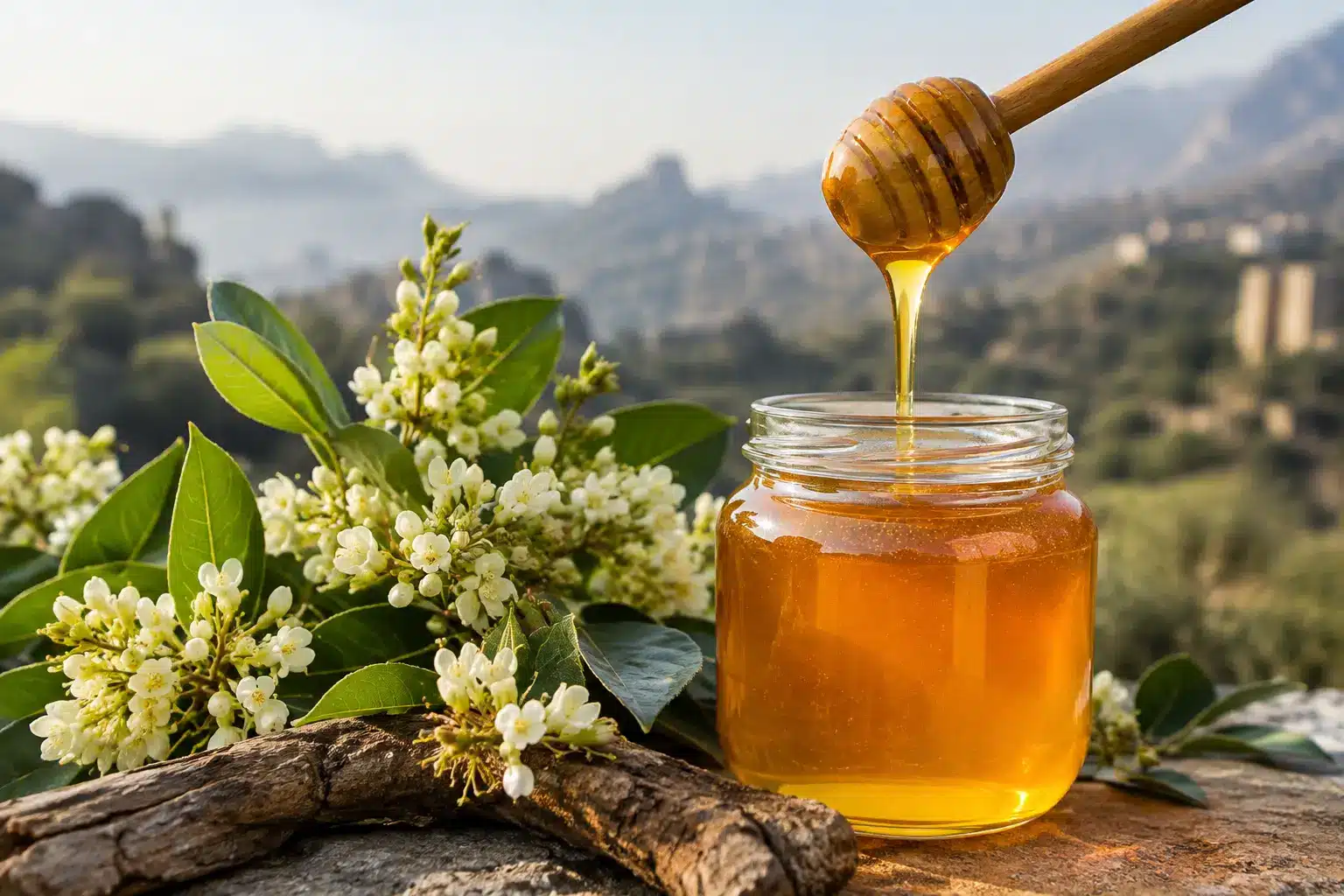
Sidr tree nectar is the naturally sweet liquid found in the flowers of the Sidr tree, commonly known in parts of Yemen and the Middle East as the lote tree. The tree is often identified botanically as Ziziphus spina-christi. When Sidr trees bloom, bees collect this nectar and bring it back to the hive, where it is transformed into honey.
That distinction matters. Nectar is the floral source; honey is the finished food created by bees. When people refer to Sidr tree nectar in connection with honey, they are usually describing the prized floral origin behind authentic Sidr honey.
Sidr trees are remarkably resilient. They thrive in demanding, often arid environments where many cultivated plants would struggle. Their small blossoms offer bees a concentrated seasonal forage, and the surrounding terrain contributes to the honey’s sense of place. Like fine olive oil or single-origin coffee, true Sidr honey reflects where it comes from.
From Sidr Blossom to Yemeni Honey
The journey from flower to jar is simple in principle but requires patience and experience. Bees visit the blossoms during the flowering season, gathering nectar along with traces of the wider landscape. Back at the hive, enzymes and natural evaporation change that nectar into honey. Beekeepers then harvest only when the honey is mature enough to preserve its flavor and character.
Traditional harvesting is especially meaningful in Yemen, where beekeeping knowledge has been carried through families and communities for generations. The goal is not to force a uniform, factory-style product. It is to respect the bees, the season, and the natural pace of the hive.
Why the harvest season matters
Sidr flowering does not last all year. Rainfall, temperature, elevation, and local conditions can influence when trees bloom and how much nectar is available. A difficult season may yield less honey, while a favorable one can bring a more generous harvest. This is one reason authentic Yemeni Sidr honey is valued as a rare specialty food rather than an everyday commodity.
Natural variation is part of that value. One batch may lean darker and more caramel-like; another may seem lighter in color with a brighter floral finish. These differences do not automatically signal a problem. With pure honey, nature does not produce identical copies.
What Makes Sidr Honey So Distinctive?
Honey made from Sidr tree nectar is known for its full body, golden to deep amber color, and memorable aroma. The flavor is often rich and rounded rather than sharply sugary. Many people notice notes that feel warm, floral, buttery, or gently caramelized, with an earthy depth that lingers after each spoonful.
Texture can vary too. Fresh, unprocessed honey may pour slowly, feel silky on the tongue, or gradually crystallize over time. Crystallization is a natural process in real honey, not a sign that it has spoiled. The pace and appearance depend on factors such as floral source, temperature, and natural sugar balance.
Sidr honey is also appreciated because it is enjoyed as more than a sweetener. It contains naturally occurring sugars for quick energy and naturally occurring compounds that make honey a welcome part of many traditional wellness routines. Still, it is best viewed as a nourishing food, not a replacement for professional medical care. Anyone managing blood sugar or a specific health condition should enjoy honey with their personal dietary needs in mind.
A Sidr Tree Nectar Guide to Origin and Purity
Not every jar labeled “Sidr” offers the same experience. Sidr trees grow across several regions, and honey may be blended, heavily filtered, heated, or mixed with other sweeteners before it reaches a shelf. Those practices can make a product cheaper or more consistent, but they can also distance it from the distinctive flavor and heritage people seek in Yemeni Sidr honey.
When choosing honey, start with origin. A clear connection to Yemen matters if you are looking for the deep cultural and geographic identity associated with Yemeni Sidr. Look for sellers that speak plainly about where their honey is sourced and avoid vague claims that give no meaningful information about country or floral source.
Next, consider ingredients. A premium Sidr honey should have one ingredient: honey. There is no need for corn syrup, refined sugar, artificial flavoring, or preservatives. Pure honey has enough character on its own.
Finally, remember that color and thickness are clues, not proof. Darker does not always mean better, and an unusually thick honey is not automatically more authentic. Season, storage temperature, and natural composition all affect how honey looks and flows. Honest sourcing, careful handling, and a clean ingredient statement offer a far better foundation for confidence.
How to Enjoy Yemeni Sidr Honey
The best way to understand Sidr honey is often the simplest: taste a small spoonful on its own. Let it rest on the palate for a moment before swallowing. You may notice how the aroma arrives first, followed by richness and a long, gentle finish.
For daily use, Sidr honey brings depth to plain yogurt, oatmeal, toast, and fruit. It is especially lovely with tahini, soft cheese, toasted nuts, or warm flatbread. A spoonful can also soften the edge of tea, though very high heat may mute some of honey’s more delicate floral notes. Let boiling water cool slightly before stirring it in if flavor is your priority.
Its natural richness makes it a beautiful addition to a morning ritual or an evening cup of tea. For gifting, a jar of genuine Sidr honey communicates care, abundance, and connection to a heritage that deserves to be tasted, not merely described.
Store It With Care
Keep Sidr honey tightly sealed at room temperature in a cool, dry cupboard. Avoid refrigeration, which can encourage faster crystallization and make the honey difficult to scoop. Do not store it beside the stove or in direct sun, where repeated heat can gradually change its aroma and texture.
If your honey crystallizes, place the closed jar in gently warm water and allow it to loosen slowly. Avoid microwaving or overheating it. Gentle handling helps preserve the qualities that made you choose a pure, unprocessed honey in the first place.
For those seeking honey Straight from the Heart of Yemen, the small details are worth honoring: the flowering season, the source, the harvest, and the quiet pleasure of a spoonful enjoyed without rush. Choose with care, taste with attention, and let every jar bring a little of Yemen’s living heritage into your home.