

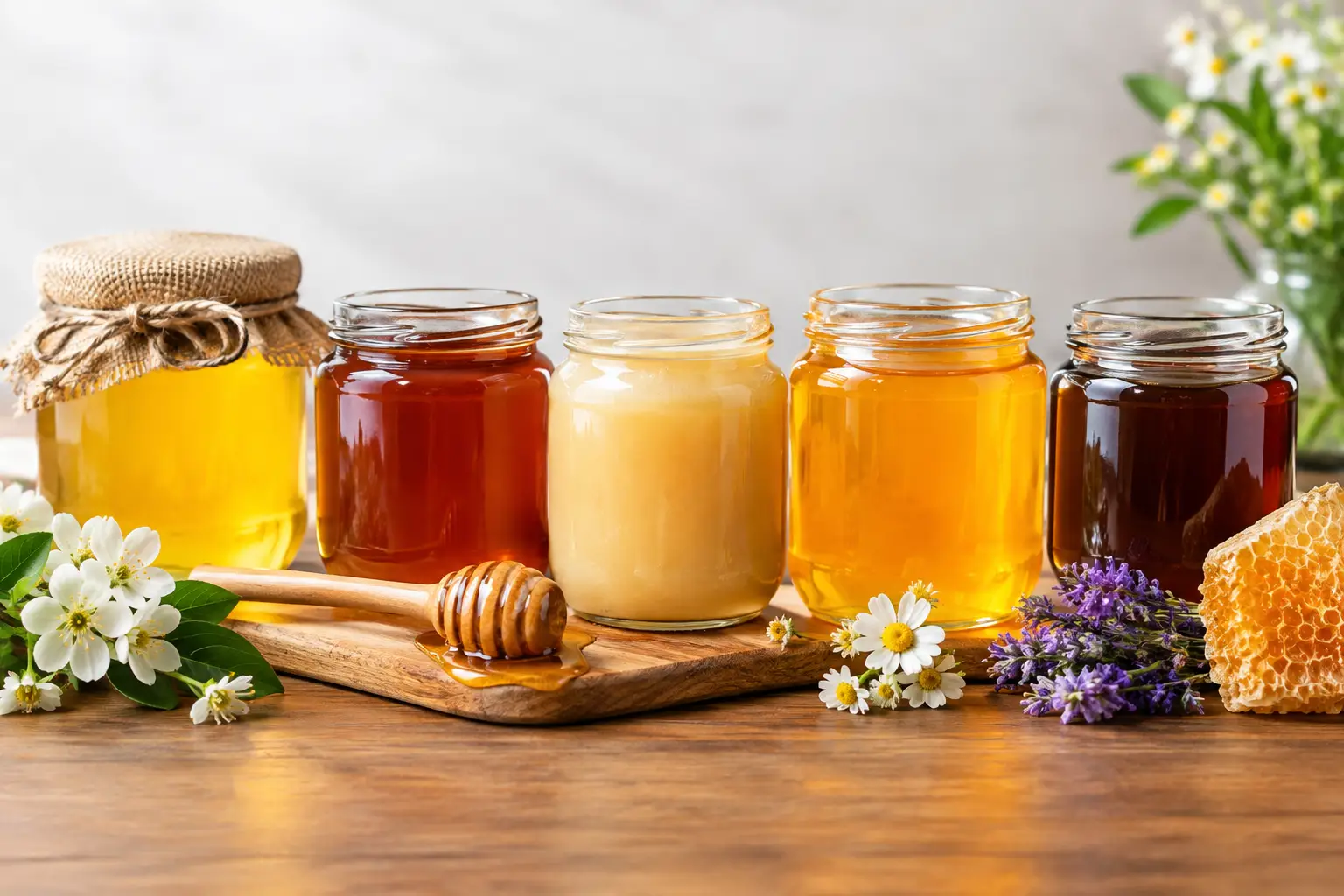
A honey jar can tell a story before you ever lift the lid. Its color, aroma, and texture reflect the flowers bees visited, the climate surrounding the hives, and the care taken after harvest. In this guide to top honey varieties explained, the goal is not to crown one universal winner. It is to help you recognize what makes each variety distinct and choose honey that belongs in your pantry.
For shoppers who care about natural foods, the difference is more than flavor. A clearly identified honey with a traceable origin offers a stronger sense of what you are bringing home than a generic blended bottle with a vague label. Whether you enjoy honey by the spoonful, stirred into tea, paired with cheese, or used in family recipes, variety matters.
What Makes One Honey Variety Different From Another?
Most named honeys are defined by their dominant floral source. Bees still visit more than one flower, especially in open landscapes, but beekeepers harvest during a season or from an area where one nectar source is especially abundant. That is why orange blossom honey carries citrus-floral notes, while buckwheat honey tastes dark, earthy, and deeply malty.
Geography matters just as much. Soil, rainfall, altitude, local plants, and harvesting traditions can change a honey’s character even when the floral source is similar. This is particularly true for rare regional honeys, where the landscape is part of the product’s identity.
Color alone is not a measure of quality. Pale honey can be beautifully delicate; dark honey can be wonderfully complex. Crystallization is not automatically a flaw either. Natural honey often crystallizes over time, and the speed and texture depend on its natural sugar profile. A gently warmed jar may return to a pourable consistency, though many people enjoy the soft, spreadable texture of crystallized honey.
Top Honey Varieties Explained by Flavor and Use
Clover honey: mild and familiar
Clover honey is one of the most common varieties in American kitchens. Usually light gold in color, it has a clean, gentle sweetness and a mild floral finish. Its easygoing flavor makes it a practical choice for baking, morning oatmeal, salad dressings, and tea when you want sweetness without a strong honey presence.
Its wide availability is also its trade-off. Clover honey is often sold as part of large-scale blends, so origin and processing can vary widely from jar to jar. For a more intentional purchase, look for a label that clearly identifies the source and ingredients rather than relying on a generic honey description.
Wildflower honey: seasonal and expressive
Wildflower honey comes from a changing mix of local blooms rather than one dominant flower. That makes it one of the most interesting types to taste, but also one of the least predictable. A spring wildflower honey may be light and fresh, while an autumn harvest can be darker, richer, and more resinous.
This variety is a wonderful choice for people who enjoy a sense of place in their food. It works well on warm toast, yogurt, and fruit, where its floral character has room to show. The trade-off is consistency: one region’s wildflower honey may taste very different from another’s, even under the same name.
Orange blossom honey: bright and delicate
Orange blossom honey is gathered from citrus groves during bloom. It is often pale amber with a fragrant, gently fruity aroma. The flavor is floral rather than sharply citrusy, bringing a light brightness to tea, sparkling water, vinaigrettes, and desserts.
Because it is subtle, orange blossom honey is best used where its aroma will not be overwhelmed by strong spices or heavy roasting. It is a lovely table honey for anyone who prefers finesse over intensity.
Buckwheat honey: bold and full-bodied
Buckwheat honey stands apart with its deep amber to nearly black color and powerful taste. Expect notes that can feel like molasses, malt, toasted grain, or dried fruit. It is not the best first choice for someone seeking a delicate sweetness, but it is memorable for those who appreciate rich, savory complexity.
Use buckwheat honey in marinades, barbecue sauces, spice cakes, and warm drinks. Its strength means a little can go a long way. As with any honey, flavor preferences matter more than color or popularity.
Manuka honey: distinctive and carefully graded
Manuka honey comes from the nectar of the manuka plant in New Zealand and is known for its dense texture, earthy flavor, and recognized grading systems. Shoppers often encounter labels that reference methylglyoxal, commonly shortened to MGO, or UMF ratings. Those markings are meant to identify measurable characteristics and can affect price substantially.
Manuka has become a popular choice for wellness-focused households, but it is worth buying with clear expectations. It is a premium specialty honey, not a substitute for medical care or a cure-all. If you enjoy its flavor and value its verified grading, it can be a meaningful addition to a natural-food pantry. If your priority is a more floral, luxurious honey for everyday enjoyment, another variety may suit you better.
Acacia honey: light, clear, and slow to crystallize
Often called acacia honey, this variety is commonly sourced from black locust blossoms. It is very light in color with a mild, vanilla-like floral sweetness. Its high fructose content means it often stays liquid longer than many other honeys, which appeals to people who prefer a clear, pourable jar.
Acacia honey is excellent in beverages and with fresh cheese because it sweetens without taking over. Its gentle profile can feel almost understated, so it may not satisfy those looking for the layered depth of a darker regional honey.
Yemeni Sidr honey: rare, rich, and rooted in heritage
Yemeni Sidr honey is treasured for its connection to the Sidr tree, which grows in Yemen’s rugged, sun-soaked landscapes. The honey is typically golden to deep amber, with a full, elegant sweetness and a distinctive herbal, caramel-like depth. Its aroma and lingering finish make it feel less like an ordinary pantry staple and more like Nature’s Gold.
What makes authentic Sidr honey special is not just its flavor. It is the union of a particular tree, a historic beekeeping culture, and an origin that cannot be replicated by a label alone. Traditionally harvested Sidr honey is valued by families for daily nourishment, natural energy, and the simple ritual of enjoying something pure.
For the best experience, enjoy it straight from the spoon, over warm bread, with tahini, or stirred into tea after it has cooled slightly. Very hot water can mute the honey’s nuanced aroma. Yemen Honey Store brings this rare heritage to American households with authentic Yemeni Sidr honey chosen for purity, natural character, and origin you can trust.
How to Choose Premium Honey With Confidence
The right variety begins with your palate, but quality begins with transparency. Read the ingredient line first. Pure honey should not need corn syrup, cane sugar, artificial flavoring, or unnecessary additions. Then look beyond attractive packaging to see whether the floral source and country or region of origin are clearly stated.
Processing deserves a thoughtful look, too. Terms such as raw, unfiltered, and unpasteurized can be useful, but they are not interchangeable guarantees of excellence. Some straining is normal and helps remove natural hive particles. What matters is that the honey remains true to its source, without dilution or excessive handling that strips away the character you came for.
Price can offer a clue, especially with rare honey, but it should not be your only test. Genuine regional honey costs more when responsible harvesting, limited yields, careful handling, and international sourcing are involved. An unusually cheap jar claiming to be a rare variety deserves closer scrutiny.
Store Honey to Protect Its Natural Character
Keep honey tightly sealed at room temperature, away from direct sunlight and moisture. Refrigeration is usually unnecessary and can speed crystallization. Use a clean, dry spoon each time, since introducing water can affect the honey over time.
Remember one essential household safety rule: honey should never be given to children under 12 months old. For everyone else, it can be enjoyed as part of a varied diet, whether you choose a mild everyday honey or a rare jar saved for meaningful moments.
The best honey is the one whose origin you understand, whose flavor you genuinely look forward to, and whose purity gives you confidence. Let each spoonful be a small way to bring more care, heritage, and honest sweetness to your table.