A jar of true Yemeni Sidr honey carries more than sweetness. Its deep amber color, botanical aroma, and lingering finish reflect the hands, landscapes, and seasonal judgment behind it. Yemen traditional beekeeping practices are part of what gives this honey its distinctive identity: a heritage shaped by dry mountain valleys, flowering Sidr trees, and beekeepers who understand when nature is ready to give.
For families seeking pure foods with a meaningful origin, that heritage matters. Honey is often treated as a simple pantry staple, but authentic Yemeni honey is inseparable from the place where bees forage and the care used to gather it. From hive placement to harvest timing, traditional knowledge helps protect the character that makes Sidr honey one of Yemen’s most treasured natural foods.
A Beekeeping Heritage Rooted in Place
Yemen’s beekeeping history is closely tied to its varied terrain. High mountains, cultivated valleys, desert edges, and remote wadis each offer different forage, temperatures, and flowering cycles. This diversity has encouraged a practical, place-based style of beekeeping rather than one uniform method used everywhere.
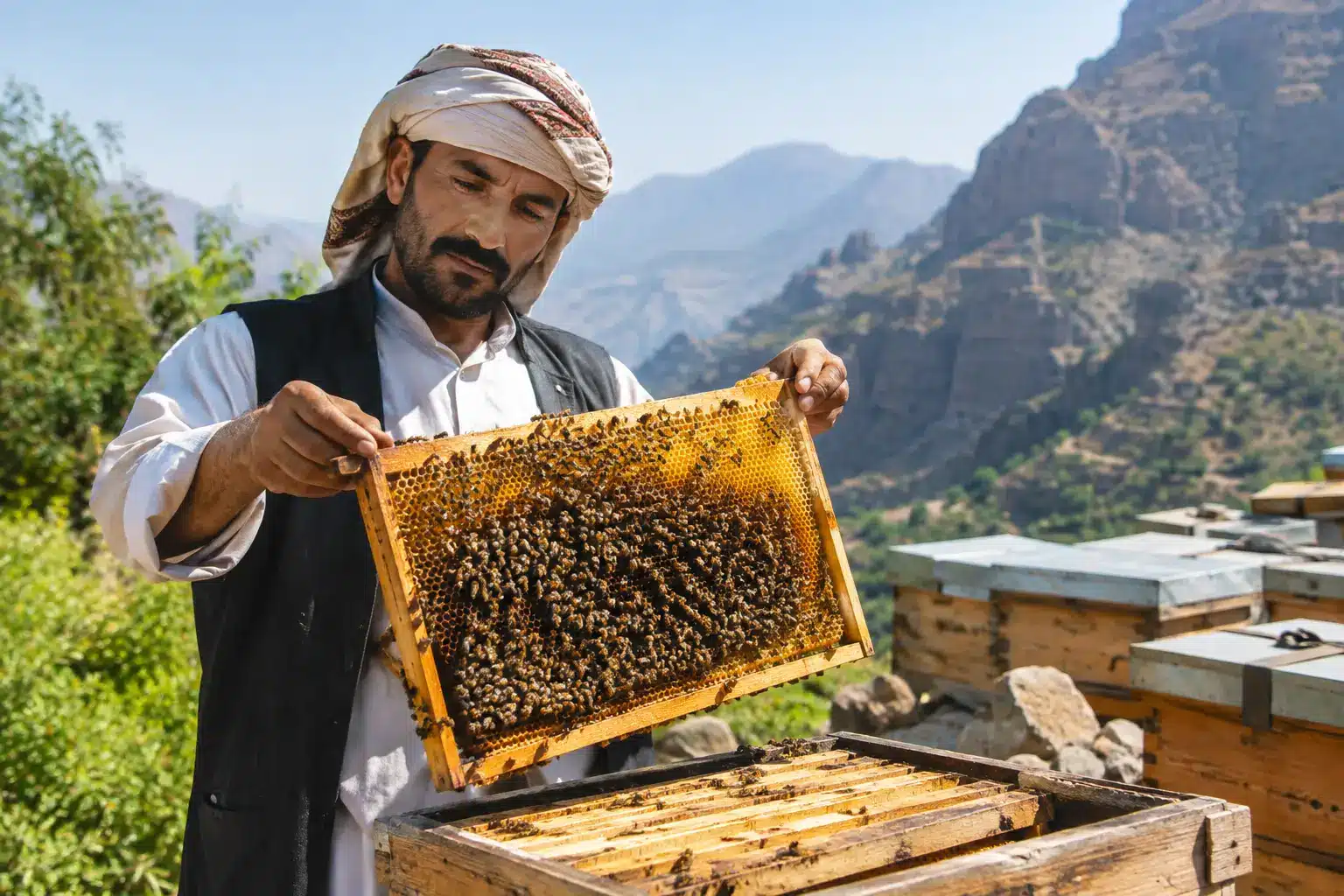
In many areas, beekeepers have traditionally kept colonies in handcrafted hives made from locally available materials. Depending on the region and household, these may include hollowed wood, clay, woven plant fibers, or other simple natural structures. Their form is modest, but their purpose is precise: provide bees shelter from heat, wind, and sudden changes in weather while allowing the colony to thrive near seasonal nectar sources.
This is not an industrial system built around maximum volume. It is a relationship with a changing landscape. A skilled beekeeper watches the weather, the bloom, the behavior of the colony, and the condition of the hive. That close attention is especially valuable in Yemen, where rainfall can be limited and flowering periods can be brief.
Why Sidr Trees Matter So Much
The Sidr tree, commonly associated with the Ziziphus species found across Yemen, holds a special place in Yemeni food culture. Its small blossoms can provide the nectar that becomes Sidr honey, prized for its rich taste, dense texture, and naturally complex aroma.
Sidr trees are adapted to demanding environments, often growing in valleys and uncultivated landscapes where their roots run deep. When a strong Sidr bloom arrives, it creates a narrow and valuable window for beekeepers. Colonies must be healthy, positioned well, and ready to forage when the flowers open.
Not every honey collected in Yemen is Sidr honey, and not every season produces the same result. Rainfall, temperature, bloom intensity, and local vegetation all affect the harvest. This is why genuine origin matters. A honey’s label may tell you what it is called, but careful sourcing helps explain where it came from, what flowers the bees visited, and why its flavor may vary slightly from one harvest to another.
Seasonal movement follows the flowers
Many Yemeni beekeepers move hives in response to flowering cycles. This seasonal practice, sometimes carried out across valleys or between elevations, helps colonies reach available nectar as landscapes change. It also requires experience. Moving a hive too early can disturb the bees; moving too late can mean missing a bloom.
The goal is not simply to collect more honey. It is to place bees where forage is naturally available and where they can build strong stores. In the best circumstances, this supports both the colony and the quality of the final harvest. Yet conditions are never guaranteed. A dry season or weak bloom can reduce yields considerably, making genuine Sidr honey a naturally limited product rather than a commodity that can be produced on demand.
The Patience Behind a Careful Harvest
Traditional harvesting is often small-scale and selective. Beekeepers wait until honeycomb is sufficiently ripened, meaning the bees have reduced the nectar’s moisture and sealed much of it with wax. Harvesting too soon can compromise texture and stability. Waiting requires patience, but it respects the natural pace of the hive.
The details differ by beekeeper and region. Some traditional methods involve removing honey-filled comb and separating the honey through pressing or straining. Others may use practices adapted over generations to the specific hive design. What matters most is restraint: taking honey without leaving the colony depleted.
Responsible harvesting means bees need adequate stores for their own survival, particularly during periods when flowers are scarce. Traditional beekeeping is not automatically sustainable simply because it is old. Like any agricultural practice, its quality depends on the care, knowledge, and decisions of the person tending the hives. The most respected beekeepers understand that a healthy colony is not an afterthought. It is the foundation of every future harvest.
What Traditional Methods Can Mean for Honey Quality
For American shoppers, words such as raw, pure, and unprocessed are meaningful, but they deserve context. Traditional harvesting can help preserve a honey’s natural character when it is handled gently, filtered only as needed, and kept free from added syrups, artificial flavoring, or unnecessary processing.
That does not mean every jar of traditional honey will look identical. Natural honey can crystallize over time, and its color can range from golden to dark amber depending on nectar source, season, and storage. These changes are part of a real agricultural product, not proof that something is wrong.
Authentic Sidr honey is often valued for its full-bodied taste as much as its heritage. It can be enjoyed by the spoonful, stirred into warm tea, paired with bread and tahini, drizzled over yogurt, or offered as a thoughtful gift. For many households, it belongs in daily wellness routines as a natural source of energy and a more flavorful alternative to refined sweeteners.
It is still honey, so it should be enjoyed mindfully as part of a balanced diet. Honey should not be given to children under one year of age. For everyone else, quality begins with knowing what you are buying: a product with a clear origin, no unnecessary additives, and respect for the land that produced it.
How to Recognize Heritage-Driven Yemeni Honey
When choosing Yemeni honey, look beyond a dramatic claim on the front of a jar. Origin transparency is one of the clearest signs of care. A trustworthy seller should be able to identify Yemen as the source and explain the type of honey offered, particularly when it is presented as Sidr.
Purity is equally important. Premium Yemeni honey should contain honey, not blended syrups, fillers, or artificial ingredients. Its price may be higher than supermarket honey because it reflects limited seasonal supply, careful sourcing, transport, and the exceptional work behind small-batch harvesting.
Flavor also tells a story, although it is not a laboratory test. Real Sidr honey is often known for a rich, warm, and distinctive profile rather than a flat, one-note sweetness. Each harvest can have its own personality. That variation is part of the appeal of a natural product gathered from living trees and active hives.
Protecting a Living Tradition
Yemen’s traditional beekeeping knowledge deserves attention because it represents more than a method of producing honey. It preserves local skills, supports rural livelihoods, and keeps a connection between food and landscape that many modern supply chains have lost.
For those who value nature’s gold, choosing authentic Yemeni Sidr honey is a way to honor that connection. The next time you open a jar, notice its aroma before you taste it. Behind that single spoonful is a Sidr bloom, a thriving colony, and generations of careful work straight from the heart of Yemen.