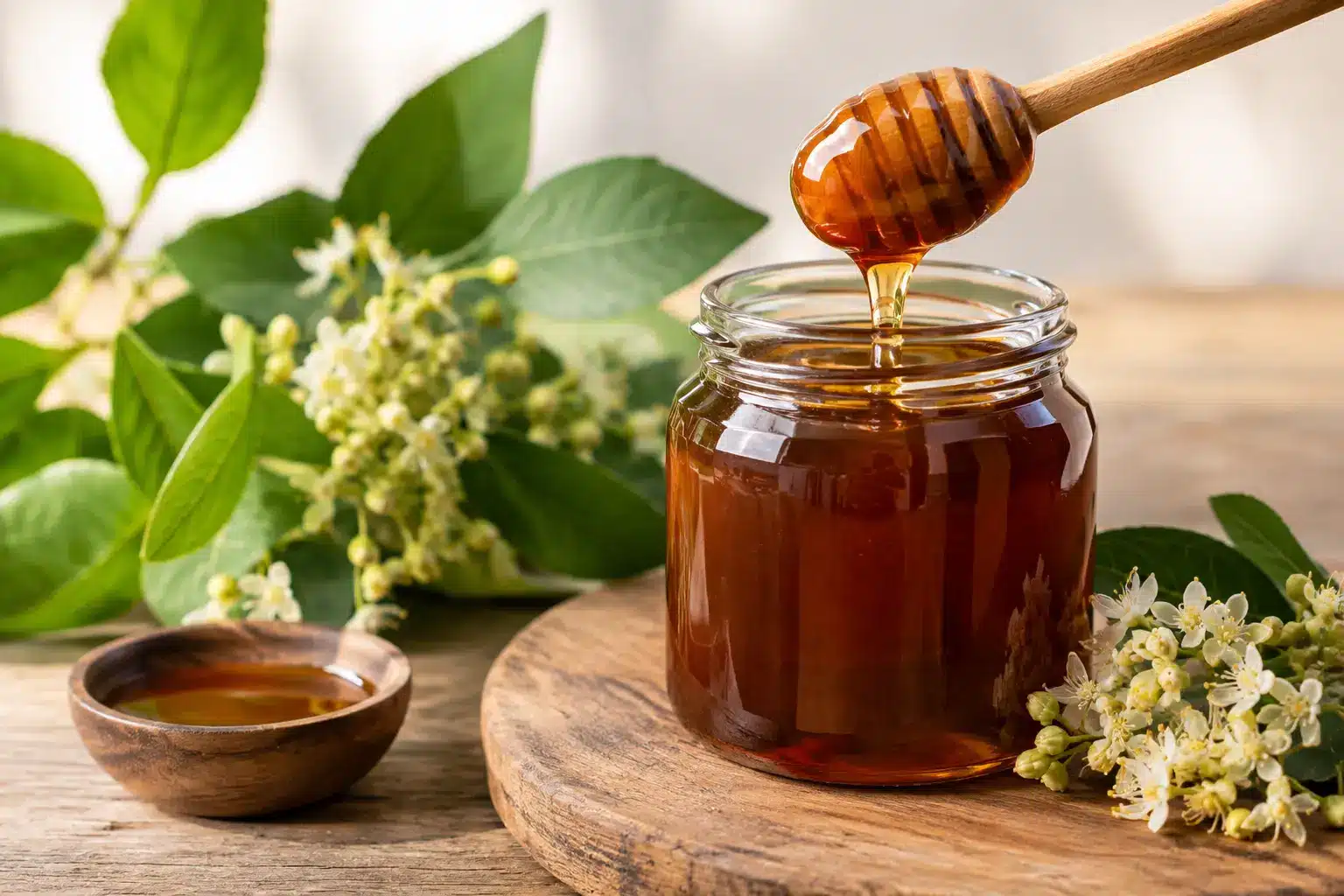
A spoonful of genuine Yemeni Sidr honey can look almost like polished amber, deep caramel, or even dark mahogany in the jar. So, why is Sidr honey dark? Its rich color is shaped by the nectar of the Sidr tree, Yemen’s distinctive landscapes, traditional harvesting practices, and the honey’s naturally concentrated composition. It is not simply a visual detail. Color is part of the story of where this treasured honey comes from.
For honey lovers who value purity and origin, a darker jar can be especially appealing. It signals a bold, layered flavor and a product that has not been stripped down to resemble the pale, uniform honey commonly found on supermarket shelves. Still, color alone is never a complete test of authenticity. True Sidr honey should be judged by its source, aroma, flavor, texture, and the integrity of the producer behind it.
The Sidr Tree Produces Distinctive Nectar
Sidr honey begins with the nectar gathered from the blossoms of the Sidr tree, also known as the lote tree. These ancient trees thrive in parts of Yemen where the terrain is dry, rugged, and largely untouched. Their flowers produce nectar with a naturally complex profile, and that profile gives Sidr honey its recognizable depth of color and taste.
Unlike light clover honey, which often has a mild sweetness and pale golden appearance, Sidr honey is known for a fuller body. Its color may range from warm golden-brown to a deep reddish brown. The exact shade depends on the season, the flowering area, weather conditions, and the concentration of nectar available to the bees.
This natural variation is part of what makes Sidr honey special. A jar that is slightly lighter or darker than the last one is not automatically a concern. Like olive oil, coffee, or wine, a harvest can reflect the conditions of a particular place and season.
Why Is Sidr Honey Dark Compared With Other Honey?
The short answer is that darker honey usually contains more naturally occurring plant compounds, minerals, and flavor-building elements from its floral source. In Sidr honey, the dense nectar of the Sidr blossom creates a honey that is often richer in appearance than common commercial varieties.
As bees transform nectar into honey, they reduce its water content and concentrate the natural sugars, aromatic compounds, and trace nutrients within it. The result is a thick, luxurious honey with a color that can appear especially dark when viewed through a full glass jar.
Yemeni Sidr honey also develops its character in a landscape unlike large-scale agricultural regions. Sidr trees grow among mountains, valleys, and remote areas where traditional beekeeping has been practiced for generations. This setting contributes to the honey’s singular identity: floral but not delicate, sweet but not one-dimensional, and richly colored without any need for added caramel, syrups, or artificial ingredients.
The Landscape of Yemen Matters
Not all Sidr honey looks exactly alike because not all Sidr trees grow under identical conditions. Soil composition, elevation, rainfall, temperature, and nearby vegetation can all influence the nectar bees collect. Honey from one Yemeni valley may carry a more golden amber tone, while a harvest from another region may be noticeably deeper and more red-brown.
That connection to place is worth protecting. Mass-produced honey is often blended from multiple countries and floral sources to create a consistent color and flavor. Authentic single-origin Sidr honey is valued for the opposite reason. It carries the natural signature of its homeland.
At Yemen Honey Store, that heritage is central to the experience. Genuine Yemeni Sidr honey is Nature’s Gold – a rare food shaped by ancient trees, skilled beekeepers, and the land that has sustained them for centuries.
Harvesting and Processing Can Preserve Its Deep Color
Raw, unprocessed honey retains the qualities that make it feel alive in the jar: its aroma, natural enzymes, pollen, texture, and deeply developed flavor. When honey is heavily heated or filtered for mass retail, it may become more uniform in appearance, but it can lose much of the character that discerning honey buyers seek.
Traditional Sidr honey is commonly harvested with care and minimally handled. The honey is removed from the comb, strained to remove natural wax particles or hive debris, and then bottled. It does not need fillers, refined sugar, corn syrup, or artificial coloring to look rich and inviting.
A dark color should come from the honey itself, not from processing tricks. That is why ingredient transparency matters. Pure Sidr honey should have one ingredient: honey.
Dark Does Not Always Mean Better
A deep color is common in premium Sidr honey, but it should not be treated as the only measure of quality. Honey can darken naturally with age, especially if stored in a warm place or exposed to light. Some sellers may also offer blends that look dark but do not have the aroma, flavor, or origin of true Sidr honey.
The best approach is to look at the complete picture. Authentic Sidr honey often has a dense texture, a warm herbal or fruity aroma, and a lingering sweetness with gentle complexity. It should taste more nuanced than plain sugar syrup. Depending on the harvest, you may notice hints of caramel, dried fruit, spice, or woodsy florals.
Ask where the honey was sourced, whether it is raw or minimally processed, and whether it is a single-origin product. A trustworthy seller should be clear about these details rather than relying on color alone as proof.
What Changes Sidr Honey’s Color Over Time?
Even a carefully stored jar can change gradually. This is normal. Honey is a natural food, and its appearance can evolve without becoming less enjoyable.
Crystallization Can Make Honey Look Lighter
When honey crystallizes, tiny sugar crystals scatter light. The jar may look cloudier, creamier, or lighter in certain areas. Crystallization is not a sign that honey has gone bad. In fact, it is common in pure honey and reflects its natural glucose content.
If you prefer a smoother pour, place the sealed jar in warm water and allow it to soften slowly. Avoid high heat and microwaving, which can compromise the delicate qualities that make raw honey so valued.
Heat and Light Can Deepen the Shade
Over time, warm storage conditions may make honey appear darker. To protect flavor and color, store Sidr honey tightly sealed in a cool, dry cupboard away from direct sunlight. Refrigeration is not necessary and can speed up crystallization.
Seasonal Variation Is Expected
A new jar from a different harvest may not match the previous jar exactly. That variation is one of the clearest reminders that authentic Sidr honey comes from a living ecosystem, not a factory formula.
Enjoy the Richness Beyond the Color
The dark beauty of Sidr honey becomes even more apparent when you taste it. Enjoy a spoonful on its own, stir it into warm tea, drizzle it over yogurt, or pair it with fruit, cheese, and warm bread. Its bold character also makes it a thoughtful gift for anyone who appreciates traditional foods with a genuine sense of place.
When you choose pure Yemeni Sidr honey, you are choosing more than a sweetener. You are bringing home a product shaped by the Sidr tree, the hands of traditional beekeepers, and the enduring natural heritage of Yemen. Let its deep color be an invitation to slow down, taste carefully, and appreciate what true origin can bring to a jar of honey.