
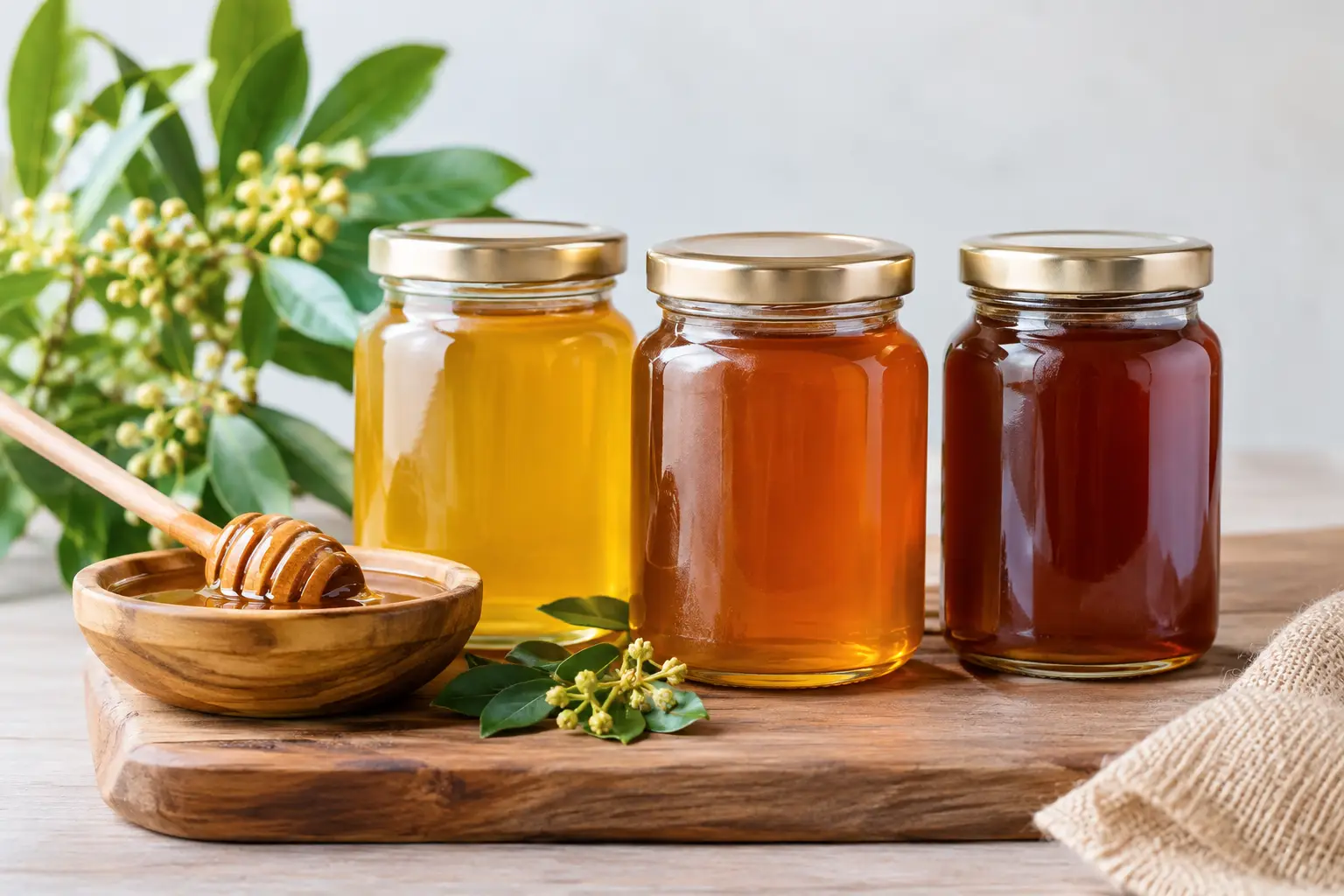
A jar of genuine Sidr honey should invite questions before it ever reaches your spoon: Where was it harvested? What was in bloom? Was it heated, blended, or filtered beyond recognition? This guide to Sidr honey grades separates meaningful signs of quality from marketing shortcuts, so you can choose Nature’s Gold with greater confidence.
Sidr honey is not a commodity honey with one fixed flavor or a universal grading chart. It is a treasured Yemeni honey shaped by the Sidr tree, known botanically as Ziziphus spina-christi, along with the land, rainfall, harvest season, and care of the beekeeper. The finest jars carry the character of Yemen’s valleys and mountains: rich aroma, lingering flavor, dense texture, and a deep sense of place.
First, Understand What “Grade” Means for Sidr Honey
Unlike some standardized food products, Sidr honey does not have one official global grade system that every producer follows. Labels such as premium, royal, first harvest, mountain, or Grade A can be helpful only when the seller explains what stands behind them. On their own, they are not proof of purity or origin.
In practice, Sidr honey grades usually refer to a combination of factors: the geographic source, how concentrated the Sidr nectar was during the harvest, the season, the honey’s sensory qualities, and its handling after extraction. A higher-priced grade may reflect a more remote harvest area, limited seasonal yield, or a stronger Sidr floral profile. It should not simply mean darker honey, thicker honey, or a more elaborate label.
The best approach is to think of grades as a quality conversation, not a single stamp. Ask for details, then judge the whole picture.
The Main Factors Behind Sidr Honey Grades
Origin: Yemen’s landscape matters
Authentic Yemeni Sidr honey is valued because Yemen offers a distinctive environment for Sidr trees. Dry valleys, mountain foothills, and untouched rural landscapes can produce honey with remarkable depth. Within Yemen, regional names may carry special weight because local climate and flowering conditions influence the final jar.
Do’ani Sidr honey, associated with Wadi Do’an in Hadramaut, is often regarded as one of the most sought-after expressions. Its reputation comes from the region’s longstanding beekeeping heritage, limited availability, and memorable flavor. That said, a regional name should be supported by transparent sourcing. A label alone cannot tell you whether honey was truly harvested there.
Other Yemeni regions can also produce beautiful Sidr honey. A thoughtful buyer does not dismiss every jar that is not labeled Do’ani. Instead, look for a clear country of origin, a specific harvest area when available, and a seller willing to stand behind the sourcing.
Nectar concentration: pure Sidr versus mixed floral honey
One of the most meaningful differences among Sidr honey grades is the role of Sidr nectar in the harvest. During a strong Sidr bloom, bees may forage predominantly from Sidr flowers, creating honey with a more defined aroma and flavor. This is often sold as pure or monofloral Sidr honey.
In other conditions, bees naturally visit several flowering plants. The resulting honey may still be raw, delicious, and genuinely Yemeni, but its flavor can be more varied and its Sidr character less pronounced. That does not automatically make it poor quality. It simply means it belongs in a different category than a harvest collected during a concentrated Sidr bloom.
Purity also means no added syrups, sweeteners, colorings, or artificial flavoring. A premium grade should be a reflection of the hive and harvest, not an attempt to imitate rarity after the fact.
Harvest season: scarcity can be meaningful
Sidr trees have distinct flowering periods, and weather can change a harvest dramatically from year to year. Rainfall, drought, wind, and local forage all affect how much honey bees can produce. A limited seasonal harvest may be more expensive because there is genuinely less of it, not because scarcity has been invented for marketing.
Some customers seek early or first-harvest honey for its freshness and bright floral notes. Others prefer a later harvest with a deeper, fuller profile. Neither preference is universally better. The right choice depends on whether you value delicate aroma, bold flavor, or the prestige of a particularly limited regional crop.
Aroma, taste, color, and texture
Fine Sidr honey is often recognized first by its aroma. It may smell warm, floral, woody, caramel-like, or lightly fruity, with an unmistakable richness that continues after tasting. The flavor is usually more complex than ordinary table honey: naturally sweet but not flat, with depth that lingers rather than disappearing quickly.
Color can range from golden amber to dark reddish brown. Color alone does not determine grade. A pale jar is not necessarily less authentic, and a very dark jar is not automatically superior. Nectar conditions, storage, and harvest timing can all affect appearance.
Texture is equally variable. Sidr honey is commonly dense and smooth, yet genuine raw honey can become thicker in cool weather or crystallize over time. Crystallization is a natural process, not evidence of adulteration. A seller who promises that all real honey must stay perfectly liquid forever is oversimplifying how honey behaves.
How to Read a Sidr Honey Label With Confidence
A trustworthy label should make the essentials easy to understand. Start with the ingredient statement. For a pure product, the ingredient should be honey, with no blend of sugar syrup, corn syrup, flavoring, or unnecessary additives.
Then look for origin. “Imported honey” is vague. “Product of Yemen” is more meaningful, and a named region or harvest area offers further context. If a jar claims a special grade or rare origin, the brand should be able to explain why that designation applies.
Raw and unprocessed language can also be useful, but it deserves context. Honey may be strained to remove natural hive particles while remaining minimally handled. What matters is that it has not been heavily heated or diluted in a way that strips away its natural character. Clear sourcing, careful handling, and an honest ingredient list should work together.
At Yemen Honey Store, the focus is straightforward: authentic Yemeni Sidr honey, sourced for its natural purity and heritage rather than dressed up with unnecessary ingredients.
A Practical Guide to Sidr Honey Grades When Shopping
When comparing jars, begin with provenance rather than a grade name. A seller that identifies Yemen, shares meaningful harvest information, and clearly states that the honey is additive-free gives you a better foundation than a seller using only broad claims such as “luxury” or “superior.”
Next, consider price with perspective. Genuine Yemeni Sidr honey is often costly because harvesting is labor-intensive, regional yields can be limited, and moving a fragile specialty food from Yemen to the United States requires care. An unusually low price does not prove a jar is fake, but it should encourage closer questions. Rare, origin-specific honey cannot usually be offered at the same price as mass-market blended honey.
Finally, let your senses have a role. Once you have chosen a transparently sourced jar, notice its aroma, body, and finish. Genuine Sidr honey often earns loyalty not through one dramatic claim but through the complete experience: a spoonful that tastes richly alive, rooted in a particular land and tradition.
Why the Highest Grade Is Not Always the Best Choice
The most expensive Sidr honey may be the right choice for a meaningful gift, a special wellness ritual, or a person who wants a highly concentrated regional harvest. Yet a different authentic Yemeni Sidr honey can be the better everyday choice for tea, breakfast, baking, or family use.
Think about how you plan to enjoy it. A rare, intensely flavored harvest deserves to be tasted simply, perhaps by the spoonful or over warm bread, yogurt, and fruit. A more approachable jar may be ideal for stirring into warm water, drizzling over oatmeal, or bringing natural sweetness to everyday meals. Quality is not only about prestige. It is also about honesty, freshness, and whether the honey fits your table.
For families, remember that honey should never be given to children under 12 months old. For everyone else, Sidr honey is best appreciated as a natural food, not as a substitute for professional medical care.
A true grade is ultimately revealed by transparency. Choose honey that tells you where it came from, what it contains, and why its harvest is special. Then slow down for the first taste. The finest Sidr honey carries more than sweetness – it carries the patience of the beekeeper, the resilience of ancient Sidr trees, and a small, golden piece of Yemen.