

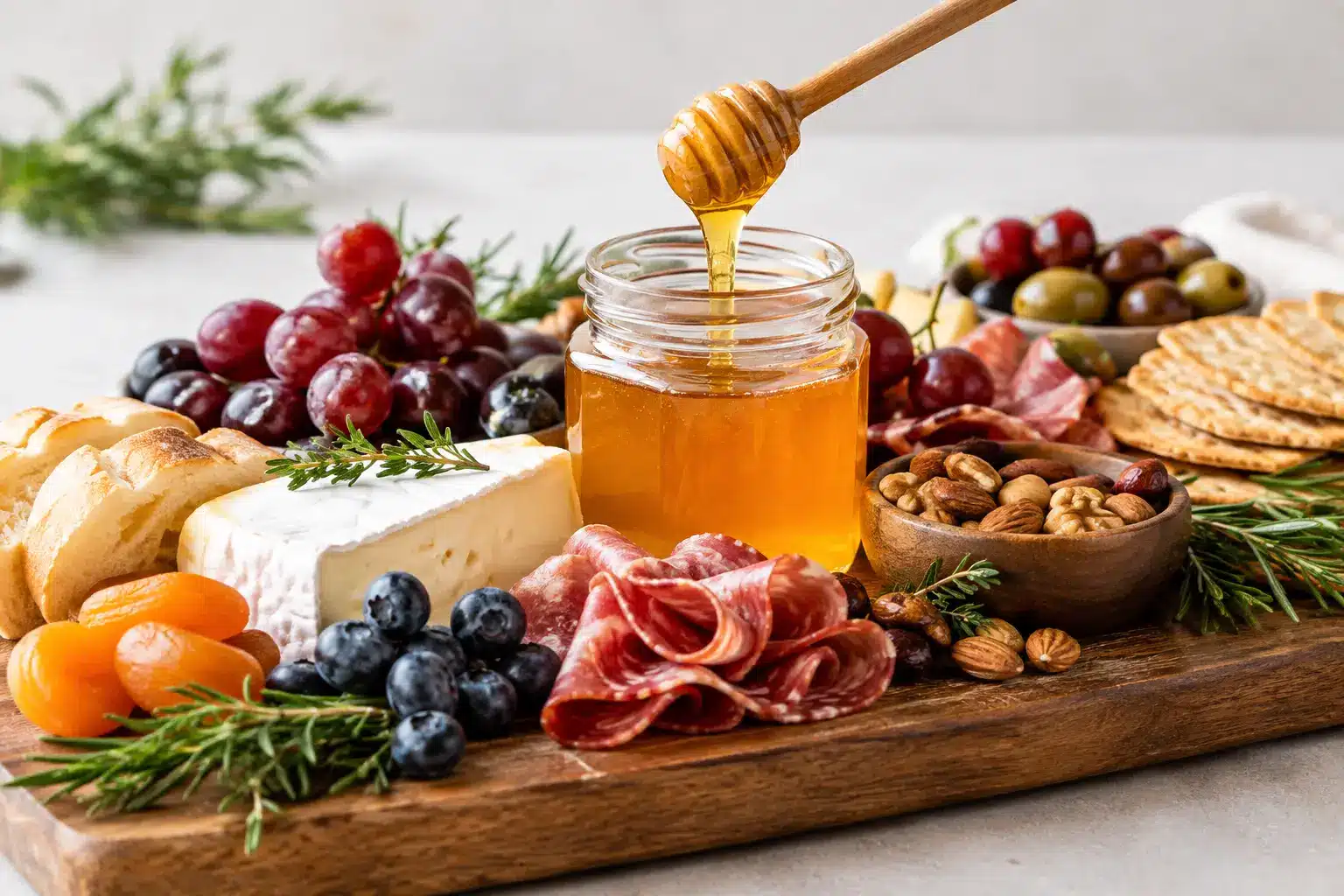
A spoonful of exceptional honey can change the entire character of a charcuterie board. It softens the salty edge of aged cheese, brightens savory cured meat, and gives fresh fruit and toasted nuts a richer purpose. The best honey for charcuterie boards is not simply the sweetest jar on the table. It is the one with enough flavor, aroma, and texture to hold its own beside carefully chosen ingredients.
For a board meant to feel generous and memorable, choose honey with a clear origin and a naturally complex taste. Pure, unprocessed honey brings more than sweetness. It brings the landscape where the bees foraged, whether that means delicate wildflowers, fragrant orange blossom, or the deep, distinctive character of Yemeni Sidr honey.
What Makes the Best Honey for Charcuterie Boards?
The right honey creates contrast without taking over. Charcuterie is built on balance: salty meats, creamy and sharp cheeses, bright fruit, briny accompaniments, and something sweet to tie them together. Honey should add a new note to that conversation, not cover it up.
Flavor is the first consideration. A mild honey is lovely with fresh goat cheese, ricotta, or burrata, where its floral sweetness can remain light and clean. A darker, fuller-bodied honey works especially well with assertive cheeses such as blue cheese, aged cheddar, Manchego, Pecorino, and washed-rind varieties. These pairings need a honey with depth, not a thin, one-note sweetness.
Texture matters, too. A slow-pouring honey looks beautiful in a small bowl or drizzled directly over cheese. Naturally crystallized honey can be just as appealing when served with a small spoon, offering a soft, spreadable texture that feels at home beside rustic bread and crackers. Crystallization is a natural change in real honey, not a sign that it has gone bad.
Finally, consider purity. Honey blends and heavily processed products can taste flat or overly sugary, especially next to artisan cheese and quality cured meat. A single-origin or carefully sourced honey gives the board a sense of place. It is a small detail guests notice, even if they cannot immediately name why the flavors feel more complete.
Why Sidr Honey Belongs on a Premium Board
Sidr honey is a remarkable choice when you want the sweet element of your board to feel as special as the cheese and charcuterie. Harvested from bees that forage on the blossoms of ancient Sidr trees in Yemen, it is known for its rich golden color, smooth body, and layered taste. Depending on the harvest, its profile can bring warm caramel notes, gentle fruitiness, and an earthy finish that lingers pleasantly.
That depth makes Sidr honey especially well suited to boards with aged and savory ingredients. It does not disappear beside prosciutto, soppressata, smoked duck, or a sharp, nutty cheese. Instead, it creates a balanced contrast that feels luxurious but natural.
Authentic Yemeni Sidr honey also carries a heritage that adds meaning to the table. It is Nature’s Gold, shaped by traditional harvesting practices and Yemen’s untouched landscapes. For hosts who care about origin, ingredient integrity, and food with a story, a jar of pure Sidr honey offers more than a finishing touch.
Yemen Honey Store brings this treasured honey straight from the heart of Yemen to American tables, with a focus on 100% natural, unprocessed, additive-free Sidr honey. Serve it simply, and let its character speak for itself.
Match Honey to the Cheese, Not Just the Meat
Cheese is usually the most useful starting point for choosing honey. Cured meats bring salt and richness, but cheese determines whether your honey should be delicate, bold, floral, or dark.
For creamy and fresh cheeses
Choose a lighter honey with floral or citrus-like notes for goat cheese, mascarpone, fresh ricotta, and burrata. These cheeses have a mild, milky character, so a very dark honey may overwhelm them. Add sliced peaches, strawberries, or ripe figs for a soft, refreshing combination.
If you are using whipped goat cheese, make a shallow well in the center and spoon in the honey just before serving. A little cracked black pepper or fresh thyme makes the sweetness feel even more intentional.
For aged, nutty cheeses
Aged Gouda, Manchego, Comté, and Parmigiano-Reggiano can handle a richer honey with real depth. Sidr honey is particularly compelling here because its full flavor meets the cheese instead of merely decorating it. Add Marcona almonds, roasted walnuts, or a few thin slices of pear for a pairing that moves from sweet to savory with every bite.
For blue and washed-rind cheeses
Blue cheese and washed-rind cheese need contrast. Their saltiness and pungency are exactly what make them exciting, but honey rounds their edges and makes them more approachable. Choose a bold honey, then add walnuts or pecans and a tart fruit such as apple, grape, or dried apricot.
Use restraint. A small drizzle is enough. The goal is to let the blue cheese remain expressive while giving it a warm, sweet counterpoint.
Build a Board Around Contrast
A beautiful board is not about piling on every available ingredient. It is about giving guests several satisfying paths to follow. Start with two or three cheeses in different styles, then add one or two cured meats. Place honey near the cheeses it suits best rather than leaving it at the far edge of the board.
For a Sidr honey-centered board, try pairing aged Manchego with toasted almonds and sliced pear; creamy goat cheese with fresh figs; and a small wedge of blue cheese with walnuts. Add folds of prosciutto or thin slices of salami, then include simple crackers or a crusty sliced baguette. The honey becomes the bridge between each element.
Acid is helpful when a board leans rich. Cornichons, pickled cherries, olives, or a few tart grapes prevent the honey and cheese from becoming too heavy. Fresh herbs such as rosemary or thyme add fragrance, but use them sparingly. They should support the ingredients, not turn the board into a centerpiece that is difficult to eat.
How to Serve Honey Beautifully
Presentation is simple, but timing matters. Set honey out at room temperature so it pours easily and its aroma is more noticeable. If your kitchen is cool and the honey has thickened, place the closed jar in a bowl of warm water for a few minutes. Avoid high heat, which can dull the qualities that make raw, natural honey special.
A small ceramic bowl, ramekin, or honey pot works well for serving. Give guests a spoon or wooden honey dipper, and place a small knife nearby for spreading cheese onto bread before adding honey. If you prefer a more relaxed look, drizzle a little honey over one cheese and serve the rest in a bowl for guests to use as they like.
Do not pour honey over every item before guests arrive. Salty crackers can soften, cured meat can become messy, and some people prefer to control the sweetness themselves. A board feels more generous when it invites people to create their own bite.
Common Pairing Mistakes to Avoid
The most common mistake is choosing honey solely because it is labeled raw or local, without tasting it against the rest of the board. Those qualities can be valuable, but flavor compatibility still matters. A delicate clover-style honey may be perfect for a brunch board with berries and soft cheese, while it can seem nearly invisible beside blue cheese and spicy salami.
Another mistake is treating honey as a dessert ingredient only. It belongs in savory bites, particularly with salty, smoky, and nutty foods. Try a thin layer of Sidr honey on a cracker, followed by Manchego and a sliver of prosciutto. The result is balanced, not sugary.
Also avoid crowding the board with competing sweet elements. If you are serving rich honey, you do not need jam, candied nuts, chocolate, and several dried fruits all at once. Choose one or two supporting sweet accents, then leave room for the honey to shine.
A thoughtfully chosen honey turns a charcuterie board into more than a collection of snacks. Open a jar with a true sense of place, offer it beside cheese worth lingering over, and give every guest a reason to reach for one more bite.