

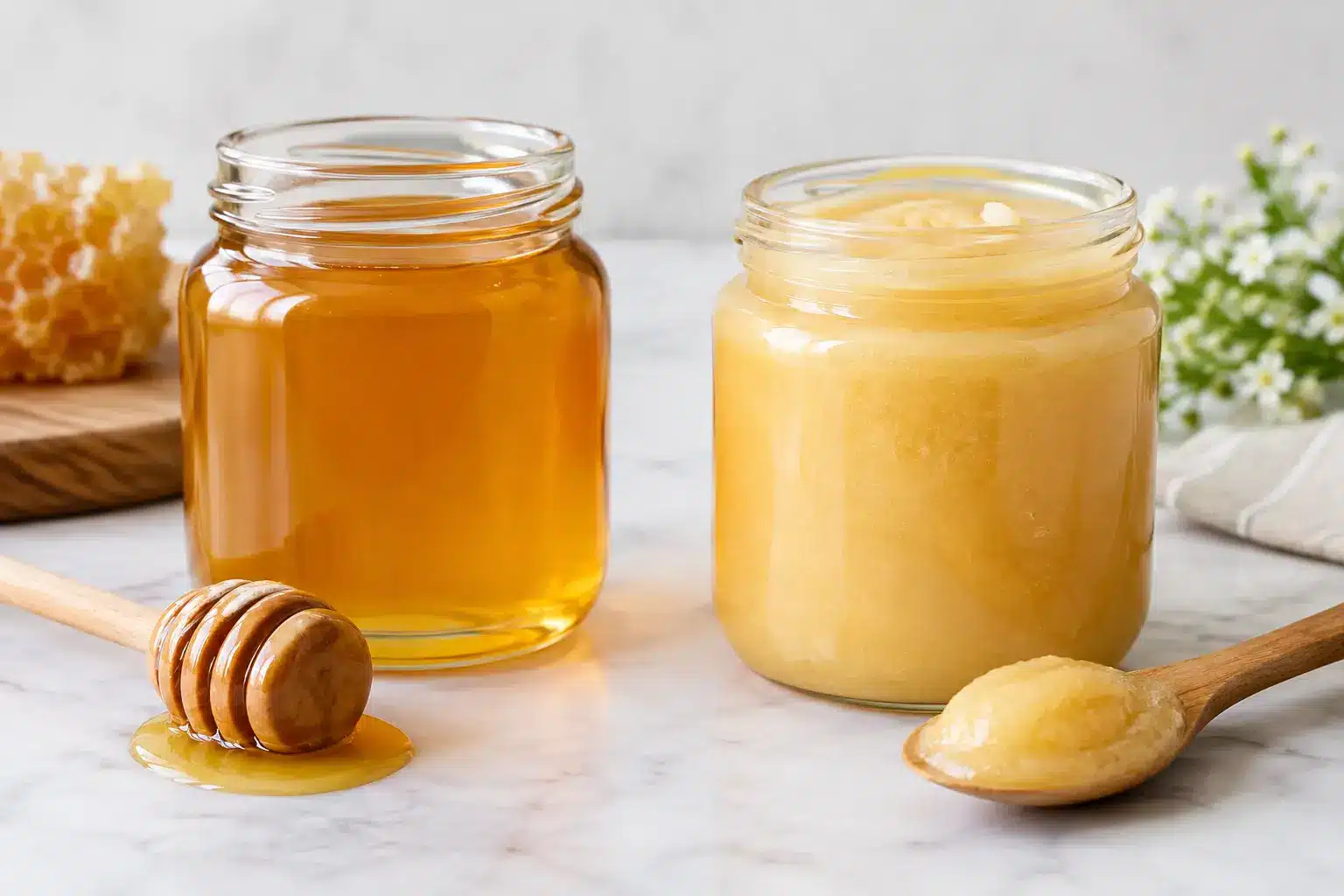
A spoonful of honey can look completely different from one jar to the next. One pours in a warm amber ribbon; another is pale, smooth, and spreadable like soft butter. In the conversation around liquid versus creamed honey, neither form is automatically more pure, more natural, or more valuable. The meaningful difference is how the honey has crystallized and how you plan to enjoy it.
For lovers of authentic Yemeni Sidr honey, this distinction matters because exceptional honey is appreciated with all the senses. Its color, aroma, body, and finish tell a story of nectar, landscape, season, and traditional harvest. Understanding the texture helps you choose Nature’s Gold with confidence rather than mistaking a natural change for a flaw.
What Is Liquid Honey?
Liquid honey is honey in its free-flowing state. Freshly harvested honey is generally liquid, though its thickness varies widely. Some varieties pour easily, while others move slowly through the jar with a rich, syrupy weight.
The texture comes from honey’s natural balance of sugars, primarily fructose and glucose, along with its modest water content. Honey with a higher proportion of fructose often remains liquid longer. Honey with more glucose is more likely to crystallize sooner. Temperature, pollen content, storage conditions, and even the tiny natural particles in raw honey can also influence when crystals form.
Liquid honey is the familiar choice for stirring into tea, drizzling over yogurt, finishing warm bread, or adding a measured spoonful to a morning routine. It shows off honey’s color beautifully, from light gold to deep amber and beyond. With prized Sidr honey, the slow pour and complex aroma are part of the experience.
A liquid appearance does not by itself prove that a honey is raw, rare, or pure. Some commercial products are heavily filtered or heat-treated to delay crystallization and keep a uniform look on supermarket shelves. That is why origin, ingredient integrity, and transparent sourcing matter more than a jar’s texture alone.
What Is Creamed Honey?
Creamed honey, also called whipped honey, spun honey, or set honey, contains no dairy and no added cream. It is simply honey that has been guided into forming very fine, uniform crystals. When made well, those tiny crystals create a velvety, spreadable texture rather than a grainy one.
Traditional creamed honey is often produced by blending a small amount of finely crystallized honey into liquid honey. The mixture is then held at a carefully controlled cool temperature while the fine crystals multiply. This process encourages a smooth set instead of the larger, uneven crystals that can develop naturally over time.
Its flavor is still honey’s flavor. Yet the texture can change how that flavor is perceived. Creamed honey melts slowly on the tongue, which may make its floral, caramel-like, herbal, or fruity notes seem fuller and longer lasting. It is especially lovely on toast, biscuits, pancakes, apple slices, and cheese boards because it stays where you spread it.
Creamed honey is not inferior honey, and liquid honey is not inherently more authentic. The best choice depends on whether you want a pourable finish or a luxurious spread.
Liquid Versus Creamed Honey: The Real Differences
The first difference is practical. Liquid honey is easier to drizzle, stir, and measure in drinks or dressings. Creamed honey is easier to spread and less likely to run off a spoon or soak unevenly into bread. Families often enjoy keeping both styles on hand for different moments.
The second difference is crystal size. Liquid honey has not yet formed enough visible crystals to set. Creamed honey has been intentionally crystallized into very small crystals. Naturally crystallized liquid honey may develop larger crystals, creating a firmer or slightly gritty texture. That does not make it unsafe or spoiled. It simply means the crystallization happened without the controlled method used for creamed honey.
The third difference is appearance. Liquid honey ranges from transparent gold to dark, opaque amber. Creamed honey usually looks lighter because countless small crystals scatter light. A paler color after creaming does not mean the honey has been diluted.
Nutritionally, the distinction is usually small when both products begin with the same pure honey. Each is naturally sweet and energy-dense, and each should be enjoyed thoughtfully as part of a balanced diet. The bigger question is whether the jar contains only honey, without added syrups, artificial flavors, or unnecessary fillers.
Is Crystallized Honey the Same as Creamed Honey?
They are related, but they are not always the same thing. Crystallized honey is any honey that has naturally begun to form sugar crystals. It may remain partly liquid, become firm, or feel coarse depending on the crystals’ size and the conditions in which it was stored.
Creamed honey is deliberately crystallized for a consistent, smooth result. Think of natural crystallization as honey following its own course, while creaming gently directs that natural process toward a particular texture.
A jar of authentic Sidr honey may crystallize over time, especially in cooler conditions. This is a normal characteristic of real honey, not evidence that it has gone bad. In fact, honey that never changes over a very long period may have been processed in ways that reduce the natural particles that encourage crystallization. That alone is not a final test of quality, but it is a helpful reminder to look beyond appearances.
Which Texture Is Best for Sidr Honey?
Sidr honey is treasured for far more than sweetness. Sourced from the nectar of ancient Sidr trees in Yemen, it is admired for its depth, distinctive aroma, and rich character. For many people, enjoying it in liquid form is the clearest way to experience its original body and slow, elegant pour.
That said, a smooth crystallized or creamed texture can be deeply enjoyable too. If you prefer honey on warm toast, alongside tahini, or as a refined addition to a breakfast board, a spreadable consistency has genuine appeal. Texture is a matter of use and preference, not a simple ranking of better or worse.
When choosing premium honey, focus first on what remains unchanged in either form: a single, honest ingredient; clear origin; careful handling; and flavor that reflects the land where the bees foraged. Authenticity begins at the source, Straight from the Heart of Yemen, not with a promise that honey must always look perfectly liquid.
How to Store Honey Without Losing Its Character
Keep honey tightly sealed in a cool, dry cupboard away from direct sunlight. Room temperature is generally best for preserving an easy-to-use consistency. Refrigeration often speeds crystallization, so it is usually unnecessary.
If liquid honey crystallizes and you prefer it smooth again, place the closed jar in warm water and let it warm gradually. Replace the water as it cools, and be patient. Avoid boiling water, microwaving the jar, or aggressive high heat, which can dull the delicate aroma and character that make premium honey special.
For creamed honey, cool cupboard storage helps preserve its smooth, set texture. Stirring is not needed, and a clean, dry spoon helps protect the honey from introducing moisture into the jar.
Choose Honey for the Moment You Want to Create
Choose liquid honey when you want a golden drizzle in tea, over fruit, or across warm pastries. Choose creamed honey when you want a soft, elegant spread that turns an ordinary slice of bread into something worth savoring. And when a treasured jar of Sidr honey begins to crystallize naturally, welcome it as one of honey’s honest transformations. The finest honey does not need to be forced into one perfect appearance to remain a gift of place, tradition, and patient craftsmanship.