

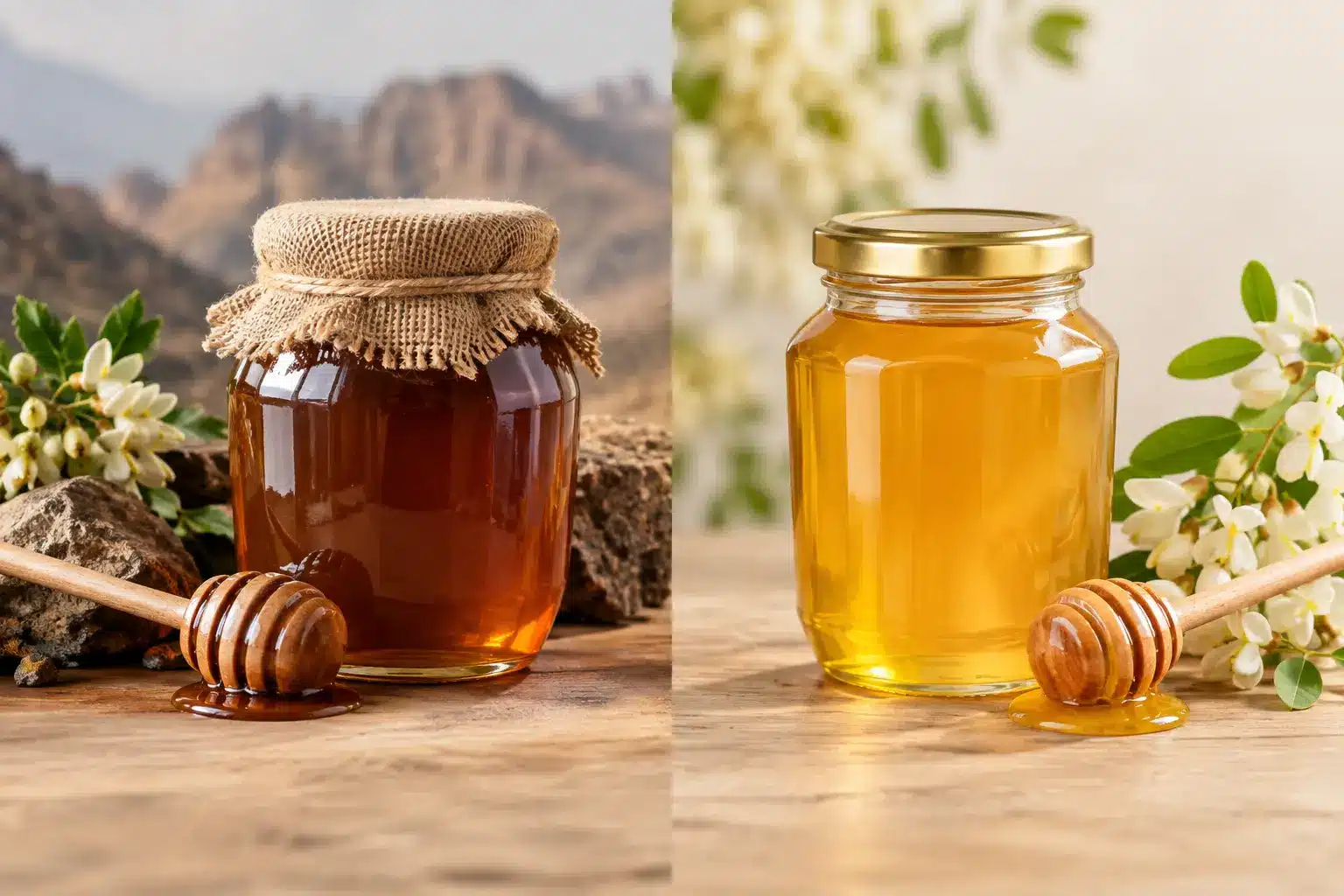
A jar can be golden, raw, and beautifully labeled, yet tell a completely different story from the next one. When considering Yemeni honey versus acacia, the real difference is not simply color or sweetness. It is the flower source, the landscape, the harvesting tradition, and the kind of experience you want from every spoonful.
Acacia honey is admired for its pale appearance and mild, easy sweetness. Yemeni Sidr honey is treasured for a deeper character shaped by Yemen’s ancient Sidr trees and time-honored harvesting practices. Neither belongs in the same category as an ordinary blended supermarket honey. But for those seeking Nature’s Gold with a powerful sense of origin, the distinctions matter.
Yemeni Honey Versus Acacia: The Essential Difference
The first distinction is botanical. Acacia honey is generally made from the nectar of black locust blossoms, often called acacia flowers in the honey trade. It is produced in several parts of Europe and North America, and its flavor is known for being clean, light, and delicate.
Authentic Yemeni Sidr honey comes from bees that forage around Sidr trees, also known as jujube trees, in Yemen’s rugged valleys and untouched landscapes. The name Sidr refers to the tree itself, not merely a color or a style of honey. Its origin is inseparable from its identity.
This is why a true comparison goes beyond asking which honey is sweeter. Acacia offers a gentle, neutral profile that fits easily into almost any recipe. Yemeni Sidr honey brings a richer taste, a more pronounced aroma, and a heritage that makes each jar feel like a direct connection to the Heart of Yemen.
Flavor: Delicate Sweetness or Full-Bodied Depth?
Acacia honey has a light floral taste with a soft vanilla-like sweetness. It tends not to overwhelm tea, yogurt, fresh fruit, or baked goods. For someone who wants a honey that quietly sweetens without changing the flavor of a dish, acacia is often a natural fit.
Yemeni Sidr honey is more expressive. Its flavor can be warm, caramel-like, floral, and gently earthy, with notes that linger longer than those of a mild honey. The exact taste may vary with the region, season, and surrounding vegetation, which is part of what makes traditionally harvested Sidr honey so distinctive.
That depth is especially appealing when honey is meant to be enjoyed on its own. A spoonful of Sidr honey, spread over warm bread, paired with cheese, or stirred into a cup of tea becomes a central ingredient rather than a background sweetener. It is a small daily ritual with real presence.
Appearance and Texture Tell Different Stories
Acacia honey is typically very pale, sometimes almost transparent, with a smooth, fluid consistency. One reason it is popular is its high fructose content, which means it often stays liquid for a long time. For customers who prefer a clear pourable honey, this can be a practical advantage.
Yemeni Sidr honey is usually darker, ranging from golden amber to rich brown. It is often denser and more luxurious on the spoon. A thicker texture does not automatically prove quality, just as a pale color does not mean a honey is inferior. Still, the color and body of Sidr honey reflect its distinctive floral source and naturally concentrated character.
Crystallization should also be understood correctly. Pure honey can crystallize over time, and this is a natural process rather than a defect. Acacia honey crystallizes slowly compared with many varieties. Sidr honey may remain smooth for a long period or crystallize depending on its natural composition and storage conditions. Neither outcome alone should be used as a test of authenticity.
Purity Is More Important Than a Honey Name
The words “acacia” and “Yemeni” can appear on labels, but origin claims deserve care. Honey quality depends on responsible sourcing, careful handling, and a commitment to keeping the product free from unnecessary additives, syrups, and blends.
For acacia honey, buyers should look for a clearly named country or region of origin, straightforward ingredient information, and a producer willing to explain the floral source. The same standard applies to Sidr honey, with an even greater need for transparency because genuine Yemeni Sidr is rare and highly sought after.
Authentic Sidr honey should be presented as honey, full stop. It does not need artificial flavors, added sweeteners, or complicated ingredient lists to earn its place in the pantry. Its value comes from the natural work of bees, the Sidr blossoms, and the traditional care involved in gathering it.
At Yemen Honey Store, that standard is simple: 100% natural, unprocessed, additive-free Yemeni Sidr honey sourced for people who want the real thing. For a product with such cultural and culinary value, purity should never be an afterthought.
Everyday Uses: Where Each Honey Shines
Acacia honey is especially useful when you want sweetness without a strong honey flavor. Its mild profile works beautifully in iced tea, salad dressings, light sauces, and recipes where the other ingredients should remain in focus. It is also an easy choice for children and family meals, provided honey is never given to children under 12 months old.
Yemeni Sidr honey is ideal when you want to savor the honey itself. Add it to warm water with lemon, drizzle it over oatmeal, enjoy it with tahini, or take a spoonful as part of a mindful morning routine. Its richness can also elevate yogurt, toast, nuts, and charcuterie boards.
Both can replace refined sugar in simple ways, although honey is still a sweetener and is best enjoyed thoughtfully. The right choice depends on whether you want quiet sweetness or a more memorable flavor with deep roots.
Wellness Value Without the Hype
Honey has long been valued in traditional food cultures as a source of natural energy and comfort. It contains naturally occurring sugars along with trace compounds that vary by floral source. Many people reach for honey to soothe a dry throat, sweeten a warm drink, or add a comforting touch to their daily routines.
It is wise, however, to separate heritage from exaggerated promises. No honey should be treated as a replacement for medical care, a balanced diet, or professional health guidance. Its place is as a wholesome food, one that can bring both enjoyment and a sense of nourishment when chosen with care.
Sidr honey’s appeal is not that it needs dramatic claims. Its strength is its natural integrity: a rare single-origin treasure from Yemen, valued for generations for its taste, purity, and traditional significance.
Which Honey Should You Choose?
Choose acacia if your priority is a very mild, light-colored honey that stays fluid and blends effortlessly into drinks and recipes. It is graceful, familiar, and versatile.
Choose Yemeni Sidr honey if you care deeply about origin, fuller flavor, traditional harvesting, and the pleasure of eating a honey with a powerful story behind it. It is a premium culinary choice for gifting, gathering around the table, or making an everyday wellness ritual feel more meaningful.
The best jar is not always the palest, thickest, or most expensive one. It is the one whose source you can trust and whose flavor makes you pause for another spoonful. For those drawn to heritage, purity, and the rare beauty of Yemen’s Sidr trees, that pause is where Yemeni honey truly stands apart.