

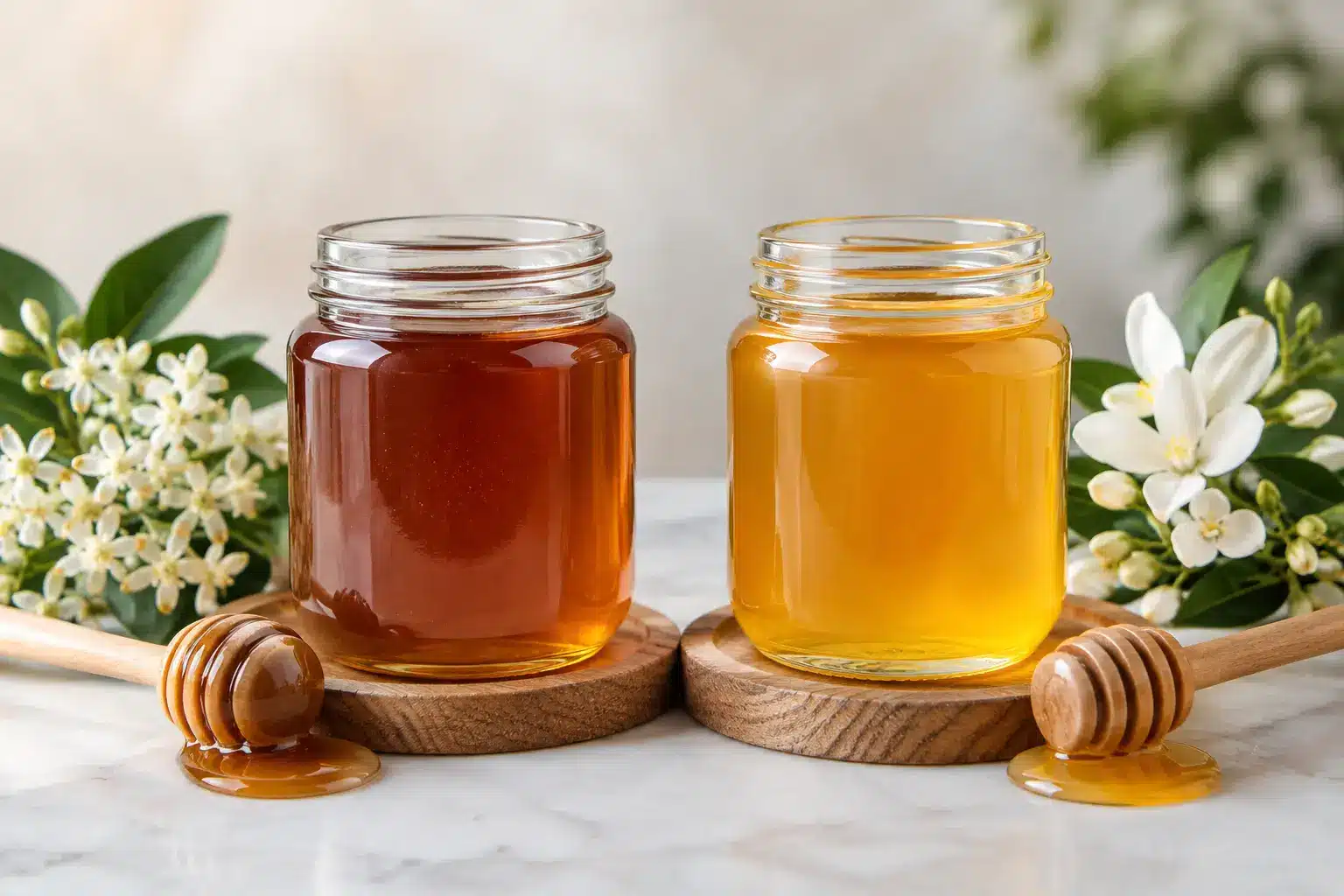
A spoonful of honey can carry the character of an entire landscape. That is especially true when comparing Sidr honey versus tupelo honey. Both are prized single-origin honeys with devoted followers, yet they come from very different trees, traditions, and parts of the world. One offers the deep, caramel-like richness of Yemen’s ancient valleys; the other is known for its light floral sweetness from the wetlands of the American Southeast.
For anyone choosing honey with care, the question is not simply which one is better. It is which honey belongs in your pantry, your tea, your family’s daily routine, or a meaningful gift.
Sidr Honey Versus Tupelo Honey: The Essential Difference
Sidr honey comes from bees that forage on the blossoms of the Sidr tree, also known as the jujube tree. The most celebrated varieties are harvested in Yemen, where Sidr trees grow in rugged, dry landscapes and traditional beekeeping practices have been passed down through generations. Genuine Yemeni Sidr honey is valued for its rare origin, dense texture, bold aroma, and naturally complex flavor.
Tupelo honey is produced when bees gather nectar from tupelo gum trees, particularly white tupelo trees growing in swampy river regions of Florida and Georgia. It has a lighter color, a delicate floral character, and a famously smooth sweetness. Pure tupelo honey is also limited by geography and bloom season, making it a specialty honey rather than an everyday commodity.
The contrast begins with place. Sidr honey is Straight from the Heart of Yemen, shaped by a dry and ancient landscape. Tupelo honey is shaped by humid wetlands, seasonal flooding, and a distinct Southern American ecosystem. Neither setting is ordinary, and that sense of place is exactly why both honeys are treasured.
Flavor, Color, and Texture
The most noticeable difference between Sidr honey and tupelo honey is the tasting experience.
Sidr honey has depth and warmth
Authentic Sidr honey is usually amber to deep golden brown, though its color can vary with season and region. Its aroma is rich and unmistakable, often carrying notes that people describe as caramel-like, woody, fruity, or gently herbal. The sweetness feels full rather than sharp, with a lasting finish that makes a small spoonful feel satisfying.
Its texture is often thick and luxurious. This makes Sidr honey especially enjoyable on its own, stirred into warm water, spooned over yogurt, or paired with bread, cheese, and nuts. It has the presence of a fine ingredient, not merely a sweetener.
Tupelo honey is light and floral
Tupelo honey tends to be pale gold, sometimes nearly transparent. Its flavor is delicate, buttery, and floral, with a clean sweetness that does not overpower mild foods. Many people enjoy it in tea, on biscuits, or drizzled over fresh fruit because it adds sweetness without changing the dish’s character too dramatically.
It is also known for resisting crystallization longer than many other honeys. That quality can make it convenient for people who prefer a pourable honey over time, although storage conditions still matter.
If you enjoy bold flavors that invite you to pause and taste, Sidr honey is likely the more memorable choice. If you prefer a gentle, bright honey that blends quietly into foods and drinks, tupelo may suit your palate.
A Tale of Two Harvest Traditions
Origin matters in premium honey because bees reflect the plants around them. It also matters because the care taken during harvesting, handling, and bottling influences what reaches your table.
Yemeni Sidr honey is tied to a long heritage of beekeeping in regions where Sidr trees have been valued for centuries. Harvests are often seasonal and limited, and the finest honey is handled with respect for its natural character. When Sidr honey is raw or minimally processed, it retains the distinct aroma, texture, and flavor that make it Nature’s Gold.
Tupelo honey depends on an equally specific natural event: a brief flowering period in tupelo wetlands. Beekeepers must position hives carefully and time their harvest closely to produce honey that is primarily tupelo nectar. Weather can affect the bloom, which means supply and flavor can shift from season to season.
This is where shoppers should look beyond a label that simply says “pure honey.” Single-origin honey deserves clear sourcing. For Sidr, ask whether it is genuinely sourced from Yemen and whether the seller can speak clearly about its origin. For tupelo, seek transparent information about where it was harvested and whether it is predominantly tupelo nectar.
Purity Is More Important Than a Famous Name
Sidr and tupelo are both names that can command premium prices. Unfortunately, that also means shoppers should be alert to vague marketing, blends, heavy filtering, and unnecessary additives.
A high-quality honey should have one ingredient: honey. It should not need corn syrup, artificial flavors, added sugar, or a long ingredient list. Color alone cannot prove quality, and neither can an unusually low price. Real specialty honey is shaped by limited blooms, careful harvesting, and the distance it travels from hive to home.
For Sidr honey, a thick consistency and rich taste are common markers people appreciate, but authenticity is about more than appearance. The strongest sign is a seller committed to origin transparency and natural handling. At Yemen Honey Store, the focus is on 100% natural, additive-free Yemeni Sidr honey that honors the land and heritage behind every jar.
Which Honey Is Better for Daily Use?
The honest answer is that it depends on what you value most.
Choose Sidr honey when you want a richer flavor, a premium ritual, and a honey with deep Yemeni heritage. It is a beautiful choice for a morning spoonful, warm milk or tea, wholesome breakfasts, and recipes where honey should be tasted rather than hidden. Many families also keep it on hand as a naturally sweet addition to wellness routines, while remembering that honey is still a source of sugar and is best enjoyed in sensible portions.
Choose tupelo honey when you want a mild, floral honey that pours easily and works quietly in lighter recipes. It can be especially appealing for people who find darker honeys too intense or who want sweetness without a strong honey flavor.
Neither honey should be given to children under 12 months of age. For older children and adults, both can be part of a balanced diet, but honey is not a substitute for medical care or a cure for illness.
Best Ways to Enjoy Sidr Honey
Sidr honey rewards simple pairings. Let its flavor lead rather than burying it under too many ingredients. A spoonful before breakfast, a swirl into plain Greek yogurt, or a drizzle over warm oatmeal lets its natural depth come through.
It is also exceptional with tahini, toasted bread, dates, walnuts, and aged cheeses. In warm tea, use water that is comfortably warm rather than boiling if you want to preserve the honey’s delicate aroma. For a thoughtful gift, Sidr honey offers something more personal than an ordinary pantry staple: a taste of Yemen’s living beekeeping heritage.
Tupelo honey has its own strengths in the kitchen, particularly with citrus, fresh berries, light pastries, and mild herbal teas. The two honeys can even belong in the same home. One can be your light, everyday drizzle, while the other is reserved for moments when you want something deeper and more distinctive.
The Choice Comes Down to Character
Tupelo honey is elegant in its restraint. Sidr honey is generous in its presence. If your table calls for a pale, delicate sweetness, tupelo is a lovely choice. But if you are drawn to a honey with a profound sense of origin, a rich golden character, and the heritage of Yemen in every spoonful, Sidr honey offers an experience that stays with you.
Keep a jar where you can see it, taste it slowly, and let a simple daily ritual remind you that the finest foods often begin with a specific tree, a careful beekeeper, and a place worth honoring.