A jar labeled Sidr honey can tell a much richer story than a jar simply labeled “honey.” The monofloral honey meaning begins with one dominant nectar source – the flower or tree that gives a honey its recognizable taste, aroma, color, and character. For those seeking genuine Yemeni Sidr honey, that source is the ancient Sidr tree, treasured across Yemen for generations.
Monofloral honey is not about making honey seem complicated. It is about knowing where its flavor comes from, how it was gathered, and why that origin matters. When you choose a honey with a clear botanical identity, you are choosing more than sweetness. You are choosing a place, a season, and the work of bees foraging in a particular landscape.
What Does Monofloral Honey Mean?
Monofloral honey is honey made primarily from the nectar of one plant species. You may also hear it called single-flower or single-origin botanical honey. Examples include orange blossom, clover, acacia, manuka, and Sidr honey.
The word “primarily” matters. Bees are free to forage, and no beekeeper can direct every bee to a single bloom. Even hives placed near vast groves of Sidr trees may contain small amounts of nectar or pollen from nearby wildflowers. For this reason, authentic monofloral honey is not necessarily 100% from one flower. Instead, its dominant nectar and pollen profile should clearly reflect the named botanical source.
That distinction is one reason monofloral honey is so valued. It respects the reality of nature while giving consumers a meaningful way to understand the honey’s character. A well-produced monofloral honey should taste, smell, and look consistent with its floral source, with harvest and testing practices that support the claim.
Why a Single Nectar Source Changes Honey
Nectar is not identical from one plant to another. Each flowering plant provides a different mix of natural sugars, aromatic compounds, minerals, and plant-derived elements. Bees transform that nectar into honey, but the original floral source still leaves its signature behind.
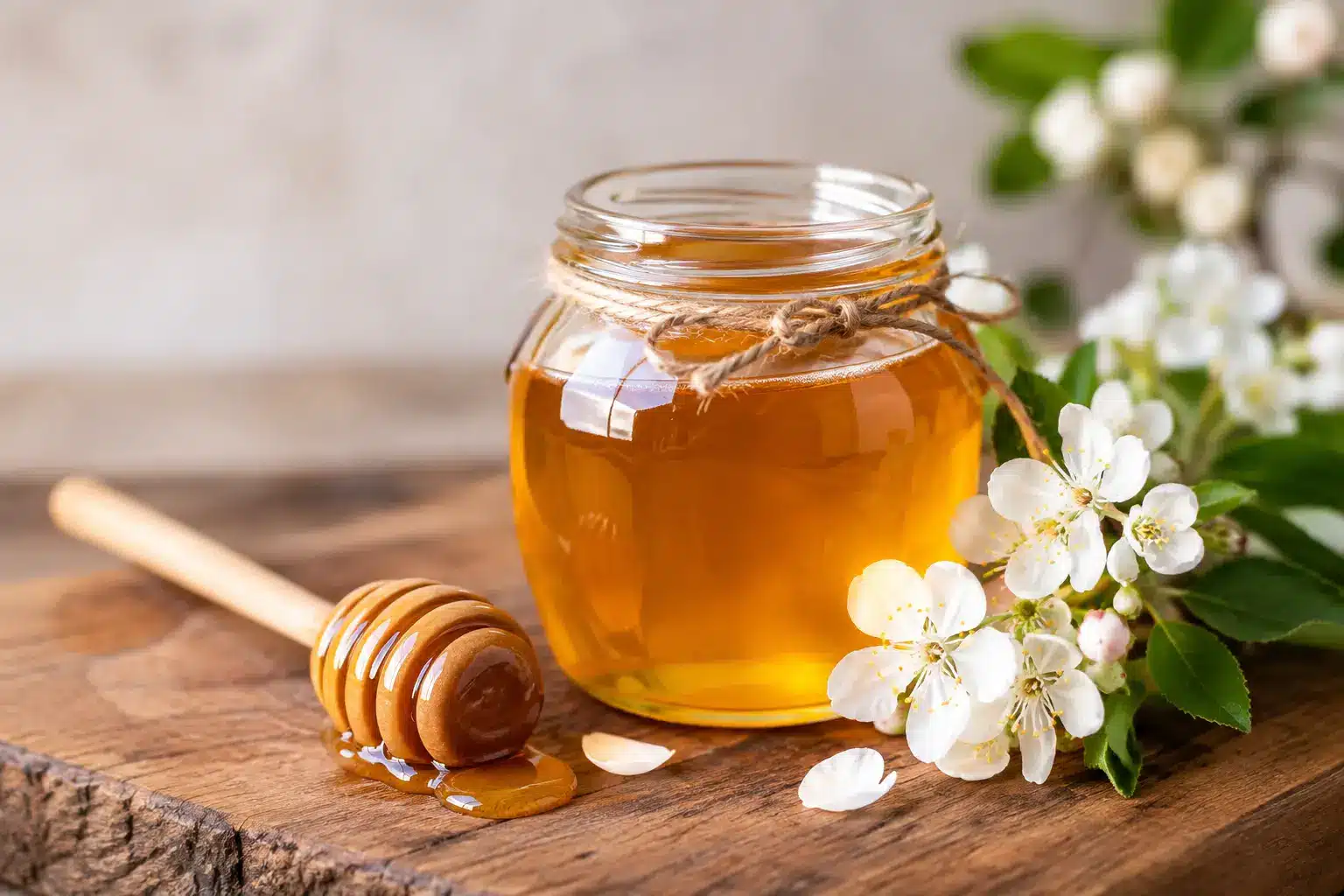
Clover honey is often mild and familiar. Orange blossom honey may have a light citrus-floral perfume. Sidr honey is known for a fuller, deeper profile: rich sweetness, warm notes, and a distinctive herbal character that feels grounded rather than delicate. Its color may range from golden amber to darker brown, depending on the region, climate, and harvest.
This is why monofloral honey appeals to people who care about food the way they care about coffee, olive oil, tea, or wine. The flavor is shaped by terroir – the natural conditions of a place. Rainfall, soil, elevation, temperature, surrounding vegetation, and flowering season all play a role. Two authentic Sidr honeys can share a botanical source yet still have subtle differences because they come from different valleys or harvests.
Sidr Honey and Yemen’s Living Heritage
Sidr honey comes from bees that forage on the blossoms of the Sidr tree, also known as Ziziphus spina-christi. These resilient trees grow in parts of Yemen’s rugged landscapes, where traditional beekeeping knowledge has been passed through families and communities over many generations.
Yemeni Sidr honey stands apart not simply because it is rare, but because of the conditions behind it. The tree, the season, the remote terrain, and the careful harvest all matter. When honey is collected with respect for the hive and handled without unnecessary processing, it keeps the qualities that make it Nature’s Gold: its naturally occurring aroma, texture, and unmistakable depth of flavor.
For culturally connected families, Sidr honey can carry the comfort of a familiar table and a cherished tradition. For those discovering it for the first time, it offers an opportunity to taste a food with a true sense of origin – straight from the heart of Yemen.
Monofloral Honey Meaning vs. Raw, Pure, and Organic
These terms are often used together, but they do not mean the same thing. Understanding the difference helps you shop with confidence.
Monofloral describes the dominant floral source. It answers the question: What did the bees mostly forage on?
Pure honey means the product should contain honey without added syrups, artificial sweeteners, flavors, or fillers. It answers the question: What is in the jar?
Raw honey generally refers to honey that has not been heavily heated or ultra-filtered. However, there is no single universal definition for “raw,” so it is wise to look for a seller that clearly explains its handling practices.
Organic refers to a certification process and agricultural standards. It can be difficult to certify honey as organic because bees naturally travel beyond a beekeeper’s immediate control. A honey can be natural, carefully harvested, and exceptionally pure without carrying an organic certification.
A jar can be monofloral and raw, monofloral and filtered, or pure but made from many different floral sources. None of these terms alone tells the full story. The strongest sign of quality is transparency: a clear botanical name, a named region or country of origin, thoughtful harvesting, and a brand willing to stand behind what it sells.
How Can You Tell if Monofloral Honey Is Authentic?
The label is a starting point, not the final proof. Premium honey deserves a closer look, especially when you are buying a specialty product such as Sidr honey.
First, look for specific origin information. “Imported honey” is vague. “Yemeni Sidr honey” gives you a botanical and geographic claim that can be evaluated. The more clearly a producer identifies the source, harvest region, and honey type, the better equipped you are to make an informed choice.
Next, pay attention to the ingredient statement. Genuine specialty honey should have one ingredient: honey. A short ingredient list is not a marketing trick here. It is a meaningful standard of purity.
Color and texture can offer clues, but they should never be the only test. Natural honey varies from batch to batch. Some honeys crystallize quickly, while others remain liquid longer due to their natural sugar balance. Crystallization is not a sign that honey has gone bad or that it is fake. In many cases, it is simply a natural process, particularly in minimally processed honey.
Finally, consider the source’s reputation and story. Specialty honey costs more than mass-market blends because beekeeping, seasonal production, careful handling, and transport from a distinct region require more care. An unusually cheap price for a rare honey is worth questioning. Real origin has value.
The Flavor Experience of Monofloral Sidr Honey
Sidr honey is often enjoyed by the spoonful, but its flavor deserves room to shine in everyday food as well. Try it over warm toast, plain yogurt, oats, or fresh fruit. Stir a small spoonful into tea after the water has cooled slightly, or pair it with nuts and soft cheese for a simple, generous serving.
Because Sidr honey has a bold personality, it can change the taste of a dish more noticeably than mild clover honey. That is a benefit when you want its distinctive character, but it may not be the right choice for every recipe. For delicate baked goods where you want neutral sweetness, a lighter honey may be preferable. For a breakfast ritual, a wellness-inspired pantry, or a thoughtful gift, Sidr’s depth is exactly the point.
Many people also make honey part of a daily routine for natural energy and simple nourishment. Honey is still a source of sugar and should be enjoyed in sensible portions. It should never be given to children under 12 months old, regardless of variety.
Choosing Honey With Confidence
A monofloral label should lead you to ask better questions, not ask you to accept a vague promise. What flower did the bees forage on? Where was the honey produced? Is it free from additives? Has the seller preserved the honey’s natural character and explained its origin with care?
At Yemen Honey Store, authentic Yemeni Sidr honey is valued for exactly these reasons: its connection to a remarkable tree, a proud beekeeping heritage, and a flavor that cannot be separated from its homeland. It is a premium food, but it is also a reminder that the best ingredients often have a clear story.
When you reach for honey next, choose one whose origin you can name. A spoonful of true monofloral Sidr honey brings the landscape, blossoms, and patient work behind the harvest a little closer to your table.