
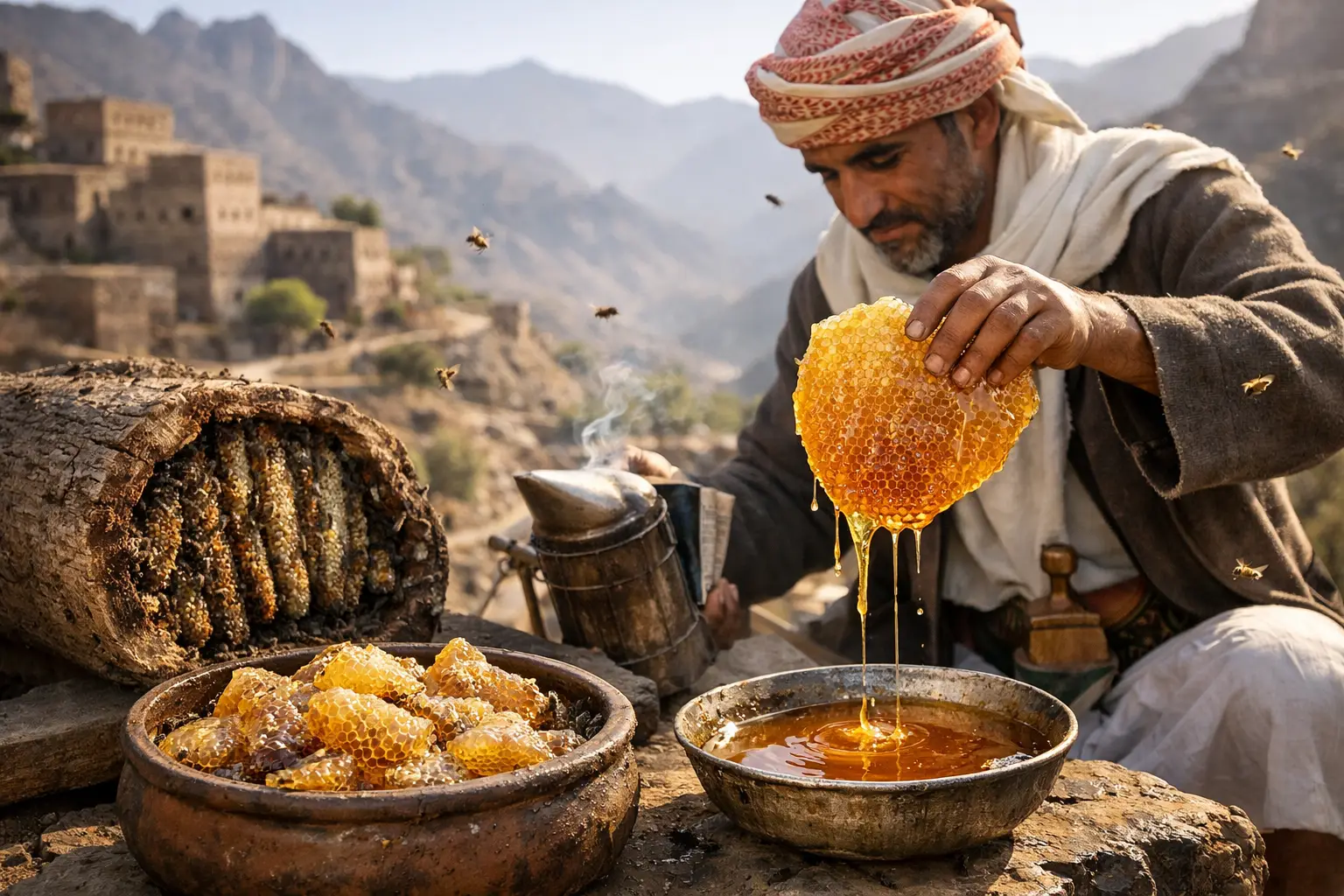
A jar of true Sidr honey begins long before it reaches an American kitchen. Traditional Yemeni honey harvesting is a seasonal craft shaped by mountain valleys, flowering Sidr trees, skilled beekeepers, and a deep respect for what the bees produce. The result is not simply honey. It is Nature’s Gold, carrying the character of the land where it was gathered.
For people who care about purity, origin, and foods with a real story, the harvesting process matters. It helps explain why genuine Yemeni Sidr honey is prized for its rich aroma, deep golden color, distinctive taste, and rare status among specialty honeys.
Traditional Yemeni Honey Harvesting Starts With the Land
Yemen’s varied landscape gives its honey a sense of place. Sidr trees, also known as lote trees, grow in areas that can be dry, rugged, and remote. When the trees bloom, bees gather their nectar from the small, fragrant Sidr flowers. That floral source is central to the honey’s identity.
The exact character of a harvest can differ from one region and season to another. Rainfall, temperature, the timing of the Sidr bloom, and nearby vegetation all influence nectar availability. A particularly dry season may mean less honey, while a strong bloom can bring a more generous harvest. This natural variation is part of what makes authentic Sidr honey special. It is not manufactured to taste identical year after year.
Beekeepers must also work with the landscape rather than force it. In many Yemeni communities, apiary sites are selected for their access to flowering trees, shelter from harsh weather, and distance from disruptive activity. Keeping hives near a desirable nectar source helps preserve the floral character that buyers seek in a true Sidr harvest.
The Heritage Behind Yemeni Honey Hives
Traditional beekeeping knowledge in Yemen is often passed through families and local communities. The methods may vary by region, but the guiding principle remains consistent: care for the colony, understand the flowering cycle, and take honey without damaging the bees’ ability to continue.
Some beekeepers use simple, time-tested hives made from local materials, while others use more modern hive structures alongside traditional practices. Neither approach alone guarantees quality. What matters most is the beekeeper’s experience, the bees’ forage, careful handling, and an honest approach to the final honey.
This is an important distinction for shoppers. Words like “raw,” “natural,” and “traditional” can sound reassuring, but they are most meaningful when tied to transparent sourcing. Genuine origin is more than a label. It is the connection between a specific flowering landscape, responsible harvesting, and honey that is not diluted with syrups, fillers, or unnecessary additives.
Timing the Sidr Bloom
Harvesting too early can mean honey has not fully matured in the comb. Harvesting too late may leave less available for the beekeeper or expose the comb to changing conditions. Experienced beekeepers watch their colonies closely, looking for capped honeycomb, which signals that bees have reduced the nectar’s moisture and sealed it for storage.
The Sidr flowering period is precious and limited. That is one reason pure Sidr honey commands a premium. Supply depends on nature, not on an industrial production schedule.
How Honey Is Removed From the Comb
At harvest time, beekeepers carefully remove honey-filled combs while leaving enough stores for the bees. The work calls for patience. A rushed or careless harvest can disturb colonies, damage comb, or compromise the quality of the honey collected.
The comb is then opened and the honey is separated using methods suited to the apiary and local tradition. It may be drained, pressed, or extracted with equipment designed to remove honey from the comb. The goal is simple: collect the honey while preserving its natural flavor, aroma, and texture.
After extraction, honey is commonly strained to remove larger pieces of wax or other natural hive material. Straining is not the same as heavy processing. A gently strained honey can still retain the qualities consumers value in minimally handled honey, including its naturally occurring flavor compounds and pollen traces.
Heat is where careful handling becomes especially important. Excessive heating can alter honey’s delicate aroma and flavor, and it may reduce the character that makes a specialty harvest worth seeking. Premium Sidr honey is valued because it is handled with restraint, not because it is forced into a uniform, mass-market appearance.
That said, natural honey can change over time. It may darken slightly, become thicker in cooler temperatures, or crystallize. These changes are normal and do not automatically signal poor quality. Crystallization is a natural process that depends on the honey’s composition and storage conditions. Gentle warming in a bowl of warm water can soften crystallized honey without harsh treatment.
Why Purity Matters After the Harvest
The journey from a Yemeni apiary to your pantry includes collection, storage, packaging, and transport. Each step can protect or weaken the honey’s integrity. For this reason, discerning buyers should look for honey with a clear botanical and geographic story, straightforward ingredients, and no vague blending language.
Pure Sidr honey should contain one ingredient: honey. It does not need artificial flavors, corn syrup, refined sugar, or preservatives to be appealing. Its richness comes from the nectar, the bees, and the seasonal conditions of its origin.
Color alone is not a perfect test of authenticity. Sidr honey is often amber to deep golden-brown, but shade can vary naturally between harvests. Likewise, thickness can be influenced by temperature and moisture levels. A trustworthy product is better judged through its sourcing transparency, clean ingredient statement, aroma, flavor, and the care behind its handling.
At Yemen Honey Store, that care is central to the promise: authentic Yemeni Sidr honey, chosen for its natural purity and connection to the Heart of Yemen.
What Traditional Harvesting Brings to the Table
The reward of traditional harvesting is found in the jar. Yemeni Sidr honey is known for a full-bodied sweetness that feels layered rather than flat. Depending on the harvest, you may notice warm caramel notes, a gentle herbal quality, floral depth, and a lingering finish.
Its naturally rich texture also makes it versatile. Spoon it over yogurt, stir it into warm tea, enjoy it with tahini and bread, or use a small amount to bring depth to marinades and dressings. Many families keep it on hand as a more meaningful alternative to ordinary sweeteners, especially when they want something pure and satisfying.
Because this is a premium honey, it is often best enjoyed simply. A spoonful lets you notice what industrial honey can hide: the texture, the aroma, and the unmistakable taste of a particular bloom and place.
Choosing Honey With Respect for Its Origin
Traditional harvesting is not a shortcut to a marketing claim. It is a relationship between beekeeper, bee colony, flowering tree, and season. The best harvests honor that relationship by keeping the honey close to its natural state and by recognizing that nature does not produce identical batches on demand.
When you choose authentic Yemeni Sidr honey, take a moment to taste it slowly. Let its warmth and depth remind you that rare foods are worth knowing by their source, not just by their sweetness.