
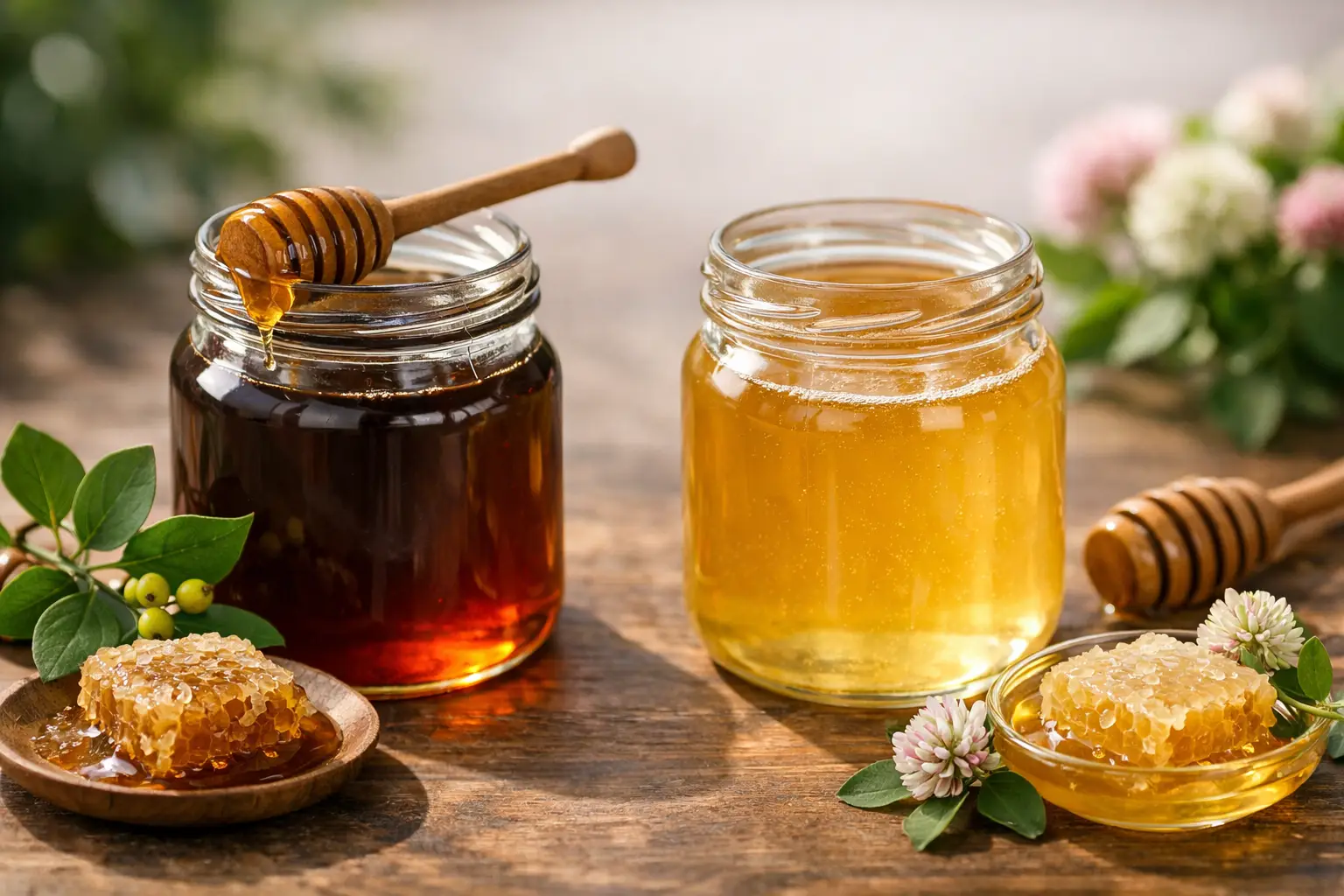
A jar of honey can look simple on the shelf, but its character begins long before it reaches your spoon. In the conversation around sidr honey versus clover honey, the real difference is not merely color or price. It is the flower, the landscape, the harvest tradition, and the experience you want from your honey each day.
Clover honey is familiar, mild, and easy to find. Yemeni Sidr honey is rarer, deeper in flavor, and closely tied to the ancient Sidr trees that grow in Yemen’s distinctive landscapes. Both can have a place in a natural kitchen. The better choice depends on whether you want an everyday sweetener or a more expressive, heritage-rich honey to savor.
Sidr Honey Versus Clover Honey: The Source Matters
Sidr honey is made when bees gather nectar from the blossoms of the Sidr tree, commonly known as the Christ’s thorn jujube tree. In Yemen, these trees grow in dry valleys and mountainous areas where beekeeping traditions have been passed through generations. The limited flowering season and specific growing environment are part of what make authentic Yemeni Sidr honey so prized.
Clover honey comes from bees foraging on clover blossoms. Clover is widely grown across the United States and other temperate regions, so this honey is generally more abundant and accessible. It may be labeled as clover honey even when the bees have visited more than one floral source, depending on local conditions and honey standards.
Neither origin is automatically better in every situation. Clover’s widespread availability makes it practical for cooking, baking, and filling the everyday honey jar. Sidr’s more distinct origin gives it the appeal of a specialty food – Nature’s Gold with a clear connection to place, season, and traditional harvest.
Flavor, Aroma, and Color
The most immediate difference between sidr honey and clover honey is on the palate. Clover honey is typically light, clean, and gently floral. Its mild sweetness makes it a dependable choice when you want honey to blend quietly into tea, yogurt, dressings, or baked goods without changing the flavor profile too much.
Authentic Sidr honey is known for a fuller, more layered taste. Its sweetness often carries warm caramel notes, a gentle herbal quality, and a lingering finish that can feel richer than ordinary table honey. The aroma is usually more pronounced as well, which is why many people enjoy it by the spoonful or drizzled over foods with simple flavors.
Color can offer a clue, though it should never be the only test of quality. Clover honey often ranges from nearly clear to pale gold. Yemeni Sidr honey is commonly amber to deep golden-brown, with a luminous density that reflects its concentrated character. Natural color can vary with rainfall, region, flowering conditions, and storage, so a darker jar is not proof of authenticity by itself.
A matter of preference, not just sweetness
Choose clover honey if you prefer a restrained sweetness that disappears easily into a recipe. Choose Sidr honey if you want the honey itself to be part of the meal. A spoonful over warm bread, plain Greek yogurt, oatmeal, tahini, or a cheese board can turn a small moment into something more memorable.
Texture and Crystallization
Fresh honey can be pourable, thick, silky, or almost spreadable. Sidr honey is often admired for its dense, smooth body. Its viscosity can make it feel especially luxurious, particularly when enjoyed slowly from a spoon. Clover honey is usually lighter in body, although its texture varies based on temperature and the ratio of natural sugars within the jar.
Crystallization is another point where shoppers sometimes become concerned unnecessarily. Pure honey naturally crystallizes over time, and clover honey is especially likely to do so because of its sugar composition. It may become creamy, grainy, or firm more quickly than some darker honeys.
Sidr honey can crystallize too. That change does not mean the honey has gone bad or contains additives. If you prefer a smoother consistency, place the sealed jar in warm water and allow it to soften gradually. Avoid overheating honey, since intense heat can diminish the delicate aroma and natural qualities that make specialty honey worth choosing.
Nutrition and Natural Wellness Use
All honey is primarily a natural source of carbohydrates, which makes it a convenient source of quick energy. Both Sidr and clover honey contain naturally occurring sugars along with small amounts of trace compounds that vary according to floral source, soil, climate, and processing.
Sidr honey has long held a respected place in Yemeni and Middle Eastern food traditions, where it is enjoyed as both a nourishing food and part of everyday wellness routines. Many people choose it for its rich taste, naturally occurring antioxidants, and minimal-ingredient appeal. A spoonful in warm water, tea, or milk is a cherished ritual in many homes.
Still, honey is honey: it is best enjoyed thoughtfully as part of a balanced diet. It is not a replacement for medical care, and it should never be given to children under 12 months old. If you manage blood sugar or follow a medically prescribed diet, speak with a qualified healthcare professional about the amount that fits your needs.
The strongest wellness advantage of either option may be choosing a honey you trust. A single-ingredient product with clear sourcing, no artificial flavors, and no unnecessary additives gives you confidence about what is on your table.
Why Authenticity Is Especially Important With Sidr Honey
Because Yemeni Sidr honey is rare and sought after, origin transparency matters. Terms such as “Sidr-style,” “Sidr blend,” or “jujube honey” do not necessarily mean a jar contains pure Yemeni Sidr honey. They may refer to a different region, a mixed floral source, or a product blended with other honey.
When buying Sidr honey, look beyond a beautiful label. Ask where it was harvested, whether the source is specifically Yemen, and whether the seller can clearly describe the product’s origin and handling. A trustworthy specialty seller should be proud to explain its sourcing rather than relying only on broad wellness language.
At Yemen Honey Store, the focus is on genuine Yemeni Sidr honey – straight from the heart of Yemen and presented without additives or unnecessary processing. That direct connection to origin is central to the experience. You are not simply choosing a sweetener. You are bringing home a product shaped by a particular land and a living beekeeping heritage.
When Clover Honey Is the Better Choice
Premium does not mean Sidr honey needs to replace every other honey in your pantry. Clover honey is a sensible choice for recipes that use larger quantities, such as marinades, homemade granola, muffins, or salad dressings. Its mild profile keeps the rest of the ingredients in focus, and its usual availability makes it easier to use generously.
It also works well for households that are still learning what they enjoy. If someone prefers a delicate, familiar honey flavor, clover can be a comfortable starting point. A quality clover honey with a transparent source is still a beautiful natural food.
When Sidr Honey Earns Its Place
Sidr honey shines when flavor, origin, and ritual matter. Keep it for moments when you want to taste the difference: a morning spoonful, an afternoon cup of tea, a thoughtful gift, or a simple dessert shared with family. Its character is substantial enough that a little often feels satisfying.
It can also be a meaningful choice for shoppers who care deeply about food heritage. Authentic Yemeni Sidr honey carries a story that cannot be replicated by a generic honey blend. The climate, the trees, the beekeepers, and the limited harvest all contribute to its singular identity.
The best jar is the one that matches how you will use it. Keep clover honey nearby for everyday cooking if its gentle flavor suits your kitchen. Save pure Yemeni Sidr honey for the occasions when you want to slow down, taste something extraordinary, and let a small spoonful speak for the place it came from.