
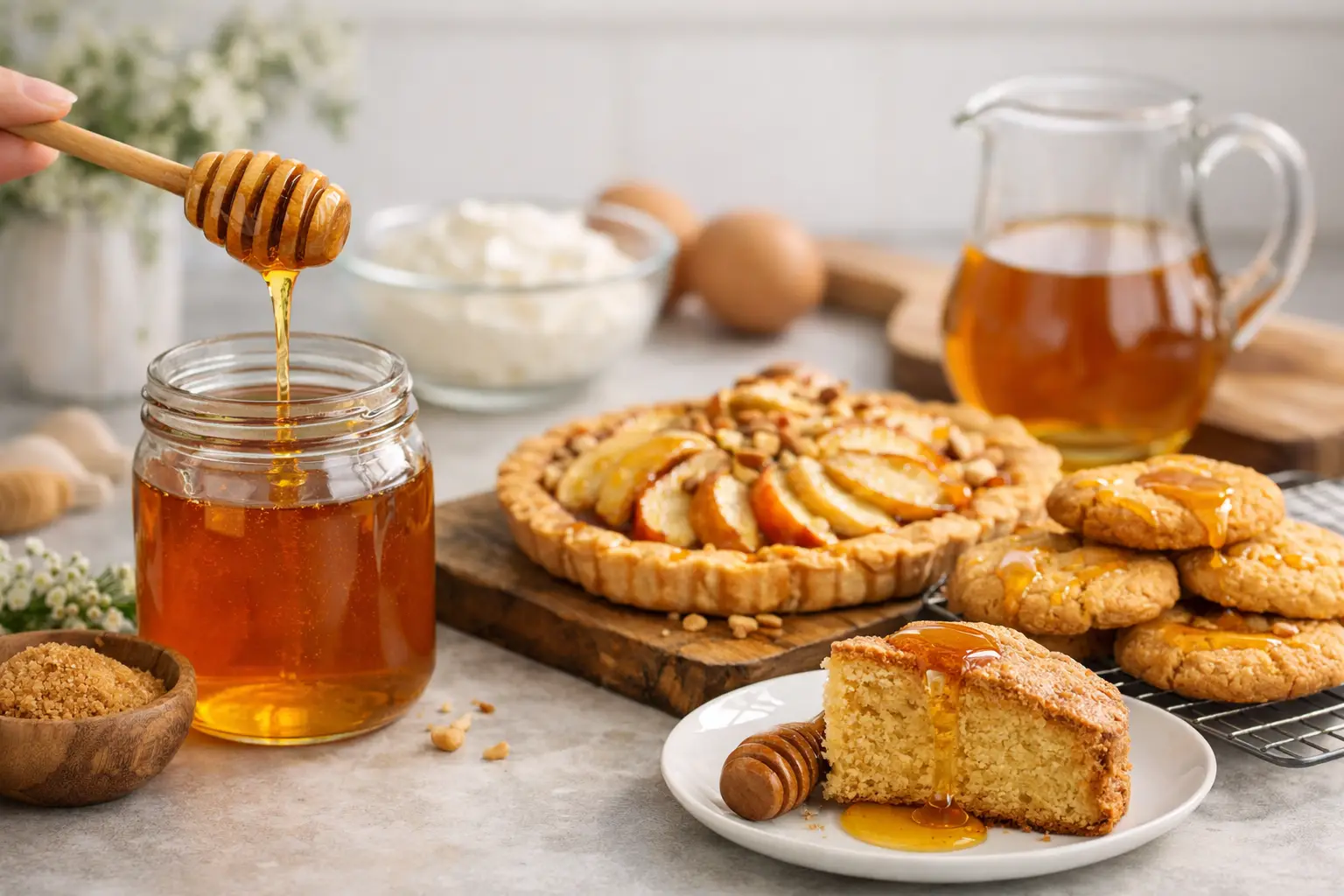
A spoonful of genuine Sidr honey carries more than sweetness. It brings deep caramel notes, gentle florals, and the distinctive character of Yemen’s ancient Sidr trees. In sidr honey baking, that rich flavor can turn a simple loaf cake, breakfast muffin, or roasted fruit dessert into something worth sharing.
Because authentic Yemeni Sidr honey is rare, pure, and naturally luxurious, it deserves a more thoughtful approach than an ordinary squeeze-bottle sweetener. The goal is not to hide its character under heavy spices or excessive heat. It is to let Nature’s Gold add warmth, moisture, and a memorable finish to recipes your family already loves.
What Makes Sidr Honey Different in Baking
Sidr honey is often darker and fuller-bodied than familiar clover or wildflower varieties. Its profile can range from buttery caramel and toasted nuts to dried fruit and soft herbal notes, depending on the harvest. That depth makes it especially beautiful with ingredients that have their own natural richness: oats, dates, tahini, walnuts, almonds, warm milk, olive oil, and ripe pears.
In baked goods, honey does more than sweeten. Its natural sugars hold onto moisture, helping quick breads and cookies stay tender for longer. It also encourages browning, which is why honey-sweetened cakes can develop a lovely golden crust. A little acidity in honey can react with baking soda, giving certain batters a lighter texture.
There is a trade-off. High heat softens the most delicate flavor notes that make Sidr honey special. A honey cake will still taste delicious, but it will not preserve every nuance you notice when tasting the honey directly from the spoon. For that reason, reserve a small portion for a finishing drizzle, glaze, or whipped topping. You get the comfort of baked honey flavor and the clear, lingering character of pure Sidr in the same bite.
Sidr Honey Baking Swaps That Actually Work
Honey is sweeter and wetter than granulated sugar, so it cannot always be exchanged cup for cup without a few adjustments. For a recipe that calls for 1 cup of white sugar, begin with 2/3 to 3/4 cup Sidr honey. Then reduce another liquid in the recipe by about 1/4 cup. Milk, water, juice, or even yogurt can usually be reduced, depending on the batter.
Lower the oven temperature by about 25°F when honey replaces a substantial amount of sugar. This gives the center of the cake or loaf time to bake before the edges become too dark. In many recipes, 325°F works better than 350°F. If the top browns quickly, loosely tent it with foil for the final stretch of baking.
A pinch of baking soda is useful in recipes without it already, especially when using a generous amount of honey. For every cup of honey, about 1/4 teaspoon can help balance acidity and support a tender crumb. Do not add it blindly to delicate recipes, though. A small-batch cookie or a lightly sweetened custard may not need it.
Sidr honey pairs best with recipes where it has room to speak. Vanilla, cinnamon, cardamom, orange zest, coffee, and toasted nuts are good companions. Strong molasses, very dark chocolate, or large amounts of cloves can overpower it. That does not mean those ingredients are off-limits. It simply depends on whether you want Sidr honey to be the star or a quiet background note.
A Better Way to Measure It
Warm honey flows more easily, but avoid overheating it. Set the jar in a bowl of warm water for a few minutes rather than placing it in the microwave. Lightly oil the measuring cup or spoon first, and the honey will release cleanly. Every precious drop belongs in the batter, not left behind on the measuring cup.
Three Recipes Made for Sidr Honey
Sidr Honey Olive Oil Loaf
This is the kind of everyday cake that feels refined without being fussy. Heat the oven to 325°F and line a 9-by-5-inch loaf pan with parchment. Whisk together 1 1/2 cups all-purpose flour, 1 teaspoon baking powder, 1/2 teaspoon baking soda, and 1/2 teaspoon fine salt.
In a separate bowl, whisk 1/2 cup Sidr honey with 1/2 cup extra-virgin olive oil, 2 eggs, 1/2 cup plain Greek yogurt, 1 teaspoon vanilla, and the finely grated zest of one orange. Fold the dry ingredients into the wet ingredients just until no flour remains. Bake for 45 to 55 minutes, until a tester comes out with only a few moist crumbs.
Let the loaf cool for 15 minutes before lifting it from the pan. Once it is warm rather than hot, brush the top with 1 tablespoon of Sidr honey thinned with a teaspoon of orange juice. The result is tender, fragrant, and quietly rich, with a glossy finish that tells everyone this is not an ordinary loaf cake.
Tahini Sidr Honey Cookies
Tahini’s roasted sesame flavor makes a natural partner for Yemeni honey. Stir 1/2 cup tahini, 1/3 cup Sidr honey, 1/4 cup softened unsalted butter, 1 egg yolk, and 1 teaspoon vanilla until smooth. Add 1 cup all-purpose flour, 1/2 teaspoon baking soda, and 1/4 teaspoon salt. Chill the dough for 20 minutes if it feels too soft to shape.
Roll tablespoon-sized portions into balls, place them on a parchment-lined baking sheet, and flatten them gently with a fork. Bake at 325°F for 10 to 12 minutes, until the edges are set and lightly golden. These cookies should stay soft in the center. Cool them on the pan, then finish with a few sesame seeds and a light drizzle of Sidr honey just before serving.
Warm Pears With Sidr Honey and Walnuts
Not every baking recipe needs flour. Halve and core four firm pears, then arrange them cut-side up in a small baking dish. Fill each center with chopped walnuts, a tiny pinch of cinnamon, and a little orange zest. Drizzle with 2 tablespoons Sidr honey and add a splash of water to the bottom of the dish.
Bake at 350°F for 30 to 40 minutes, spooning the pan juices over the pears once or twice. The pears are ready when tender but not collapsing. Serve with plain yogurt, labneh, or a scoop of vanilla ice cream. Add another small spoonful of raw Sidr honey at the table for a finish that tastes Straight from the Heart of Yemen.
When to Add Sidr Honey for the Best Flavor
Adding honey at the start of a recipe is ideal when you want moisture, browning, and an even sweetness throughout the crumb. Adding it near the end is ideal when flavor matters most. A warm honey glaze over a cooled cake, a ribbon through mascarpone, or a final drizzle over baked fruit will show off its origin more clearly.
For glazes, keep the formula simple. Stir Sidr honey with a few drops of lemon or orange juice and just enough warm water to make it brushable. For a richer finish, whisk it with softened butter and a pinch of salt, then spread it over warm cornbread or breakfast scones. Salt is especially helpful because it sharpens the honey’s caramel character without making the dish taste salty.
If you are baking for children or serving a crowd, use Sidr honey in a familiar recipe first. Banana bread, oatmeal bars, and soft muffins are easy places to begin. Once you know how its distinctive flavor lands in your kitchen, try it in more expressive pairings such as cardamom cake, date-filled pastries, or almond pastries with orange blossom water.
Choose Purity Before You Bake
The finished dessert can only be as special as the honey in the jar. Honey blends and heavily processed products may provide sweetness, but they cannot offer the same depth, heritage, or confidence as authentic, unprocessed Sidr honey. Choosing honey with a clear Yemeni origin honors the recipe and the generations of traditional harvesting behind it.
At Yemen Honey Store, genuine Sidr honey is chosen for those moments when ingredients matter: a family breakfast, a thoughtful gift, or a tray of warm baking shared with people you love. Use it generously where it counts, and save a final golden spoonful for the moment the baking comes out of the oven.