
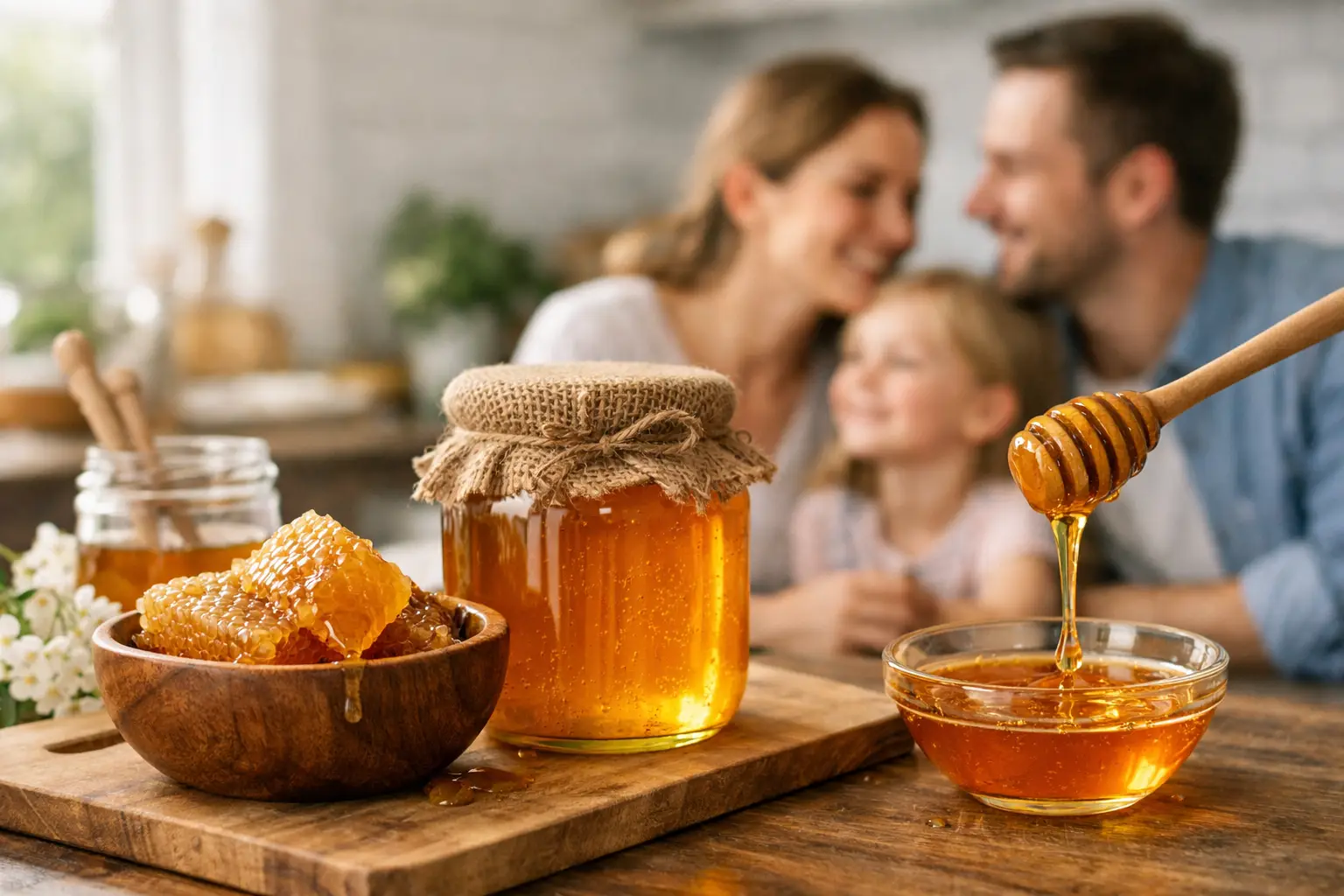
Breakfast is usually where family food habits show up first. A drizzle over yogurt, a spoon stirred into tea, a little sweetness on toast – these small choices add up. That is why raw honey for families has become more than a pantry extra. For many households, it is a simple way to bring cleaner sweetness, fuller flavor, and a more natural food tradition into everyday life.
Not all honey belongs in the same conversation. On one end, there are mass-market bottles that may be heavily filtered, blended, or overheated for shelf uniformity. On the other, there is raw honey – honey kept close to its natural state, with its original character, aroma, and texture intact. For families trying to buy with more care, that difference matters.
Why raw honey for families stands out
Raw honey appeals to families for a practical reason first – it does more than one job. It sweetens food and drinks, but it also brings depth of flavor that refined sugar simply does not have. A good raw honey can taste floral, earthy, herbal, or richly caramel-like depending on where it comes from. That means a small amount often goes further.
It also fits the values many health-conscious households care about. Parents often read labels more closely now. They want fewer additives, less processing, and ingredients they can recognize without decoding them. Raw honey answers that preference naturally when it is genuine and unadulterated.
There is also a cultural and traditional side to honey that many families appreciate. Honey has long held a place in home kitchens, wellness routines, and hospitality across many parts of the world. Choosing a raw, origin-specific honey can feel less like buying a sweetener and more like bringing a food tradition home.
What raw honey actually means
The term gets used often, so it helps to be clear. Raw honey is generally honey that has not been excessively heated or heavily processed after harvest. It may still be strained to remove bits of wax or natural debris, but the goal is to preserve the honey’s natural qualities rather than standardize it into a perfectly clear, uniform syrup.
That said, raw does not mean identical from jar to jar. Natural honey can crystallize, darken slightly over time, or vary by season and floral source. Those changes are not flaws. In many cases, they are signs that the honey has been left closer to nature.
For families used to squeeze-bottle supermarket honey, raw honey can be a shift. It may be thicker. It may have tiny particles of pollen or a creamier texture. It may even taste stronger than expected. That is part of its value, not a problem to fix.
The family benefits are real, but they depend on quality
Raw honey is often chosen by families because it feels like a more thoughtful ingredient. It can be a flavorful replacement for heavily refined sweeteners in certain meals and snacks. It can also support a simpler pantry built around fewer, better staples.
Still, quality is the deciding factor. If a honey is diluted, blended without transparency, or stripped of its character through excessive heat, many of the reasons families seek raw honey begin to fade. This is where origin matters.
Authentic, single-origin honey tends to offer a clearer sense of place and purity. Yemeni Sidr honey is a strong example. Harvested from ancient Sidr trees in Yemen’s rugged landscapes, it is prized for its depth, richness, and traditional reputation. For families looking beyond commodity honey, this kind of origin-specific product offers something more trustworthy and more meaningful than a generic label.
Raw honey in everyday family routines
The strongest case for raw honey is not made in theory. It is made in ordinary use. Families tend to keep buying an ingredient when it works across the week without much effort.
A spoonful can finish oatmeal without making breakfast taste flat or overly sugary. It can add balance to plain yogurt, homemade dressings, marinades, warm lemon water, or herbal tea. Some families use it in baking, though heat changes the final character, so its most distinctive flavor is better appreciated in low-heat or no-heat uses.
It also works well in small amounts. Because raw honey often has a fuller taste than processed honey or white sugar, you may need less to get the flavor you want. For parents trying to be more intentional about sweetness at home, that can be a meaningful advantage.
Safety matters, especially with children
Any honest conversation about raw honey for families needs one clear note. Honey should never be given to infants under 12 months old. That guidance applies whether the honey is raw, filtered, local, imported, premium, or ordinary. For babies under one year, honey is not considered safe.
For older children and adults, honey is widely enjoyed, but it still helps to use common sense. Raw honey is a sweetener, not a cure-all. Some families choose it as part of a broader wellness lifestyle, and that can be reasonable, but expectations should stay grounded. It is best valued as a pure, naturally rich food with traditional appeal rather than a miracle product.
If anyone in the household has specific medical needs, blood sugar concerns, or dietary restrictions, personal guidance from a qualified healthcare professional is always the right next step.
How to choose raw honey your family can trust
The hardest part is often not deciding whether to buy raw honey. It is deciding which jar is actually worth bringing home. Labels can sound impressive while saying very little.
Start with source transparency. A trustworthy honey should tell you where it comes from in a specific way. Country of origin is a start, but regional detail is even better. Next, look at ingredient integrity. Real raw honey should be just that – honey, with nothing added.
It also helps to expect natural variation instead of perfect consistency. Real honey may crystallize. It may have a richer aroma. It may not pour like thin syrup in every season. Families who understand this are less likely to mistake authenticity for imperfection.
Price is another reality. Premium raw honey, especially rare varietals like genuine Sidr honey, costs more than conventional blends. That is not just branding. It often reflects limited harvests, traditional beekeeping, difficult sourcing conditions, and a product that has not been bulked out for mass distribution. For some families, that price makes sense as an occasional premium food. For others, it works best as a daily staple used more intentionally. Either approach is valid.
When premium honey is worth it for a household
It depends on what role honey plays in your home. If it is only used once a month in a baked recipe, a premium jar may feel excessive. But if your family uses honey regularly in breakfasts, teas, wellness routines, and simple desserts, quality becomes easier to notice and appreciate.
This is where a honey like authentic Yemeni Sidr can justify its place. Its texture, aroma, and naturally rich taste turn a basic pantry ingredient into something memorable. It feels less like a commodity and more like Nature’s Gold – a food shaped by landscape, tradition, and careful harvest.
For many American families, that matters. They are not just shopping for sweetness. They are shopping for confidence. They want to know what they are feeding the people they care about. They want purity without artificial shortcuts and a product with a real story behind it.
A more thoughtful way to sweeten the table
Raw honey is not the right fit for every use, every budget, or every family preference. Some households want the lowest-cost option. Others prefer neutral sweeteners for certain recipes. There is room for those choices.
But for families who value clean ingredients, traditional foods, and authentic sourcing, raw honey offers something richer than convenience. It brings flavor with character, sweetness with heritage, and a sense of care that industrial food often lacks. When that honey comes straight from the heart of Yemen, its story becomes part of the experience too.
A family pantry does not need more products. It needs better ones – the kind you reach for often, trust fully, and feel good about sharing at the table.