
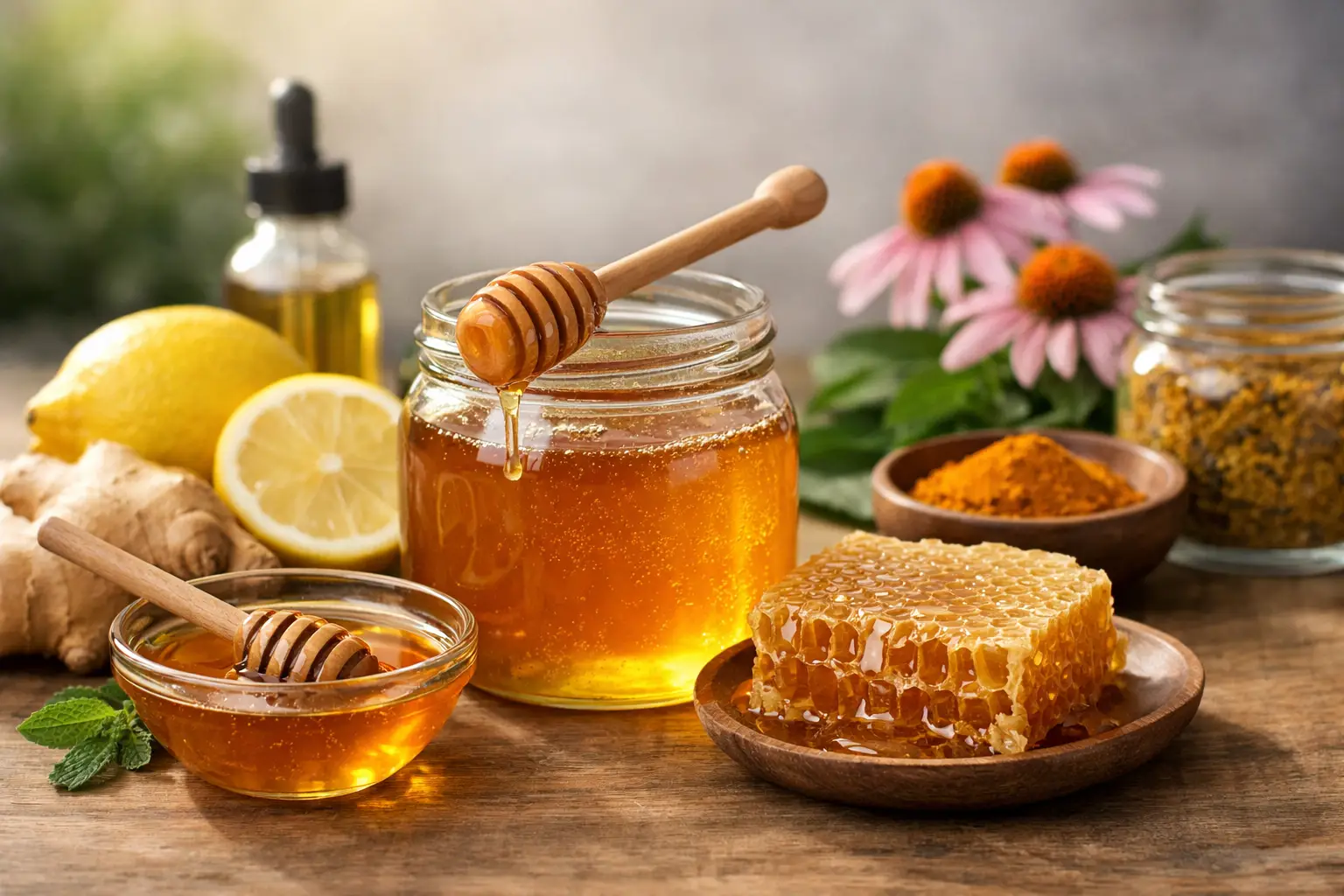
A spoonful of exceptional honey should taste like it came from somewhere real: warm sunlight, wild blossoms, and a landscape with a story. When people search for the best honey for immunity support, they are usually looking for more than sweetness. They want a pure, nourishing food that earns a place in a daily wellness routine, without artificial ingredients, mystery blends, or exaggerated promises.
Honey is not a replacement for sleep, balanced meals, movement, medical care, or recommended vaccinations. Yet a high-quality, minimally handled honey can be a meaningful part of the everyday rituals that help you care for yourself and your family. The key is choosing honey for what it truly is: a natural food with distinct botanical origins, protective plant compounds, and a heritage worth preserving.
What Makes the Best Honey for Immunity Support?
There is no single honey that can guarantee immunity or prevent illness. The immune system is complex, and it benefits from consistent habits over quick fixes. But honey contains naturally occurring antioxidants, including polyphenols and flavonoids, and its traditional use in warm drinks and soothing foods is deeply rooted across cultures.
For a wellness-minded household, the best choice is usually honey that is authentic, minimally processed, and traceable to a specific floral source and region. Honey that has been heavily heated, filtered beyond recognition, or blended from unidentified sources may still be sweet, but it loses much of the character that makes specialty honey valuable.
Look beyond a front-label claim. A jar should tell a credible story about where the honey was harvested, what flowers the bees visited, and how it was handled. That transparency is especially meaningful with rare, origin-specific honey, where the landscape shapes the flavor, color, aroma, and naturally occurring compounds in every harvest.
Why Yemeni Sidr Honey Stands Apart
Sidr honey is gathered by bees that forage around the Sidr tree, known for generations throughout Yemen and the wider Middle East. These ancient trees thrive in Yemen’s rugged valleys and untouched landscapes, producing nectar that becomes a rich, aromatic honey with a distinctive golden to deep amber color.
Authentic Yemeni Sidr honey is prized not because it is a trendy ingredient, but because it carries a genuine tradition of careful beekeeping and respect for the land. Its flavor is often described as smooth, complex, and lightly caramel-like, with an herbal depth that makes it just as welcome on a breakfast table as in a wellness routine.
Its natural antioxidant content is one reason many people choose Sidr honey as part of their daily diet. Those compounds vary with season, location, and harvest, so no responsible seller should promise a fixed health outcome from a spoonful. What Sidr honey offers is something more enduring: pure, unprocessed nourishment from a source with a remarkable heritage.
For people who value foods with a clear origin, this matters. Mass-market honey is often sold as a generic commodity. Genuine Sidr honey is tied to a particular tree, place, and traditional harvest. That difference can be tasted.
Purity matters as much as the variety
A label that says “honey” does not always reveal the whole story. Some products are blended from multiple regions, while others may be diluted or overly processed. A premium honey should be additive-free and made from one simple ingredient: honey.
At Yemen Honey Store, authentic Yemeni Sidr honey is valued as Nature’s Gold, sourced straight from the heart of Yemen and offered without artificial additives. For customers in the United States, that direct connection to origin makes a rare traditional food easier to bring into everyday life.
Crystallization is not a flaw in pure honey. In fact, it is a normal natural process that depends on the honey’s floral source and storage conditions. If your honey crystallizes, set the sealed jar in gently warm water and allow it to soften slowly. Avoid boiling water or high microwave heat, which can damage the delicate flavor and aroma you chose it for.
How Other Honeys Compare
Sidr honey is a standout choice for origin, flavor, and heritage, but the best honey for your household can depend on your preferences and how you plan to use it. Several varieties deserve a place in the conversation.
Raw wildflower honey offers a changing flavor profile based on local blooms. It can be a wonderful everyday option when you know the beekeeper or source, although its flavor and composition may vary greatly from one jar to the next.
Manuka honey from New Zealand is widely recognized for its methylglyoxal, often listed as MGO, and some people seek it for occasional topical or culinary use. It is often expensive, and a high number on the label does not make it automatically better for every purpose. Its strong, medicinal taste is also not for everyone.
Buckwheat honey is dark, bold, and known for a notably rich antioxidant profile. It works beautifully in baking, sauces, and warm drinks, though its malty flavor can overwhelm lighter dishes.
Clover honey is mild and familiar, making it easy to use in tea or on toast. It can be a reliable pantry staple, but buyers should still check for clear sourcing and avoid assuming that pale color alone signals quality.
If your goal is a luxurious, versatile honey with deep cultural roots, Sidr is difficult to surpass. If you need a neutral sweetener for a large recipe, a well-sourced local honey may be more practical. The thoughtful choice is not always the most expensive jar. It is the one whose purity, purpose, and taste match your needs.
Bringing Sidr Honey Into a Daily Wellness Routine
The most meaningful routines are simple enough to keep. Enjoy a teaspoon of Sidr honey on its own when you want a naturally sweet moment, or stir it into warm water with lemon. Let the water cool slightly first rather than adding honey to a rolling-hot drink. This helps preserve its refined aroma and makes the ritual more enjoyable.
At breakfast, drizzle it over plain Greek yogurt, oats, chia pudding, or fresh fruit. The combination of protein, fiber, and honey’s satisfying sweetness can turn a rushed meal into something more balanced. Sidr honey also pairs beautifully with tahini, soft cheese, toasted nuts, and warm flatbread, honoring the flavors of the region that gave it its name.
For an evening cup, add a small spoonful to caffeine-free herbal tea. Honey is often chosen for its smooth, coating feel when the throat is dry or irritated. Keep expectations practical: it can provide comfort, but persistent symptoms, fever, breathing difficulty, or concerns about a child’s health deserve guidance from a qualified healthcare professional.
Moderation still matters. Honey is a natural sweetener, but it is still a source of sugar. A teaspoon or two can fit comfortably into many eating patterns, especially when it replaces heavily refined sweets. People managing diabetes or specific dietary needs should speak with their healthcare provider about an amount that suits them.
How to Shop With Confidence
Start with the ingredient list. It should contain honey and nothing else. Then look for a specific country or region of origin, a named floral source where possible, and a seller willing to explain how the honey is sourced. Vague descriptions such as “international blend” may be acceptable for basic cooking honey, but they do not offer the transparency specialty-honey buyers deserve.
Color can offer clues, but it is not a quality score. Light honey can be excellent, and dark honey can be excellent. More useful indicators are aroma, flavor, texture, seasonality, and traceability. A real harvest can naturally vary from year to year because rainfall, flowering conditions, and bee forage change. That variation is evidence of nature, not inconsistency.
Store your jar tightly sealed at room temperature, away from direct sunlight and excess moisture. Do not refrigerate it unless the label instructs otherwise, as cold temperatures can encourage crystallization. Always use a clean, dry spoon to protect the honey’s quality.
One safety rule is absolute: never give honey to infants under 12 months old. Their digestive systems are not yet ready for it, regardless of how pure, raw, or premium the honey may be.
A jar of authentic Sidr honey is not meant to carry the full weight of your health goals. It is meant to be a small daily expression of care: a taste of Yemen’s ancient Sidr trees, chosen with intention and enjoyed in the simple moments that make a well-lived routine.