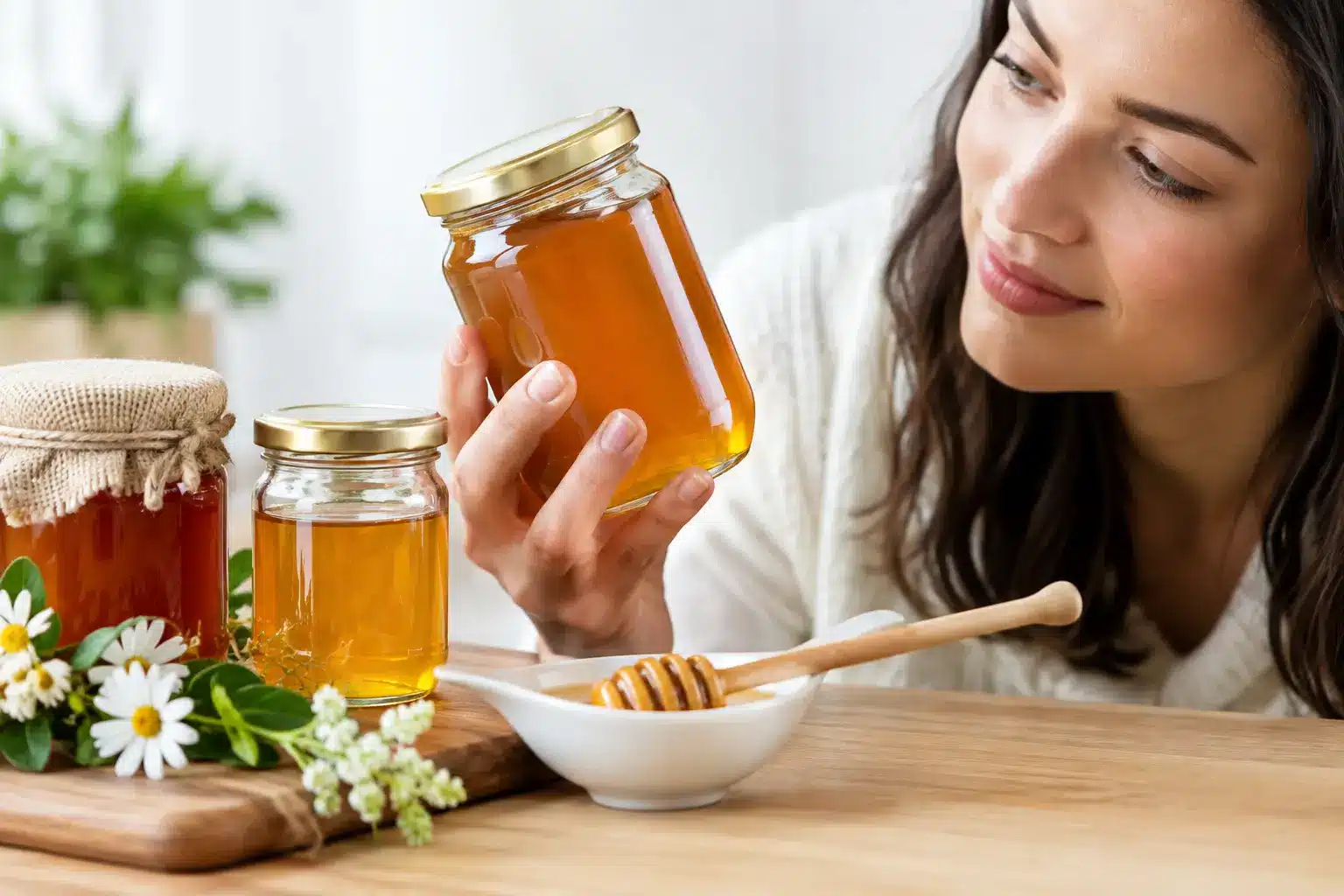
A honey jar can look golden, taste sweet, and still tell you very little about what is inside. To select pure honey with confidence, look beyond a polished label and ask the questions that reveal its true character: Where was it harvested? What does the ingredient list say? Can the seller clearly explain its origin?
For families who choose natural foods carefully, honey is more than a pantry staple. It may be stirred into warm tea, drizzled over breakfast, used in treasured recipes, or enjoyed by the spoonful as a naturally sweet moment in the day. A truly pure honey deserves that place in your home. It should carry the flavor of its landscape, the care of its harvest, and nothing unnecessary.
How to Select Pure Honey Before You Buy
The simplest rule is also the most valuable: read the ingredient list. Pure honey should contain one ingredient – honey. If the jar lists corn syrup, glucose, cane sugar, flavoring, preservatives, or a vague blend of sweeteners, it is not the untouched product many shoppers expect.
That said, a short ingredient list is the beginning, not the whole story. Honey can be pure while still being broadly sourced, heavily heated, or blended from multiple regions. For shoppers seeking a rare and meaningful honey, origin matters just as much as the word “pure” on the front of the jar.
Look for a seller that identifies the country and, when possible, the region or floral source. “Product of Yemen,” for example, speaks to a distinct heritage and landscape. Sidr honey comes from the nectar of Sidr trees, long valued across Yemen and the Middle East. Its deep amber color, full-bodied sweetness, and aromatic complexity are shaped by the land where those trees grow.
A trustworthy source should be comfortable sharing what makes its honey different. Clear origin information is not a marketing extra. It is part of the product’s identity.
Choose a recognizable floral source
Honey is not one uniform food. Clover, wildflower, orange blossom, and Sidr honey each reflect different blossoms, climates, and harvest conditions. When a jar identifies its floral source, it gives you a more specific expectation of flavor, color, and aroma.
Sidr honey is especially sought after because of its connection to Yemen’s ancient Sidr trees and traditional harvesting culture. Genuine Yemeni Sidr honey is often richly colored, smooth on the palate, and layered with a warm, distinctive taste that feels more substantial than everyday table honey. It is Nature’s Gold, shaped by an extraordinary place rather than manufactured for sameness.
Still, no two harvests should taste precisely alike. Rainfall, season, and the location of hives can create subtle variation. That natural variation is a sign of a real agricultural product, not a flaw.
The Label Details That Matter Most
A premium honey label should make you feel informed, not confused. Start with the ingredient statement, then consider the claims around processing, origin, and handling. Terms such as raw, natural, unprocessed, and additive-free can be meaningful when they are supported by transparent product information.
“Raw” is often used for honey that has not been subjected to high heat. Gentle handling can help preserve honey’s naturally occurring characteristics, including its aroma and the qualities that make each harvest unique. However, labeling standards and practices can vary, so it is wise to treat the word as one helpful detail rather than the only proof of quality.
“Unfiltered” deserves a similar measured approach. Light filtering can remove incidental particles without changing the essence of honey. Extremely aggressive processing, on the other hand, may strip away much of the natural pollen and character that connect honey to its floral source. The best choice depends on your preference, but the seller should describe how the honey is handled clearly.
Avoid jars that rely on grand promises while staying silent about basics. A package that says “premium” but cannot identify its origin, floral source, or ingredients gives you less to trust than one that communicates plainly. Real quality does not need mystery.
Do Not Judge Purity by Crystallization Alone
One of the most common honey myths is that crystallized honey must be fake or spoiled. In reality, crystallization is a normal process for many pure honeys. Over time, natural sugars in honey can form crystals, changing the texture from fluid to thick, creamy, or grainy.
The speed and appearance of crystallization depend on the honey’s natural sugar balance, temperature, and storage conditions. Some varieties remain liquid for a long time. Others crystallize sooner. Neither condition, by itself, proves or disproves purity.
If you prefer a softer texture, warm the sealed jar gently in a bowl of warm water. Avoid boiling water or intense heat, which can diminish the delicate flavor and natural character you chose the honey for in the first place. Store honey tightly sealed in a cool, dry cupboard, away from direct sunlight. Refrigeration is usually unnecessary and may encourage faster crystallization.
Color is also only one clue. Pure honey can range from pale gold to dark amber, depending on the flowers visited by bees. A darker shade may suggest a bolder flavor, but it is not automatically better. With Yemeni Sidr honey, a rich, inviting amber tone often accompanies its celebrated depth, yet every authentic harvest can have its own expression.
Ask for Origin, Not Just a Bargain
Exceptional honey takes time, skilled beekeeping, and a favorable natural environment. Its price often reflects those realities. A very low price can be tempting, especially when jars appear similar at first glance, but it may signal broad blending, uncertain sourcing, or a product valued primarily for sweetness rather than quality.
This does not mean the most expensive jar is always the best. Instead, compare price with the information provided. Does the seller name the origin? Do they explain the floral source? Are they focused on one honey tradition or offering countless generic varieties with little detail? Is the product presented as 100% honey, free from additives and artificial ingredients?
For a honey as distinctive as Sidr, provenance is part of what you are bringing home. You are choosing a taste connected to Yemen’s untouched landscapes, patient harvesting traditions, and the enduring value of the Sidr tree. That story should be specific enough to stand behind.
At Yemen Honey Store, the focus remains on authentic Yemeni Sidr honey, sourced for shoppers who want a direct connection to that heritage rather than an anonymous honey blend. The goal is simple: offer pure, natural honey straight from the heart of Yemen to American homes that value what is real.
Let Taste Confirm What the Label Promises
Once you open the jar, use your senses. Pure, high-quality honey should have a clear aroma and a flavor that develops rather than disappearing into one flat note of sweetness. Depending on the variety, you may notice floral, herbal, caramel-like, fruity, or gently earthy notes.
Sidr honey is often admired for its rich sweetness and lingering finish. Enjoy a small spoonful on its own before adding it to food or drinks. That first taste helps you appreciate the honey as a specialty ingredient, much like fine olive oil, coffee, or tea.
Use it where its character can shine: over Greek yogurt, fresh fruit, warm oats, toast with tahini, or a simple cheese plate. Add it to tea after the water has cooled slightly for a gentler touch. For daily routines, many people keep a jar nearby for a natural source of quick energy and a comforting alternative to refined sugar.
Honey is still a sweetener and is best enjoyed with balance. It should not be given to children under one year old. For everyone else, choosing a pure, carefully sourced honey means that when you reach for sweetness, you are reaching for something with a genuine place behind it.
The next time you select pure honey, let the jar invite more than a quick purchase. Choose the one that names its roots, respects its harvest, and tastes like it came from somewhere worth remembering.