A spoonful of genuine Yemeni Sidr honey carries more than its deep amber color, rich caramel notes, and memorable finish. So, does Sidr honey contain pollen? In most cases, raw and minimally processed Sidr honey does contain naturally occurring pollen, although the exact amount can vary from jar to jar depending on harvesting and filtering practices.
That small detail matters to people who choose Sidr honey for its purity, heritage, and connection to the ancient Sidr trees of Yemen. Pollen is one of the natural traces that may remain in honey as bees gather nectar, return to the hive, and turn that nectar into the treasured food known as Nature’s Gold.
Does Sidr Honey Contain Pollen Naturally?
Yes, authentic raw Sidr honey can naturally contain pollen grains. Bees do not collect nectar in a vacuum. As they visit Sidr blossoms and other plants in the surrounding landscape, tiny pollen particles can cling to their bodies and make their way into the hive. Some of those particles can remain in the finished honey.
Sidr honey is made primarily from the nectar of the Sidr tree, also called the jujube tree. In Yemen, these trees grow across landscapes shaped by sun, stone, and generations of traditional beekeeping. When the Sidr bloom is strong and beekeepers harvest with care, the honey reflects that distinctive floral source in its aroma, flavor, and natural composition.
Still, no honest producer should promise that every jar contains the same pollen level. Honey is an agricultural food, not a laboratory-made formula. Weather, flowering conditions, hive location, the season, and the way honey is handled after harvest all affect what remains in it.
Pollen in Honey Is Not the Same as Bee Pollen
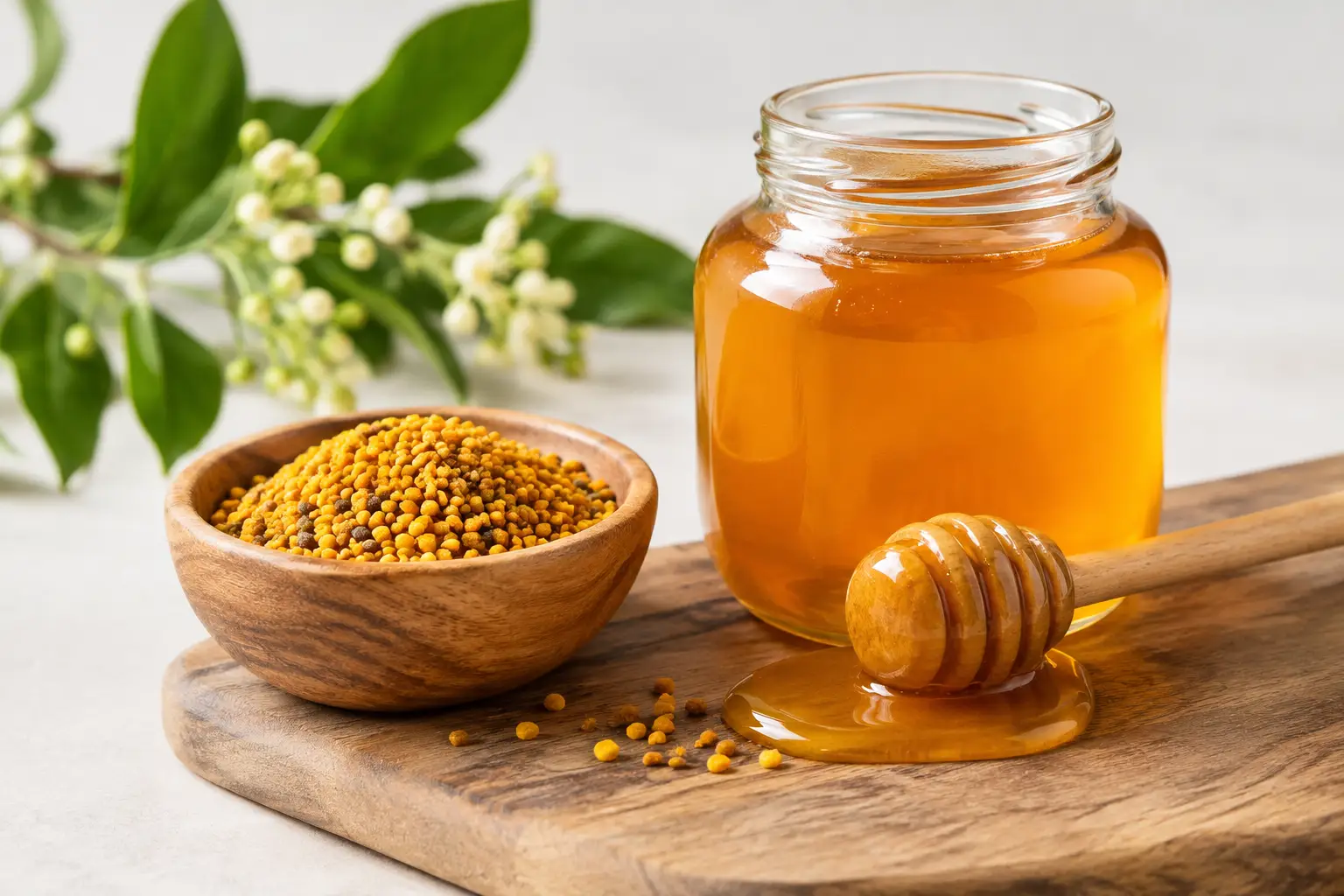
The pollen naturally present in honey is generally found in very small amounts. This is different from bee pollen sold as granules or capsules, which is collected and marketed as a separate product. A spoonful of Sidr honey should not be viewed as a replacement for concentrated bee pollen supplements.
What raw honey offers is a more complete natural food experience. Along with its sugars, moisture, organic acids, and flavor compounds, it may retain fine traces of pollen, beeswax, and other hive-derived elements. These are part of the character many honey lovers appreciate in minimally processed honey.
Why Filtering Changes the Answer
Whether Sidr honey contains pollen often comes down to processing. Freshly harvested honey commonly passes through a strainer to remove large pieces of wax or hive debris. Gentle straining is not the same as aggressive filtration.
A lightly strained honey may still retain pollen and other microscopic natural particles. Ultra-filtered honey, on the other hand, can have much of its pollen removed. High heat and intensive processing may also alter honey’s aroma, texture, and naturally occurring compounds.
For shoppers seeking authentic Yemeni Sidr honey, the useful question is not simply, “Is it filtered?” It is, “How was it handled?” A producer may strain honey for cleanliness while preserving its natural character. The concern is when processing becomes so extensive that the honey is stripped of many of the qualities that make raw, origin-specific honey special.
At Yemen Honey Store, the focus is on authentic, natural, additive-free Sidr honey sourced from Yemen’s traditional honey heritage. That commitment to purity means choosing honey for what it is: a rare food shaped by bees, blossoms, land, and careful harvesting, rather than a mass-market sweetener engineered for uniformity.
Can Pollen Help Verify Authentic Sidr Honey?
Pollen can be one useful clue in honey analysis, but it is not a simple pass-or-fail test for shoppers. Specialists can examine pollen under a microscope to learn more about the floral and geographic environment connected to a honey. If pollen associated with Sidr blossoms is present, it may support a honey’s connection to that botanical source.
But pollen testing has limits. A honey can be genuine yet show varying pollen levels because of natural conditions or because it was strained. Some plants also produce nectar and pollen in ways that do not always leave a predictable pollen signature in honey. That is why authenticity should rest on more than one detail.
Look at the full story: the stated country of origin, the beekeeper or sourcing relationship, harvest practices, ingredient transparency, and whether the honey is sold as a pure product without syrups, flavorings, or unnecessary additives. Genuine Sidr honey should be valued for its traceable Yemeni roots and honest handling, not for exaggerated claims about a single microscopic component.
What You May Notice in Minimally Processed Honey
Natural honey can change over time. These changes are often part of its real-food character, not a defect. A jar may vary in color from one harvest to another, become thicker in cooler weather, or develop crystallization. Fine sediment can also settle at the bottom of a jar.
That sediment may include tiny particles such as pollen, wax, or mineral traces, though it cannot be identified by sight alone. A smooth, clear jar is not automatically inferior, and a cloudy jar is not automatically superior. The key is transparent sourcing and thoughtful processing.
If your Sidr honey crystallizes, place the tightly closed jar in warm water and allow it to loosen gradually. Avoid boiling water or repeated high heat. Gentle warming helps preserve the honey’s flavor and the qualities that make it a premium pantry staple.
Is Sidr Honey Safe for People With Pollen Allergies?
This is where a careful answer matters. Most people with seasonal environmental allergies can eat honey without a problem, but individual reactions are possible. Honey may contain pollen traces, and anyone with a known allergy to bee products, honey, or specific pollens should speak with a qualified healthcare professional before trying it.
Do not use Sidr honey as a self-treatment for allergies. The idea that eating honey reliably relieves seasonal allergies is popular, but it is not a dependable medical strategy. Sidr honey from Yemen is also distinct from local honey in the United States, so its pollen profile would not necessarily match the plants triggering a person’s local seasonal symptoms.
Use extra caution if you have had hives, swelling, wheezing, dizziness, or breathing difficulty after consuming honey or other bee-related products. For any signs of a serious allergic reaction, seek urgent medical care.
Like all honey, Sidr honey should never be given to children under 12 months old. This guidance applies whether honey is raw, filtered, local, imported, light, dark, or rare. For older children and adults without relevant allergies, honey can be enjoyed as part of a balanced diet.
How to Choose Sidr Honey With Natural Integrity
If retaining naturally occurring pollen matters to you, choose honey described clearly as raw, unprocessed, or minimally processed, and ask how it is strained or filtered. Clear language is a sign of respect for the customer. Avoid products that obscure their origin behind vague labels or blend multiple honeys without explaining the source.
Taste can also tell part of the story. True Yemeni Sidr honey is prized for its full-bodied sweetness, warm herbal-floral notes, and lingering depth. Its color and texture may vary with region and harvest, but its appeal comes from a recognizable sense of place – straight from the heart of Yemen.
Enjoy it by the spoonful, stirred into warm tea after it has cooled slightly, spread over bread, or paired with cheese and fruit. Treat it as you would any exceptional ingredient: use it simply enough to notice where it came from.
A jar of authentic Sidr honey does not need to make impossible promises. Its value is already remarkable: honey made by bees among Yemen’s ancient Sidr trees, with the natural variation and quiet evidence of origin that real food is meant to have.