
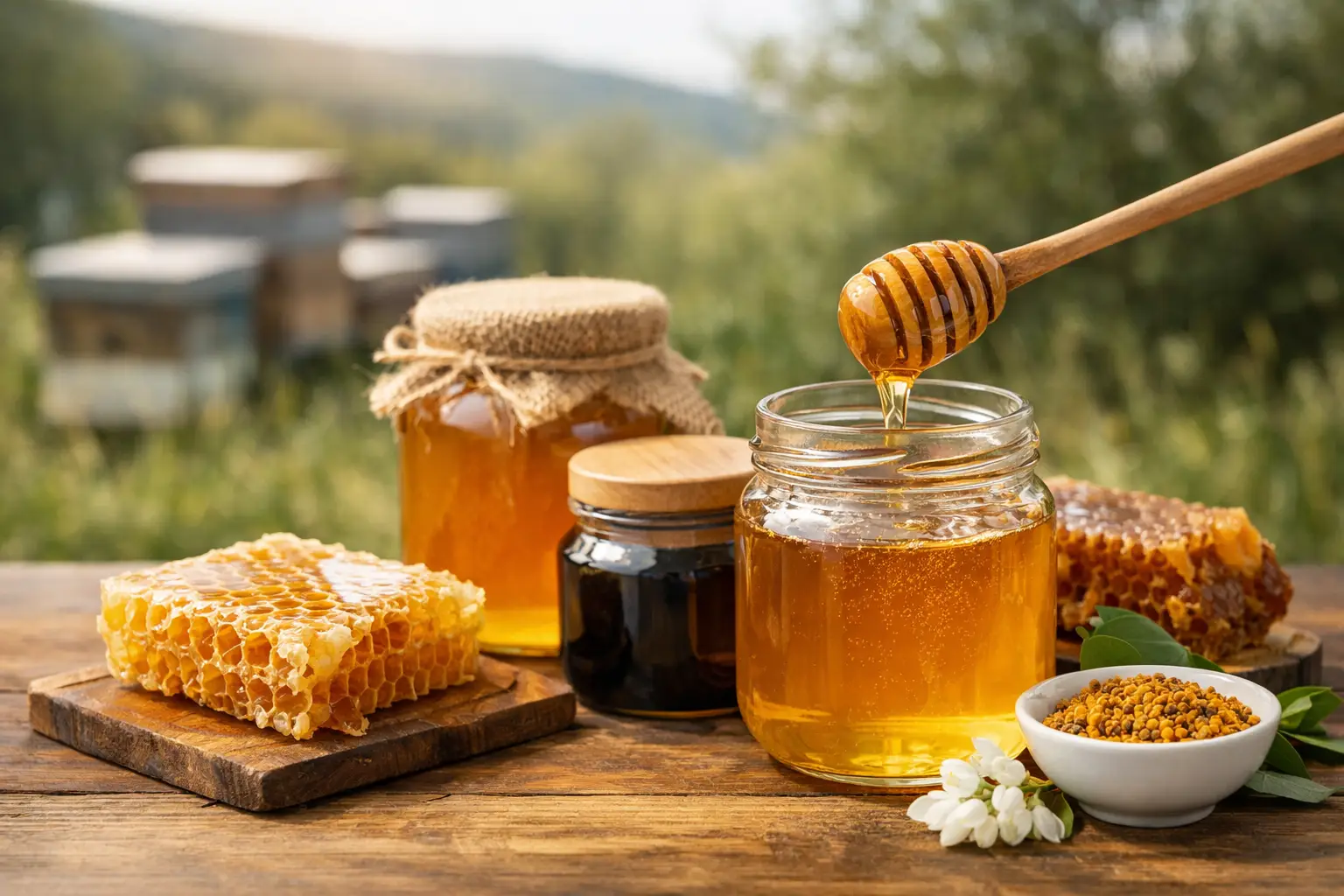
A jar of honey can carry far more than sweetness. It can reflect a flowering landscape, the work of beekeepers, local harvest traditions, and the distance between a hive and your kitchen. This honey provenance guide helps you look beyond a beautiful label so you can choose honey with a story you can trust – especially when you are seeking rare, origin-specific varieties such as Yemeni Sidr honey.
For families who care about natural foods, provenance is not a marketing detail. It is the difference between a generic honey blend and a product whose origin, ingredients, and handling are clearly understood. When honey is truly connected to a place, its flavor has a sense of place too.
What Honey Provenance Really Means
Provenance means the documented origin and journey of a product. For honey, that journey begins with the bees’ forage: the trees, flowers, climate, and terrain surrounding the hives. It also includes who harvested it, where it was extracted, whether it was blended, and how it reached the final jar.
A country name alone is not always full provenance. A label may say a product was packed in one country while the honey itself was sourced elsewhere. It may describe a floral variety without explaining whether the jar contains one origin or a blend. Those distinctions matter when you are paying for a premium honey prized for its taste, rarity, and heritage.
True provenance gives you a clearer answer to a simple question: where did this honey actually come from? The stronger the answer, the more confidently you can appreciate what is in your spoon.
Why Origin Changes Honey
Honey is shaped by its environment. Nectar from orange blossoms produces a different aroma and character than nectar gathered in mountain wildflowers or around ancient Sidr trees. Soil, rainfall, elevation, flowering season, and nearby plant life all leave their mark.
Yemeni Sidr honey is valued because of this close relationship between land and nectar. It comes from bees foraging around the Sidr tree, often associated with the Ziziphus spina-christi tree, in Yemen’s rugged and varied landscapes. Its deep golden to amber color, rich flavor, and distinctive aroma are part of why it is often regarded as Nature’s Gold.
Still, origin is not a promise that every harvest will taste identical. Natural honey varies from season to season. A lighter color or a subtle change in flavor can reflect rainfall, bloom conditions, or harvest timing. Consistency matters, but slight natural variation is often more reassuring than a product engineered to be exactly the same every time.
How to Read a Honey Label With Confidence
Start with the ingredient statement. For pure honey, the ingredient should be honey – not honey syrup, flavoring, sweeteners, or a long list of additions. Simple is powerful here. A one-ingredient product makes it easier to understand what you are buying.
Then look for specificity. “Imported honey” tells you very little. “Product of Yemen” is more meaningful, particularly when supported by details about the region, floral source, or traditional harvesting process. The most trustworthy brands do not hide behind vague language. They explain the honey’s roots with pride.
Pay attention to terms such as raw, unprocessed, filtered, and blended, but read them thoughtfully. These words can be useful, yet they are not all regulated in the same way in every context. Gentle straining can remove bits of wax or hive material while preserving the honey’s natural character. Heavy processing and high heat may change texture and appearance, but a label alone does not always tell the complete story.
A premium jar should also make it easy to identify the seller or importer. Clear business information signals accountability. If there is no meaningful information about the company behind the honey, it is harder to ask questions and verify its claims.
Questions Worth Asking Before You Buy
When the source matters, a few direct questions can reveal a great deal. Ask whether the honey is harvested in the named country or merely packaged there. Ask whether it is single-origin, single-floral, or blended with honey from other places. Ask whether anything has been added to it and how it is handled after harvest.
For a rare honey like Sidr, you can also ask what makes the offering Yemeni Sidr rather than a general honey marketed with a Sidr name. A responsible seller should be able to speak plainly about its source, its ingredient integrity, and its route to the United States.
You do not need a chemistry lab to make a wise purchase. You need transparent answers. Brands that respect their honey’s heritage typically welcome informed customers because the details are part of the value.
Signs of Authenticity – and What They Cannot Prove
Color, thickness, aroma, and crystallization can all offer clues, but none is a stand-alone test of authenticity. Real honey can be pale, dark, runny, or thick. It can crystallize quickly or remain liquid for a long time depending on its floral makeup, storage temperature, and natural sugar balance.
The popular idea that crystallized honey must be pure is too simple. Crystallization is natural and common, but it does not verify country of origin or prove a honey has never been blended. Likewise, a thick texture may be desirable, but it cannot independently confirm that honey came from a particular region.
The best evidence is a combination of factors: a precise origin claim, a short ingredient statement, credible sourcing information, a seller who answers questions directly, and, where available, quality documentation or testing. Think of authenticity as a chain. Every clear link adds confidence.
A Closer Look at Yemeni Sidr Honey
Sidr honey has earned a special place in kitchens and wellness traditions across the Middle East and beyond. Its appeal is not limited to sweetness. Many people enjoy it by the spoonful, stirred into warm drinks, paired with breakfast foods, or used as a thoughtful gift for someone who appreciates exceptional ingredients.
Its value rests on more than scarcity. Genuine Yemeni Sidr honey represents a relationship between ancient trees, skilled beekeepers, and a cultural tradition of careful harvest. That heritage deserves to be named accurately rather than reduced to a generic luxury claim.
When choosing Sidr honey, seek a product that is clearly presented as 100% natural, additive-free, and connected to Yemen as its source. Be cautious with bargains that seem unusually cheap for a limited, imported specialty honey. Price alone does not prove quality, but very low pricing can be a reason to look more closely at the product’s origin, size, and blend status.
At Yemen Honey Store, this commitment begins with bringing authentic Yemeni Sidr honey straight from the heart of Yemen to customers seeking purity, flavor, and a meaningful connection to tradition.
Store Honey in a Way That Respects Its Character
Once you have chosen honey with a source you trust, protect its natural qualities at home. Keep the jar tightly sealed in a cool, dry cupboard away from direct sunlight. Refrigeration is usually unnecessary and can encourage crystallization sooner.
If crystallization occurs, place the closed jar in warm water and allow it to loosen gradually. Avoid aggressively overheating honey. Gentle warming is a better approach when you want to preserve the flavor and character that made the honey worth choosing in the first place.
Honey is also not suitable for infants under 12 months of age. For everyone else, it can be a beautiful pantry staple when enjoyed as part of a balanced way of eating.
The next time you hold a jar of honey, pause before judging it by color or a front-label promise. Ask where the bees foraged, who tended the harvest, and whether the seller can stand behind every part of its journey. A truly special honey does not need its story invented – it carries that story naturally, from the landscape to your table.