
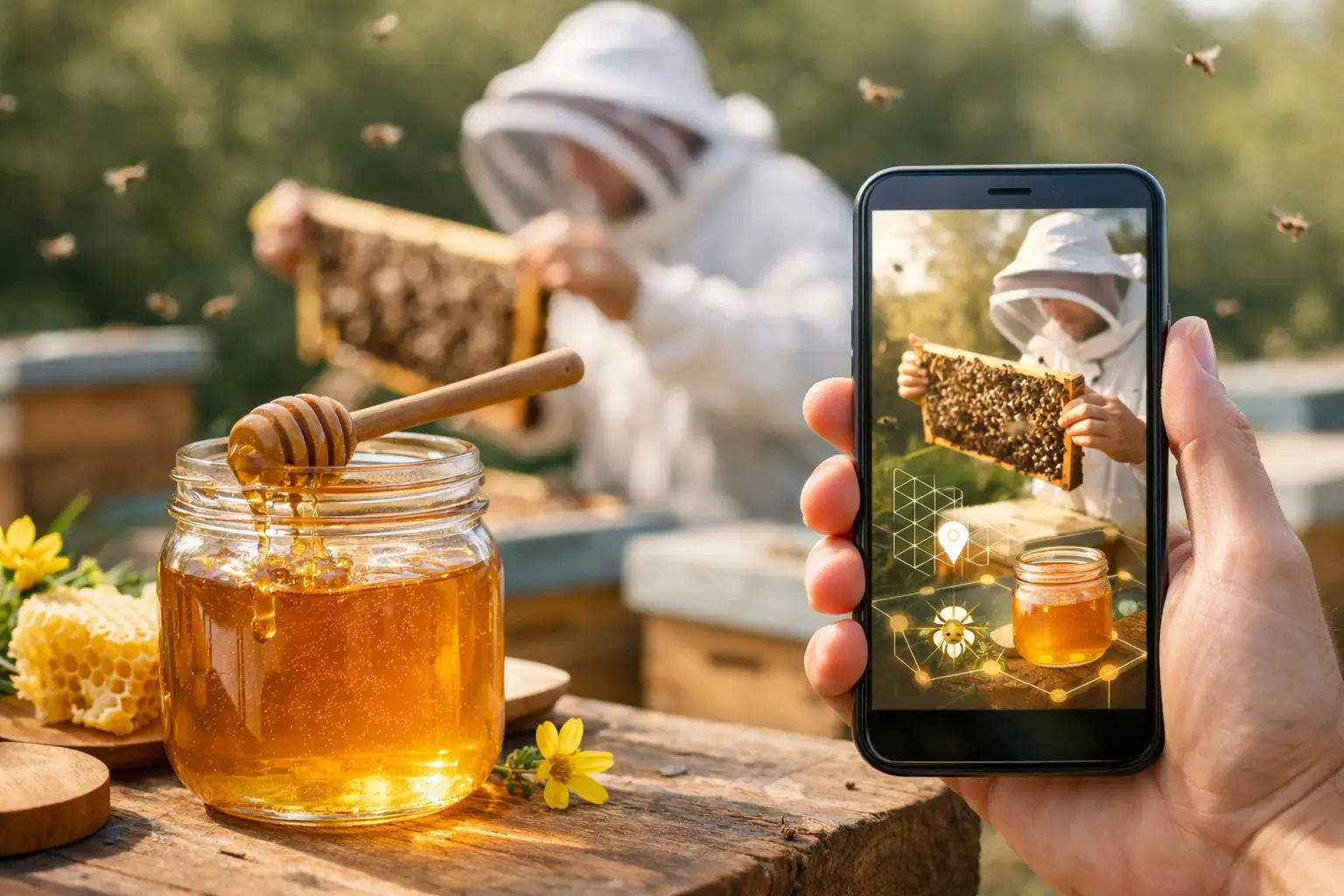
A jar of exceptional honey should not ask you to simply take its word for it. When you choose rare Yemeni Sidr honey, you are choosing a flavor shaped by ancient Sidr trees, changing rainfall, skilled harvesting, and a place with a story worth protecting. The future of traceable honey is about making that story clearer – from the landscape where bees forage to the jar placed on your kitchen shelf.
For families seeking natural foods without unnecessary additives, traceability offers something meaningful: confidence. It helps turn broad claims such as “pure,” “raw,” or “from Yemen” into information that can be understood, checked, and respected. For a treasured food like Sidr honey, that level of care belongs in every step.
Why Honey Needs a Clearer Story
Honey is often treated as a simple pantry staple. Yet it is one of the most origin-sensitive foods in the world. Its aroma, color, texture, and character can change with the nectar source, the season, the climate, and the way it is handled after harvest.
That is especially true of Sidr honey. True Sidr honey comes from bees that forage around the Sidr tree, known for centuries across Yemen and the wider region. Yemen’s valleys and mountainous landscapes give this honey its distinctive depth: rich, herbal, gently caramel-like, and remarkably full on the palate. A label alone cannot capture that heritage.
Unfortunately, premium honey also attracts confusion. Some products use vague origin language. Others may be blended, heavily processed, or sold with little detail about where the honey was harvested and how it traveled. That does not mean every unlabeled jar is poor quality. It does mean consumers have less to work with when deciding what belongs in their daily wellness routine or on their family table.
Traceability is the bridge between a beautiful claim and a credible one.
What Traceable Honey Should Actually Show
Traceability is not a decorative map on a package or a romantic paragraph about faraway mountains. Those details can be meaningful, but real traceability follows the product through its journey. The strongest systems connect the honey to identifiable sourcing and handling records.
For a specialty honey, that may include the harvest region in Yemen, the floral source, the harvest season or batch, the people or supply partners responsible for collection, and the path taken before the honey reaches the United States. Depending on the producer and importer, it can also include storage practices, filtering approach, and quality testing.
This is not about reducing a living tradition to paperwork. Traditional harvesting knowledge is part of what makes Yemeni Sidr honey so special. Documentation should protect that work, not replace it. When records are handled thoughtfully, they give beekeepers and careful suppliers a way to stand behind what they have produced.
A traceable jar should make it easier to ask practical questions. Is this honey clearly identified as Sidr? Is its country of origin stated plainly? Is there useful batch information? Does the seller explain its sourcing standards in direct language rather than relying on vague promises? Clear answers matter more than flashy packaging.
Traceability Is Different From a Marketing Claim
Words such as “natural” and “pure” are valuable when they are backed by responsible sourcing. But they are not, by themselves, a complete record of origin. The future belongs to brands that pair those promises with details customers can use.
That might mean a batch code, harvest information, supplier documentation, or transparent explanations of how honey is selected and handled. The exact system will vary. A small, family-connected supply chain in Yemen will not look identical to a large commercial operation. What matters is whether the information is specific, consistent, and connected to the actual honey in the jar.
The Future of Traceable Honey Starts at the Source
Technology will play a larger role in honey traceability, but the most important part is still human. A digital record cannot make honey authentic if the sourcing behind it is careless. It can only preserve and communicate the truth of a well-managed supply chain.
In the years ahead, more premium honey producers may use scannable batch records, digital lot tracking, and more detailed quality documentation. These tools can help sellers follow a shipment from harvest through packing and distribution. They can also make it easier to identify where a problem began if a batch fails to meet expectations.
For customers, the benefit is simple. Better records create a clearer line between what was promised and what was delivered.
Still, technology has limits. A QR code is only as reliable as the information behind it. A laboratory result can help confirm certain quality markers, but it cannot tell the full cultural story of a harvest. And a beautifully designed traceability page cannot substitute for fair, careful relationships with the people who steward the bees and landscapes.
The best future combines both: modern accountability and respect for old-world knowledge.
Protecting Yemen’s Honey Heritage
Yemeni Sidr honey is more than a premium food. It reflects a heritage of beekeeping, seasonal rhythms, and reverence for the land. As global interest in rare honey grows, traceability can help preserve the value of that heritage rather than letting it be diluted by imitation.
When origin is documented clearly, it becomes harder for generic blends to borrow the reputation of Yemen without sharing its substance. This protects consumers, but it can also support the people whose work gives authentic Sidr honey its identity. A supply chain that recognizes origin properly is more likely to recognize the care, skill, and local knowledge behind the harvest.
There is a practical side as well. Yemen’s geography and logistics can be complex. Weather, transport conditions, and export processes may affect availability from season to season. Genuine traceability does not promise that every harvest will be identical or that rare honey will always be easy to obtain. Instead, it gives customers a more honest view of why a particular batch may differ in color, aroma, or availability.
That variation is not a weakness. For natural, minimally handled honey, it is often part of the experience.
How to Shop With More Confidence
You do not need to become a supply-chain expert to choose honey wisely. Start by looking for specificity. A seller should be able to tell you what kind of honey it is, where it comes from, and why it has the flavor and value it claims.
Be cautious with prices that seem too good for a rare origin. Authentic Sidr honey requires careful sourcing and long-distance handling, so it is not usually priced like ordinary table honey. Price alone never proves authenticity, but unusually low pricing can be a reason to ask more questions.
Also consider how the honey is described. Does the brand explain that crystallization can occur naturally? Does it avoid exaggerated health promises? Is it transparent about ingredients? Honey sold as pure honey should contain honey, not a long list of sweeteners or fillers.
At Yemen Honey Store, the standard is straightforward: offer authentic Yemeni Sidr honey with respect for its origin, natural character, and place in everyday life. Whether you enjoy a spoonful in the morning, stir it into warm tea, serve it with breakfast, or give it as a meaningful gift, knowing where it comes from adds to every taste.
A More Honest Kind of Luxury
The finest foods do not need to hide behind mystery. They can be rare without being vague, luxurious without being disconnected from the people and places that made them possible. Traceability gives premium honey a more honest kind of luxury – one rooted in clarity, care, and respect.
As shoppers ask better questions, sellers will need to offer better answers. That shift can raise expectations across the honey world, from everyday jars to the most sought-after regional harvests. It may also encourage more thoughtful purchasing: choosing less, choosing better, and valuing foods with a real sense of place.
The next time you open a jar of Sidr honey, pause for the details behind its golden color. A honey’s origin is not just a label. It is the land, the blossoms, the beekeepers, the season, and the careful choices that carried Nature’s Gold from the heart of Yemen to your table.