
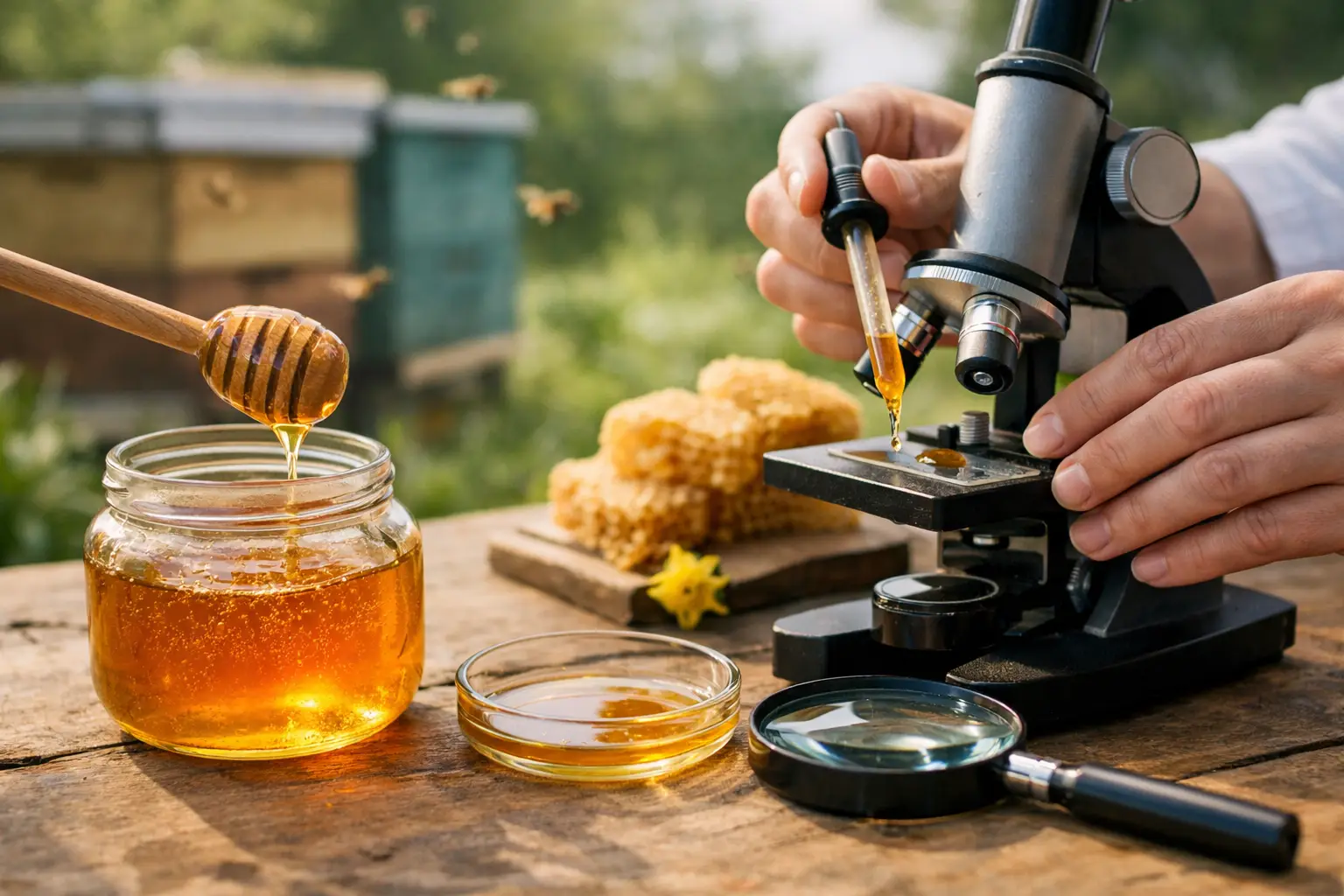
A jar can say “pure,” “raw,” or even “Sidr” and still leave the most meaningful question unanswered: where did this honey truly come from? Learning how to verify honey origin helps you look beyond attractive packaging and choose honey with a story you can trust – from the landscape and blossoms to the beekeeper and harvest.
For specialty honey lovers, origin is not a decorative detail. It shapes flavor, color, aroma, texture, rarity, and the traditions behind every spoonful. Authentic Yemeni Sidr honey, for example, carries the character of Yemen’s Sidr trees, mountain valleys, and time-honored beekeeping practices. That sense of place cannot be recreated with a generic blend.
Why Honey Origin Matters
Honey is one of nature’s most varied foods. Bees collect nectar from the flowers available around their hives, and that nectar becomes the foundation of the finished honey. A honey harvested from Sidr trees in Yemen will not taste, smell, or behave exactly like clover honey from the Midwest or wildflower honey from several countries blended together.
Origin also matters because honey is traded globally at an enormous scale. Some products are packed in one country but sourced elsewhere. Others use broad descriptions such as “imported honey” or “a blend of honeys,” which may be legally acceptable but tell you very little about the actual landscape, floral source, or harvest practices behind the jar.
When you are buying premium honey for your family, daily wellness routine, gifts, or meaningful cultural connection, clarity is worth seeking. Real origin information gives you a better idea of what you are tasting and whether the price reflects genuine rarity.
Start With the Label, but Read Beyond the Front
The front label is designed to catch your eye. The back label is usually where the useful details begin. Look for a clearly named country of origin rather than vague language like “packed in the USA” or “distributed by.” A product can be packed domestically while the honey itself was harvested overseas, so those are not the same claim.
For a single-origin honey, the label should make a specific geographic statement. “Product of Yemen” is more meaningful than “Middle Eastern style honey.” Likewise, an authentic Sidr honey should identify Yemen as its source and ideally provide more context about the region, such as Hadramout, Shabwah, or another recognized area associated with Sidr trees and traditional harvests.
Check the ingredient panel as well. Pure honey should have one ingredient: honey. There should be no corn syrup, cane sugar, artificial flavors, preservatives, or unexplained sweetener blends. A clean ingredient list does not prove geographic origin by itself, but it is a necessary starting point for anyone seeking natural, unprocessed honey.
Ask Whether the Honey Is Single-Origin or a Blend
The phrase “single-origin” generally means the honey comes from one country or a defined region rather than being mixed with honey from multiple places. This is especially valuable when you are seeking a honey known for its terroir – the natural influence of soil, climate, plants, and local conditions.
Blended honey is not automatically poor quality. A carefully selected blend can be pleasant and affordable for everyday use. But it is a different product from honey chosen specifically for its regional identity. If a jar promises a rare origin yet lists multiple countries, that is a reason to ask more questions.
A trustworthy seller should be comfortable explaining whether its honey is sourced from one harvest area, one region, or several beekeeping communities. The more specific the answer, the easier it is to understand what you are purchasing.
Look for Floral Source Details
Geographic origin and floral source are connected, but they are not identical. “Sidr honey” refers to honey made primarily from nectar gathered around Sidr trees, also known as jujube trees. A label that only says “Yemeni honey” may be genuine honey from Yemen, yet it does not necessarily confirm that it is Sidr honey.
The best product information connects both parts of the story: the country or region and the nectar source. It should explain why that flower matters and what makes the harvest distinctive. For Sidr honey, this may include the seasonal bloom, the remote growing environment, and the deep amber color and rich, caramel-like character many enthusiasts expect.
Look for Real Traceability
Traceability means there is a clear path from the jar back to its source. It does not always require revealing the name of every beekeeper or publishing private farm records. It does mean the seller can speak plainly about where the honey was harvested, how it was handled, and how it moved from Yemen to your table.
Ask practical questions. Where in Yemen was it sourced? Is it harvested by local beekeepers? Is it raw or gently handled? Is it filtered only to remove natural hive particles, or heavily processed? Was it blended after importation? A reputable specialty honey business should answer without relying on vague marketing phrases.
Batch information can offer additional confidence. A lot number, harvest date, or best-by date shows a product is managed with care and gives the seller a way to identify a particular shipment. Honey has a naturally long shelf life when stored properly, but premium honey should still be handled with the same attention expected of any fine food.
Understand What Documentation Can and Cannot Prove
Some sellers may reference testing, import records, certificates, or laboratory analysis. These can be valuable, especially when they support purity and food safety. However, one document alone rarely tells the full story of origin.
For example, a lab test may help identify moisture level, sugar profile, or signs of adulteration, but origin verification can require a combination of records, supply-chain transparency, and specialized analysis. Pollen analysis may provide useful clues about floral and geographic sources, though it also has limits because honey can be filtered and regional plant profiles can overlap.
The strongest sign is consistency across the entire story. The label, ingredient list, sourcing explanation, batch details, flavor profile, and seller’s knowledge should all point to the same place.
Use Your Senses as Supporting Clues
Authentic honey is wonderfully variable. Its appearance and texture can change by season, temperature, floral source, and storage conditions. That is why color alone is never a reliable test of origin. Yemeni Sidr honey is often deep golden to amber, but shades can vary from one harvest to another.
Aroma and taste can be more revealing when considered alongside transparent sourcing. Genuine Sidr honey is prized for a full-bodied sweetness, warm herbal or caramel notes, and a lingering finish. It should taste layered rather than flatly sugary. Still, taste is personal, and no one flavor note can serve as a certificate of authenticity.
Crystallization is another area where myths cause confusion. Pure honey can crystallize naturally, and the speed or texture depends on its natural sugars and storage temperature. Honey that remains liquid is not automatically fake, just as crystallized honey is not automatically superior. Treat crystallization as a normal physical change, not a final verdict.
Be Careful With Bargains That Do Not Match the Story
Rare honey requires careful harvesting, transportation, storage, and sourcing relationships. If a product claims to be a highly sought-after single-origin honey but is priced far below comparable offerings, pause before buying. A low price may reflect a sale or a smaller jar, but it can also signal a blend, diluted product, unclear provenance, or a story that is stronger than the sourcing behind it.
Price is not proof of authenticity either. Expensive packaging and dramatic claims do not guarantee pure honey. The goal is to look for a fair relationship between the product’s claimed origin, the level of transparency, and the price being asked.
How to Verify Honey Origin With the Seller
Before placing an order, read the product description closely and contact the seller if key details are missing. A confident source will welcome informed questions because education protects both the customer and the tradition behind the honey.
Ask where the honey was harvested, whether it is single-origin, what floral source is claimed, and whether anything has been added or removed beyond basic straining. You can also ask how the honey is stored and whether the company works directly with trusted beekeepers or established local sourcing partners.
At Yemen Honey Store, the focus is on offering authentic Yemeni Sidr honey with the heritage of its source kept at the center – not hidden behind a generic “imported” label. That distinction matters when you want Nature’s Gold that is as meaningful as it is delicious.
The finest honey does more than sweeten tea or warm bread. It carries the memory of a place. Choose the jar whose origin is clear enough to share with confidence, and every spoonful can feel a little closer to the heart of Yemen.