
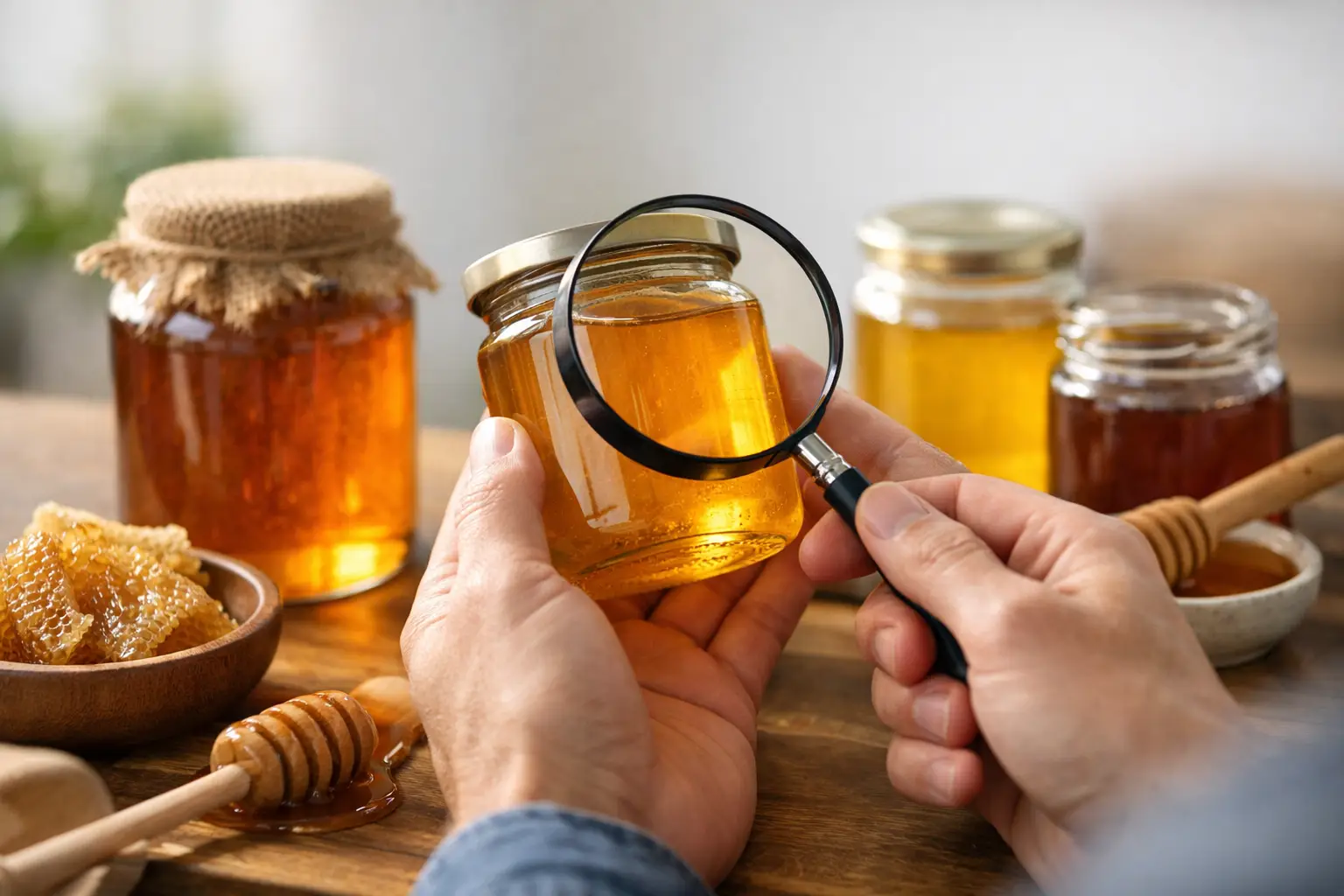
A beautiful honey jar can promise mountain flowers, raw goodness, and ancient tradition, yet the smallest print often tells the truer story. This guide to honey label reading helps you look beyond the front-label glow and choose honey with the purity, origin, and character you expect from Nature’s Gold.
For honey lovers seeking genuine Yemeni Sidr honey, the label is more than packaging. It is a window into where the honey came from, what was or was not added, and whether the product reflects a real harvest rather than a vague honey blend. A few careful moments with the jar can make all the difference.
Start With the Ingredient List
The ingredient list is the clearest place to begin. For pure honey, it should be wonderfully simple: honey.
There should be no corn syrup, cane sugar, flavoring, preservatives, or sweetener blends. A honey product may still taste pleasant, but it is not the same as a jar containing 100% pure honey. If you are buying honey for its natural flavor, traditional place in your pantry, or daily wellness ritual, simplicity matters.
Some labels use wording such as “pure honey” or “100% honey” on the front. These phrases can be reassuring, but turn the jar around and confirm them in the ingredient panel. The back label is where a product earns your confidence.
A Guide to Honey Label Reading: Know the Origin
Origin is one of the most meaningful details on a premium honey label. Honey takes on the personality of its landscape: the flowers visited by bees, the climate, the soil, and the traditions of the people who harvest it. A label that clearly names a country or region offers more traceability than one that simply says “imported” or “international blend.”
Look closely at the wording. “Product of Yemen” signals that the honey itself was produced in Yemen. “Packed in” or “distributed by” tells you where the jar was filled or sold, which is useful but does not necessarily identify where the bees gathered the nectar.
This distinction is especially valuable with Sidr honey. Authentic Yemeni Sidr honey is connected to the Sidr tree, also known as the lote tree, which grows across Yemen’s remarkable landscapes. Its deep amber color, rich aroma, and layered sweetness reflect both the tree and the region. A specific origin gives the honey a story you can trace, not simply a marketing image.
If a label offers a named region within Yemen, that can provide even more context. Still, specificity alone is not a guarantee. It should be paired with a clean ingredient list, clear seller information, and a brand that speaks consistently about its sourcing.
Read Botanical Names With Care
Honey is often described by the flower source that provided much of the nectar. You may see labels for clover, orange blossom, wildflower, acacia, or Sidr honey. These names help set expectations for flavor and color, but they deserve a thoughtful read.
Sidr honey should identify the Sidr source clearly, rather than using vague phrases that merely borrow the name or evoke Middle Eastern heritage. Look for a label that makes a direct connection between the honey and the Sidr tree, along with a stated Yemeni origin when you are seeking the traditional Yemeni variety.
Nature is not manufactured in a laboratory. Bees forage freely, and a harvest can naturally include nectar from more than one bloom. That means floral descriptions are best understood as a meaningful guide to the honey’s dominant character, not a promise that every drop came from only one flower. Honest brands make room for this natural variation.
Do Not Let Color Decide Everything
Dark honey is not automatically better, and pale honey is not automatically less pure. Color changes with floral source, harvest season, and storage conditions. Yemeni Sidr honey is often known for a warm amber to deeper golden-brown appearance, but individual batches may vary.
The same is true of texture. Freshly harvested honey can be runny, creamy, or dense depending on its natural composition and the temperature around it. A label may describe the honey as raw, unfiltered, or minimally processed. These terms can be useful, especially for shoppers who prefer honey close to its natural state, but they should be supported by clear sourcing and ingredient information.
“Raw” is not a universal measure of quality on its own. It generally suggests that honey was not heavily heated, which can help preserve its natural character. Yet there is no substitute for knowing where the honey came from and whether anything was added. Origin and purity remain the foundation.
Understand the Nutrition Facts Panel
Honey is a natural source of carbohydrates, primarily in the form of naturally occurring sugars. The Nutrition Facts panel lets you see serving size, calories, and sugar content in a standardized format. This is helpful for fitting honey into your own eating habits, whether you stir a spoonful into tea, enjoy it with breakfast, or use it in a favorite family recipe.
Do not confuse naturally occurring honey sugars with added sugars. A jar containing only honey should not have other sweeteners added to it. The ingredient list remains the best place to check that distinction.
Premium honey can be enjoyed as part of a balanced diet, but it is still honey. Serving size matters, particularly for those monitoring sugar intake. And because honey should not be given to children under 12 months old, a responsible label or product page may include that familiar safety guidance.
Look for Traceability, Not Just Attractive Claims
A trustworthy honey label usually makes it easy to identify the producer, importer, or seller. You should be able to find a business name and contact information, a net weight, and often a lot or batch code. These details may seem ordinary, but they show that a brand is prepared to stand behind what it sells.
A lot number is especially helpful for a specialty food with natural batch-to-batch variation. Harvests can differ slightly in color, aroma, or consistency. That variation is part of what makes real honey alive with place and season, not a reason for concern.
Be cautious with labels that lean heavily on dramatic promises while saying very little about ingredients or origin. Phrases such as “superfood” or “immune support” may appeal to wellness-minded shoppers, but they do not replace transparent product information. Honey has a long traditional place in homes around the world. Let the purity of the jar, the quality of its source, and your own informed choice lead the decision.
Crystallization Is Usually a Good Sign
Many people mistakenly believe crystallized honey has gone bad. In fact, crystallization is a natural process that happens when glucose forms tiny crystals over time. It can occur sooner in some varieties than others, and cooler temperatures may encourage it.
A jar that becomes thicker, grainy, or creamy is not necessarily old or impure. Unless there are unusual odors, visible moisture issues, or other signs of improper storage, crystallized honey is generally still enjoyable. Gentle warming can soften it if you prefer a pourable texture. Avoid overheating, since excessive heat can diminish the delicate aroma and character that make specialty honey worth savoring.
Choose a Label That Respects the Honey
The best label does not need to shout. It clearly tells you what is inside, where it was harvested, and who is responsible for bringing it to your table. For an authentic Sidr honey purchase, seek 100% honey, a direct Yemeni origin, a meaningful Sidr identification, and a brand willing to be transparent about its product.
At Yemen Honey Store, that standard begins with honey sourced straight from the heart of Yemen and presented for what it is: a rare, natural treasure shaped by heritage, landscape, and patient beekeeping. Read the jar with care, then enjoy the reward slowly – by the spoonful, over warm bread, or stirred into the moments that call for something truly special.