
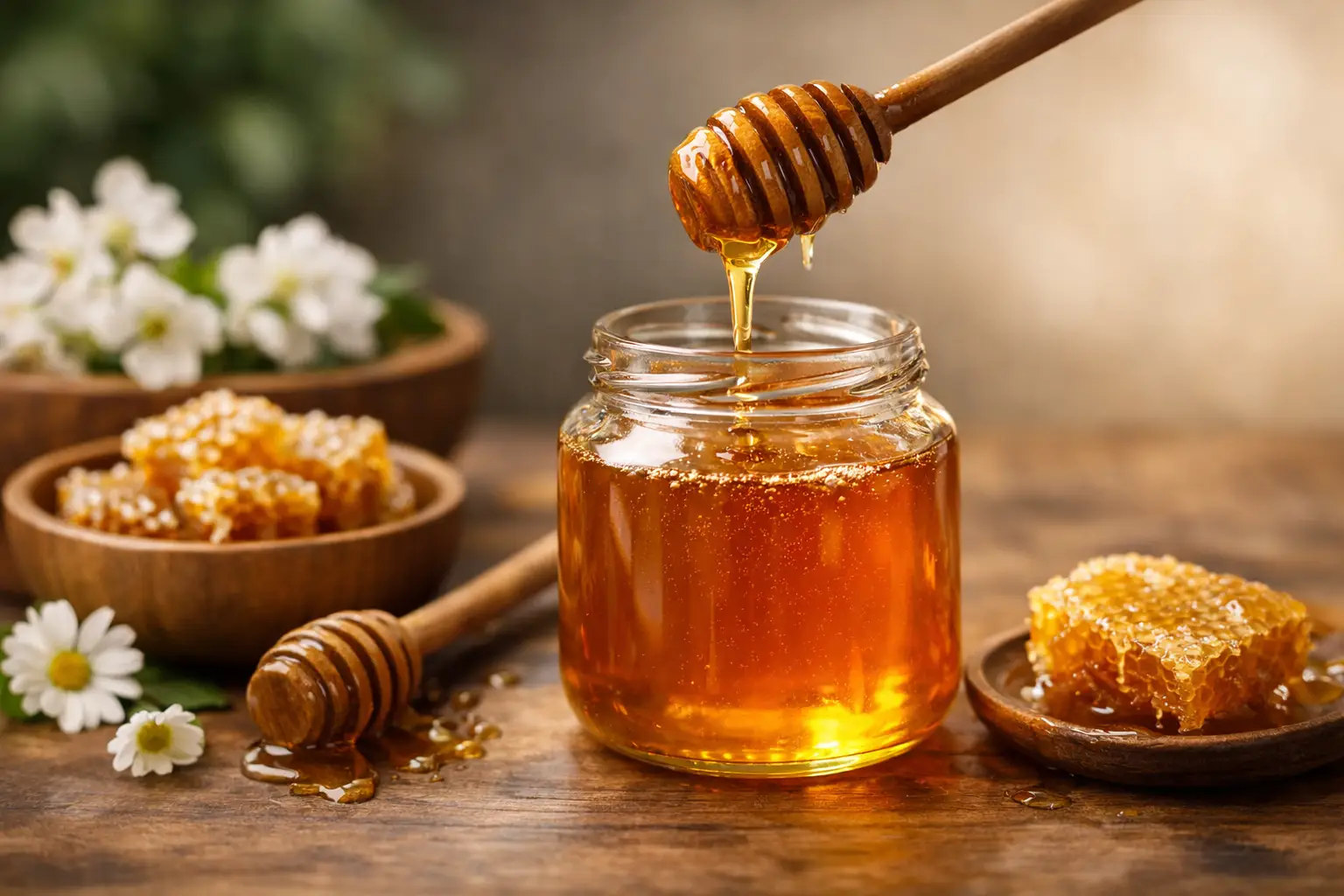
A spoonful of pure honey should not taste like anonymous sugar. It should carry a place with it: the flowers visited by bees, the season of the harvest, the soil beneath the trees, and the care used from hive to jar. That difference becomes especially clear with Yemeni Sidr honey, a treasured honey known for its rich body, warm caramel-like character, and unmistakable depth.
For families choosing better pantry staples, purity is not a trendy word. It is the reassurance that what you serve, stir into tea, or enjoy by the spoonful began with nature and remained close to it. Real honey is Nature’s Gold – simple in ingredients, yet remarkably layered in flavor, tradition, and value.
What Does Pure Honey Actually Mean?
At its most basic, pure honey contains one ingredient: honey. It has not been diluted with corn syrup, rice syrup, sugar solutions, artificial flavors, or unnecessary additives. Bees gather nectar, transform it naturally, and beekeepers collect the honey with careful handling. That is the standard worth seeking.
Still, the word “pure” should invite a closer look, not end the conversation. Honey can be pure yet come from many floral sources and regions. It can be gently strained to remove natural hive particles, or it can be heavily filtered and heated for a perfectly uniform supermarket appearance. Those are different choices, and they affect how much of the honey’s original character reaches your table.
For those who value traditional foods, the strongest sign of quality is not a pale, flawless liquid that looks identical year-round. It is transparency about where the honey came from, what the bees foraged on, and how the honey was handled after harvest.
Why Origin Gives Pure Honey Its Character
Honey is shaped by geography in much the same way that coffee, olive oil, and tea are shaped by where they grow. Nectar from wildflowers creates one profile. Citrus blossoms create another. Sidr trees create something distinctly their own.
Sidr honey comes from the nectar of the Sidr tree, also known as the jujube tree. In Yemen, these ancient trees grow in landscapes where traditional beekeeping knowledge has been passed through generations. The result is a honey prized for its dark golden to amber color, naturally dense texture, and full, lingering taste.
A jar of authentic Yemeni Sidr honey is not valuable simply because it is imported or rare. Its value comes from the relationship between the bees, the Sidr blossoms, the harvest region, and the people who safeguard the process. Straight from the Heart of Yemen, it offers a food tradition that mass-market blends cannot reproduce.
This is why origin matters so much. A generic label may say “honey” while blending supply from several countries or floral sources. That honey may still be sweet, but it rarely tells you what it is, where it began, or why it tastes the way it does. Single-origin or clearly sourced honey gives buyers a more meaningful standard of confidence.
The Signs of High-Quality Pure Honey
There is no single visual test that can prove every jar is authentic. Color, thickness, and crystallization can vary naturally based on floral source, climate, and storage. But when you look at the whole picture, quality becomes easier to recognize.
Start with the ingredient statement. It should be simple and direct: honey. Then consider the source. A trusted seller should be able to speak clearly about the country or region of origin and the type of honey being offered. Vague sourcing is not always a sign of poor quality, but clear sourcing is a stronger foundation for a premium purchase.
Aroma is another clue. Real honey often has a gentle floral, herbal, woody, or caramel-like scent that reflects its nectar source. Yemeni Sidr honey is admired for its distinctive, deep fragrance and rounded sweetness. It is rich without needing added flavoring.
Texture also tells part of the story. Pure honey may pour slowly, settle densely on a spoon, or change slightly with temperature. Some honeys remain fluid for a long time, while others crystallize more quickly. Neither behavior automatically determines quality. Crystallization is a natural process in honey, not a defect or proof that a jar has gone bad.
Taste is where authenticity becomes memorable. Quality honey has dimension. The sweetness may arrive first, followed by floral notes, a light earthiness, fruit-like warmth, or a clean finish. A flat, one-note sweetness can be pleasant, but it does not offer the same sense of place.
Pure Honey and the Value of Gentle Handling
Raw, unprocessed, strained, and filtered are terms shoppers often see, sometimes used interchangeably. They are related, but they do not always mean the same thing.
Fresh honey may contain tiny natural traces from the hive, such as wax particles or pollen. Gentle straining removes larger bits while preserving the honey’s natural character and beautiful clarity. More intensive filtering can create a highly polished, uniform look, though it may remove some of those naturally occurring traces. Heating is also sometimes used to make honey easier to bottle or to delay crystallization.
There is a practical trade-off here. A perfectly clear, slow-crystallizing jar may look familiar on a store shelf. A gently handled honey may show more natural variation from one harvest to the next. For many buyers, that variation is part of the appeal. It reflects a real agricultural product rather than a standardized sweetener.
When choosing pure honey, look for a seller that explains its approach honestly. Premium honey does not need exaggerated promises. It needs careful sourcing, clean handling, and a commitment to keeping the ingredient exactly what it should be.
How to Enjoy Yemeni Sidr Honey Every Day
The finest honey deserves more than a forgotten place at the back of the pantry. Its complex flavor makes it a simple way to bring natural luxury into everyday rituals.
Enjoy a small spoonful in the morning for a naturally sweet start, or stir it into warm tea after the water has cooled slightly. Its rich flavor pairs beautifully with plain yogurt, oats, fresh fruit, tahini, soft cheese, and warm flatbread. In the kitchen, use it where its character can be tasted: in a glaze for roasted vegetables, a dressing with lemon and olive oil, or a finishing drizzle over desserts.
Because Sidr honey is intensely flavorful, a little often goes a long way. That makes it especially rewarding as a table honey, where quality matters more than quantity. It also makes a thoughtful gift for people who appreciate heritage foods, natural ingredients, and flavors with a story behind them.
Honey is a food, not a replacement for medical care, and individual wellness needs differ. Yet choosing a minimally processed, additive-free sweetener can be a meaningful part of a more intentional kitchen. For parents, busy professionals, and anyone reducing reliance on heavily processed foods, that simplicity has real appeal.
Storing Pure Honey the Right Way
Keep honey tightly sealed at room temperature, away from direct sunlight and excess moisture. A cupboard is usually better than a refrigerator, since cold temperatures can speed crystallization. Always use a clean, dry spoon to protect the honey’s flavor and consistency.
If your honey crystallizes, there is no need to discard it. Place the closed jar in warm water and allow it to soften gradually. Avoid overheating it. Gentle warming helps return the honey to a smoother texture while respecting the qualities that made it special in the first place.
A good jar of honey asks for very little: a clean spoon, a cool cupboard, and the patience to let nature be natural.
Choosing Pure Honey With Confidence
Premium honey should make you feel connected, not confused. Choose a jar with one clear ingredient, a traceable origin, and a flavor profile that reflects real flowers and real land. If you are seeking the bold, treasured taste of Sidr, choose honey that honors Yemen’s beekeeping heritage rather than treating that heritage as a marketing detail.
Yemen Honey Store brings that standard to American tables with authentic Yemeni Sidr honey selected for purity, origin, and the extraordinary character that has made it prized for generations. Let each spoonful be a small reminder that the most exceptional foods often need the fewest ingredients.