
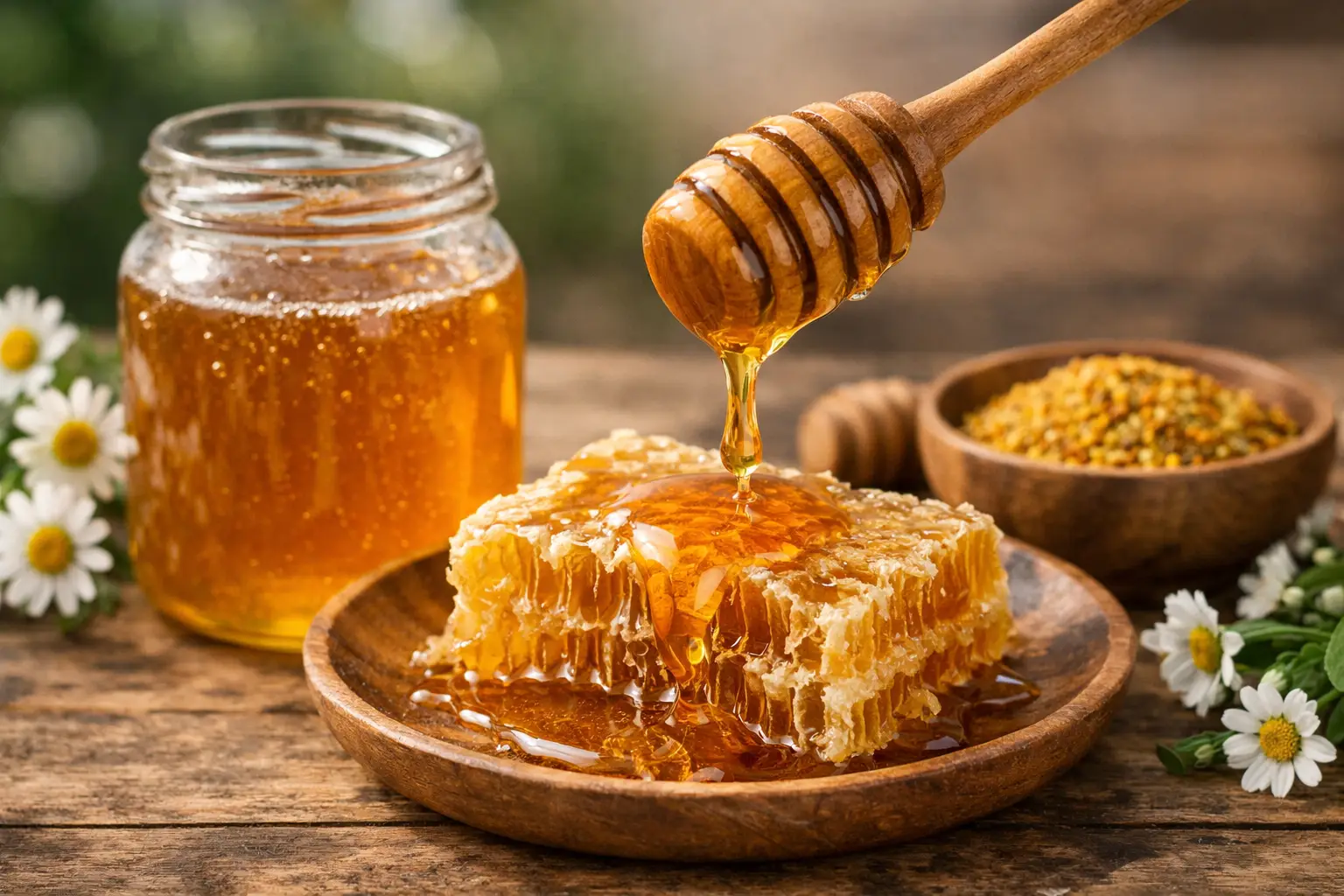
A spoonful of truly unprocessed honey should taste like it came from somewhere. It may carry deep caramel notes, warm spice, wildflower brightness, or the rich, almost buttery character of Sidr blossoms. That sense of place is exactly what gets lost when honey is heavily heated, over-filtered, or blended beyond recognition.
For families and wellness-minded shoppers looking beyond ordinary supermarket bottles, unprocessed honey offers something more meaningful than sweetness. It is Nature’s Gold in a form that remains close to the hive, with its natural aroma, color, texture, and distinctive flavor respected from harvest through bottling.
What Is Unprocessed Honey?
Unprocessed honey is honey handled with minimal intervention after harvest. Beekeepers may strain it to remove natural hive particles such as wax, but the goal is to preserve the honey’s inherent character rather than refine it into a uniform, ultra-clear product.
This usually means avoiding excessive heat and aggressive filtration. Conventional processing is often designed for visual consistency, easy bottling, and a longer liquid appearance on store shelves. Those goals are understandable, but they can make one jar of honey taste much like another.
With unprocessed honey, variation is part of the appeal. Its color may be lighter or darker depending on the flowers available to the bees, the season, and the landscape. Its aroma can be bold. Its texture can change over time. These are not flaws. They are signs that honey is an agricultural food with a real origin.
Unprocessed, Raw, and Pure: Similar but Not Identical
These terms are often used together, but they do not always mean precisely the same thing. “Pure honey” generally means no other sweeteners, syrups, flavors, or additives have been mixed into the jar. “Raw honey” commonly refers to honey that has not been pasteurized or exposed to high heat. “Unprocessed honey” emphasizes minimal handling overall.
The best approach is to look beyond a single label word. Ask whether the honey has a clear country and floral origin, whether it contains one ingredient only, and whether the seller can explain how it is sourced and handled. Transparency matters more than vague promises.
Why Processing Changes Honey
Honey is naturally shelf-stable because of its low moisture content and unique composition. It does not need preservatives, artificial colors, or flavorings to be enjoyable. Yet mass-market production often adds steps that make honey easier to package at scale.
High heat can keep honey flowing smoothly and delay crystallization. Fine filtration can create the sparkling, transparent appearance many shoppers expect. Neither step automatically makes honey unsafe, but both can reduce the sensory richness that makes a single-origin honey special.
Unprocessed honey keeps more of its natural personality. You may notice a fuller aroma, more layered taste, and a texture that feels less standardized. For someone who sees honey as a premium pantry ingredient rather than a generic sweetener, that difference is worth seeking out.
The Value of Origin in Unprocessed Honey
Honey is shaped by geography in the same way olive oil, coffee, and wine are shaped by their growing regions. The nectar source, local climate, rainfall, altitude, and beekeeping traditions all leave their mark.
Yemeni Sidr honey is prized because it begins with the Sidr tree, known for its fragrant blossoms and deep roots in Yemen’s landscape and culture. Harvested from areas where these trees grow naturally, authentic Sidr honey is known for its amber-to-dark color, rich body, and complex sweetness. Many people describe notes of caramel, dried fruit, herbs, and warm spice.
Its rarity is not simply a marketing story. Genuine Sidr honey depends on a specific botanical source and careful harvest practices. When you choose honey tied to a clear origin, you are choosing more than flavor. You are supporting a tradition of beekeeping that respects the land and the seasons.
At Yemen Honey Store, authentic Yemeni Sidr honey is valued for this exact reason: it is a direct expression of Yemen’s natural heritage, offered without additives or unnecessary processing.
A Darker Color Does Not Always Mean Better Honey
Color can offer clues, but it is not a complete quality test. Darker honey often has a stronger taste, and certain floral varieties naturally produce deeper shades. Still, honey can be excellent whether it is pale gold, amber, or dark brown.
Instead of judging by color alone, consider the full picture: floral source, origin, aroma, texture, ingredient list, and the integrity of the producer. A premium honey should have a reason for being the color it is.
How to Recognize Quality Unprocessed Honey
A trustworthy jar should make its story easy to understand. The label should identify honey as the only ingredient and provide a meaningful source, not merely a broad statement that it is “imported” or “natural.” A named country and botanical variety offer much more confidence than a mysterious blend.
The honey itself may not look perfectly identical from jar to jar. That is normal with a natural food. Seasonal changes in nectar can create subtle shifts in color, thickness, and flavor. A seller who acknowledges these differences is often giving you a more honest account of what is inside.
Be cautious of prices that seem too good for a rare, single-origin honey. Authentic sourcing, careful harvesting, and international handling all carry real costs. Premium honey is best treated as a quality ingredient to savor, not as a commodity purchased only by the ounce.
Crystallization Is Natural, Not a Defect
One of the most common misunderstandings about unprocessed honey is crystallization. When honey forms tiny crystals or becomes firmer and more opaque, it has not gone bad. Crystallization is a natural process influenced by the honey’s glucose content, temperature, and floral source.
In fact, minimally handled honey may crystallize sooner than highly processed honey because it retains more of its natural structure. Some people enjoy the spreadable texture on toast, biscuits, or warm oatmeal.
If you prefer a smoother consistency, place the closed jar in warm water and let it loosen gradually. Avoid overheating it or placing it in a microwave, which can damage the flavor you chose the honey for in the first place. Store honey tightly sealed at room temperature, away from direct sunlight and excess moisture.
Simple Ways to Enjoy It Every Day
Unprocessed honey deserves more than a quick squeeze into tea. Its flavor can turn small daily rituals into something more satisfying. Stir a spoonful into warm water with lemon, drizzle it over Greek yogurt and fruit, or use it to finish roasted carrots and winter squash.
Sidr honey’s rich profile also pairs beautifully with cheese, tahini, nuts, and toasted bread. In cooking, add it near the end when possible, so its distinctive character remains present. It can bring depth to a salad dressing, a marinade, or a bowl of oatmeal without needing much else.
For a simple wellness routine, many adults enjoy a small spoonful as part of breakfast or an afternoon snack. Honey is still a source of natural sugar, so moderation matters. And while honey is a treasured food for adults and older children, it should never be given to infants under 12 months old.
Choose Honey With a Story You Can Taste
A jar of unprocessed honey can offer sweetness, but the best jars offer far more: a connection to a flower, a landscape, and the hands that gathered it. When the source is clear and the handling is respectful, every spoonful carries a little more character.
Keep one honey in your pantry that asks you to slow down and taste it on its own. That is often the simplest way to recognize the difference purity makes.