
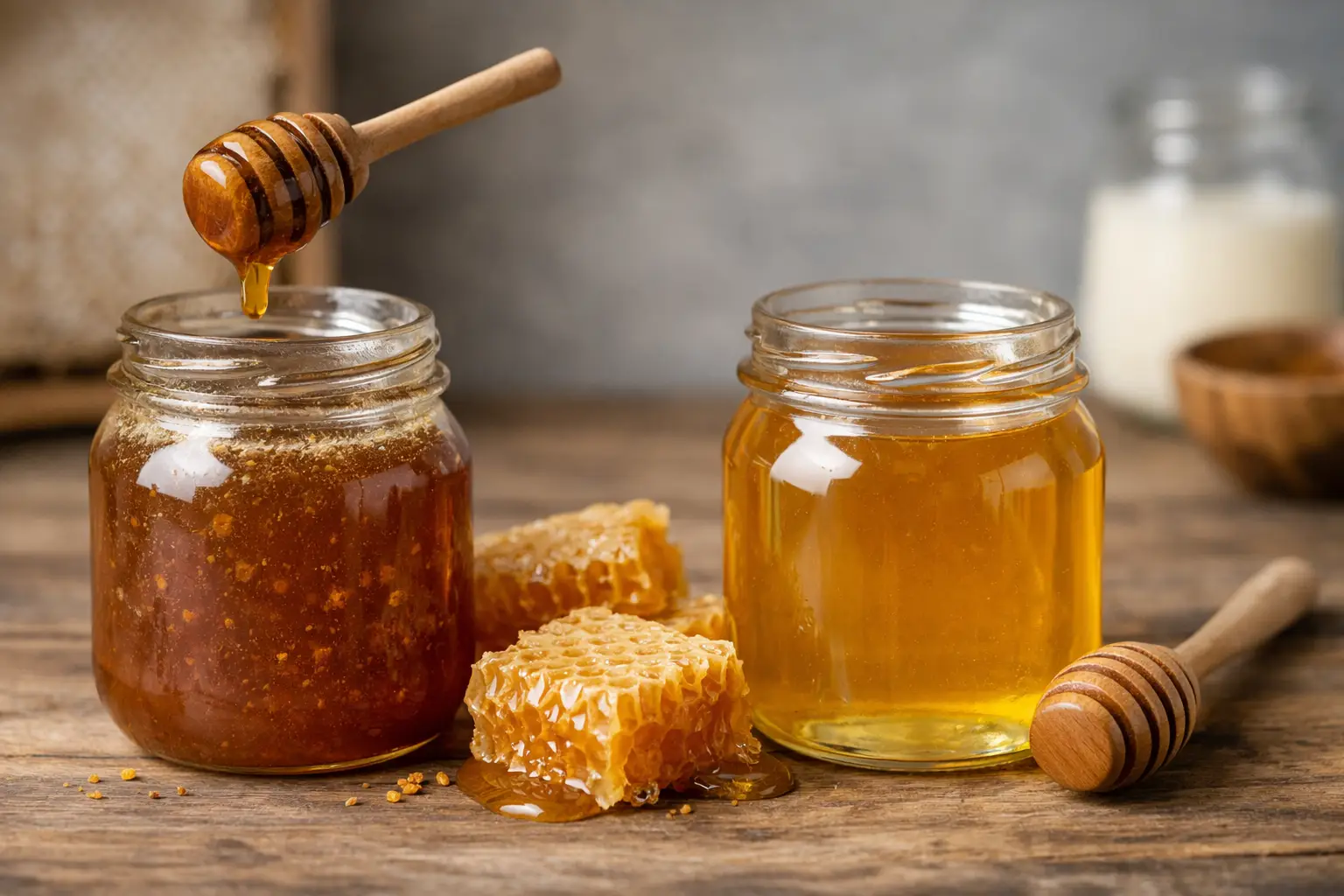
A jar of honey can look perfectly clear, brilliantly golden, and completely uniform – yet that appearance says more about processing than it does about quality. When comparing unfiltered honey versus filtered honey, the meaningful differences come down to what remains in the jar, how the honey was handled, and what you value most: a polished look, or a closer connection to the harvest.
For honey lovers seeking rare, origin-rich varieties such as Yemeni Sidr honey, this distinction matters. Honey is not simply a sweetener. It carries the character of its flowers, landscape, season, and the careful work of the beekeepers who harvest it.
Unfiltered Honey Versus Filtered Honey: The Real Difference
All honey is usually strained in some form after harvest. Beeswax pieces, hive debris, and other visible particles need to be removed before honey is bottled. Straining is a practical step that helps preserve a clean, enjoyable product without necessarily changing the honey’s natural character.
Filtered honey goes further. It is passed through very fine filters, often with gentle warming to help it flow more easily. This process removes tiny particles that may include fine wax, pollen grains, and naturally occurring air bubbles. The result is honey that looks exceptionally clear and stays liquid-looking for longer.
Unfiltered honey is generally filtered less aggressively. It may still be strained for cleanliness, but more of the fine, naturally present material remains. That can give the honey a deeper appearance, a slightly fuller texture, or a soft haze that is visible in the jar.
Neither label alone tells the complete story. There is no single universal standard that every producer uses for the word “unfiltered.” The better question is how the honey was harvested, whether it has been overheated, and whether the seller can clearly stand behind its source and ingredients.
What You May Notice in the Jar
The first difference most people see is clarity. Filtered honey is often smooth, bright, and transparent. It is a familiar supermarket look, especially in squeeze bottles designed for easy, mess-free use.
Unfiltered honey may look more substantial. Depending on its floral source, it can appear cloudy, richly opaque, or speckled with tiny natural particles. A premium dark honey, including authentic Sidr honey, may have a naturally deep amber to brown color that reflects its nectar source rather than any added ingredient.
Texture can differ as well. Fine filtration can produce an ultra-silky pour, while minimally processed honey may feel more rounded on the spoon. The difference is usually subtle, but people who enjoy honey slowly – over warm bread, stirred into tea after it cools, or enjoyed by the teaspoon – often appreciate that sense of texture.
Flavor is where origin becomes especially important. Filtration does not automatically erase flavor, but honey that has been repeatedly heated or heavily processed can lose some of the delicate aromatic notes that make single-origin honey memorable. Genuine Yemeni Sidr honey is prized for its bold, caramel-like depth, herbal warmth, and lingering finish. Those qualities begin with the Sidr blossoms and Yemen’s distinctive terrain, not with a factory process.
A Note on Pollen and Natural Particles
Pollen is often central to conversations about unfiltered honey. Because finer filtration can remove much of it, unfiltered honey may retain more pollen grains. These grains can be part of honey’s natural makeup and may help laboratories identify likely floral or geographic origins.
Still, pollen is not a magic measure of quality. The amount naturally varies by flower source, season, and handling. Its presence does not turn honey into a medicine, and its absence does not automatically mean a honey is poor. Trustworthy sourcing, pure ingredients, and responsible handling are stronger signs to look for.
Is Unfiltered Honey the Same as Raw Honey?
Not always. “Raw” and “unfiltered” describe different parts of honey handling, though they are often used together.
Raw honey generally refers to honey that has not been pasteurized or exposed to high heat. Beekeepers may warm honey gently to make bottling possible, especially when it has begun to crystallize. The key distinction is whether it was subjected to significant heat processing for a long period.
Unfiltered refers to the fineness of the filtering process. A honey can be raw but finely filtered, or it can be lightly filtered but warmed more than a raw-honey buyer would prefer. That is why clear communication from the producer matters more than relying on one appealing word on a label.
For a specialty honey, seek a simple ingredient statement: honey, and nothing else. Ask whether it is single-origin or blended, where it was harvested, and how it was handled between the hive and the jar. A honey with a clear story is far more valuable than one with vague marketing language.
Why Filtered Honey Has a Place
Filtered honey should not be dismissed as automatically inferior. Fine filtering creates a consistent, clear product that many households enjoy. It may be easier to pour, visually familiar, and convenient for baking, sauces, drinks, or everyday use.
Some people also prefer filtered honey because they want no visible particles in their food. That is a valid preference. If the producer uses pure honey, avoids unnecessary additives, and shares honest information about its process, filtered honey can still be a satisfying choice.
The trade-off is that a highly polished appearance can make honey feel more standardized. For buyers who are drawn to the individuality of a harvest – the variations in color, aroma, and texture that come from a real place – a minimally processed option is often more compelling.
Choosing Honey for Purity, Not Just Appearance
A clear jar is not necessarily purer, and a cloudy jar is not necessarily better. Purity means the honey is genuinely honey, without corn syrup, artificial flavors, unnecessary sweeteners, or undisclosed blends. It also means the seller respects the product enough to share where it comes from.
When choosing between unfiltered and filtered honey, consider these practical questions. Do you want a smooth, crystal-clear honey for daily convenience, or a more natural presentation with its subtle variations intact? Are you buying a blended product, or a honey tied to one region and floral source? Can the brand explain its harvesting and bottling practices with confidence?
For a heritage honey such as Sidr, origin deserves to lead the decision. Sidr trees grow in parts of Yemen where beekeeping traditions have been passed through generations. The honey’s value lies in that rare connection to land, blossom, and craft. Processing should protect that character, not cover it up.
Crystallization Is Natural, Not a Defect
Many shoppers assume crystallized honey is old or spoiled. In fact, crystallization is a natural change that happens when glucose forms tiny crystals over time. It is influenced by the honey’s floral source, storage temperature, and natural composition.
Unfiltered honey may show crystallization differently because it contains more tiny particles that can give crystals a place to begin forming. But filtered honey crystallizes too. It remains safe and enjoyable when stored properly. If you prefer it softer, place the sealed jar in warm water and let it loosen gradually. Avoid overheating, especially in a microwave, since intense heat can flatten the honey’s fragrance and flavor.
The Best Choice Depends on What You Value
Choose filtered honey if you want a very clear look, a consistently smooth pour, and a dependable pantry staple for cooking. Choose unfiltered or minimally filtered honey if you appreciate natural texture, a less processed presentation, and the small variations that make each harvest feel distinct.
For many premium-honey buyers, the ideal choice is not about chasing cloudiness or avoiding clarity. It is about buying honey with integrity. A carefully harvested, additive-free honey from a known place carries more meaning than an anonymous golden syrup in a bear-shaped bottle.
Nature’s Gold does not need to look identical in every jar. Let the aroma, the flavor, and the story of where it began guide your next spoonful.