
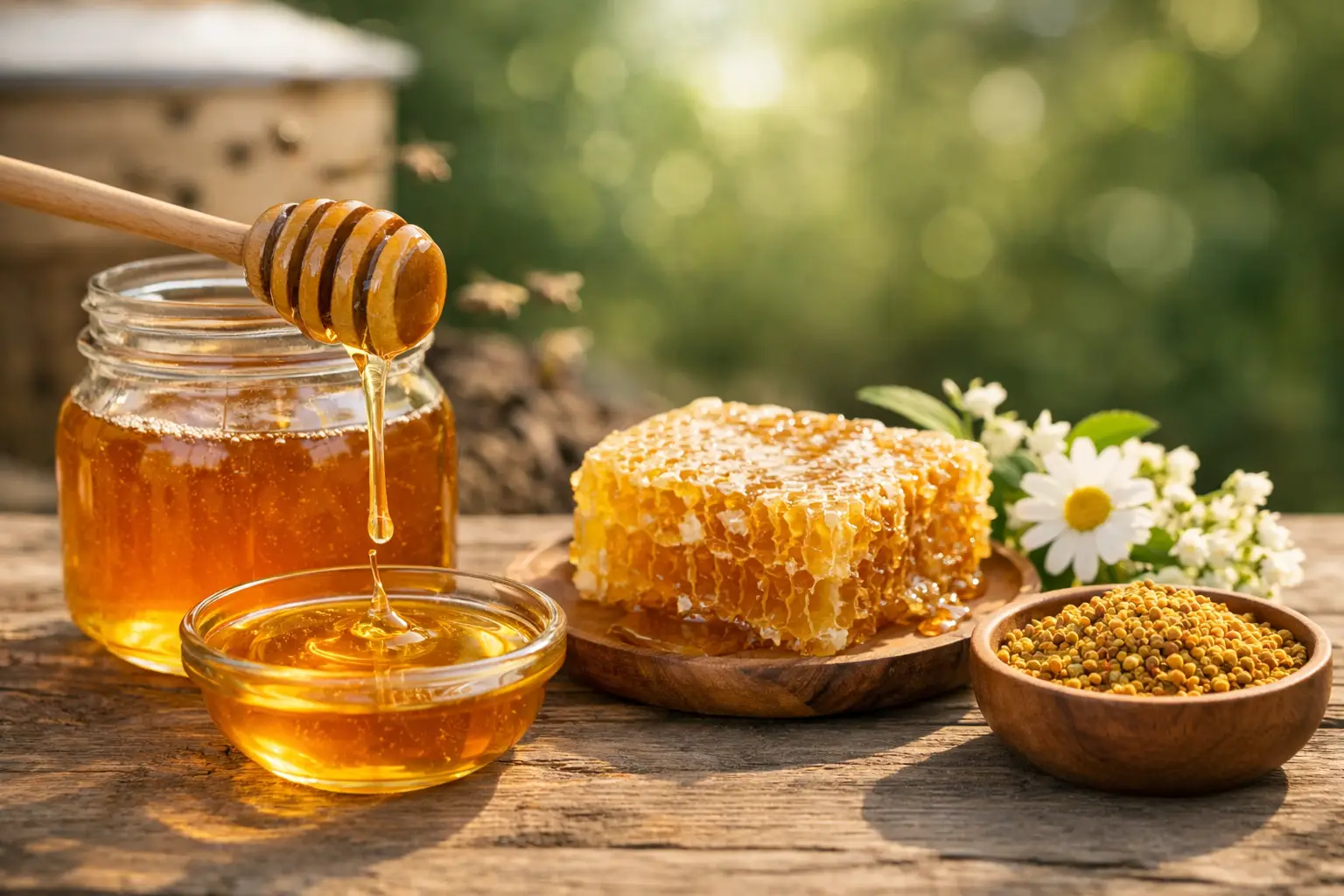
A jar can say “pure honey” and still leave shoppers with a real question: what makes honey unprocessed? The answer is not simply that honey came from bees. It is about what happens after harvest – how it is strained, heated, stored, and protected from additives or blending. For those seeking genuine Sidr honey and other premium varietals, these details shape the flavor, character, and integrity of every spoonful.
Unprocessed honey is Nature’s Gold in its most recognizable form: honey collected from the hive, separated from larger natural particles, and handled with restraint. It retains the distinct aroma, rich color, and layered taste that reflect the flowers, trees, soil, and season where the bees foraged. With rare Yemeni Sidr honey, that sense of place is part of what makes each jar so treasured.
What Makes Honey Unprocessed?
At its core, unprocessed honey has not been heavily altered after harvesting. Beekeepers remove it from the comb, then typically strain it to remove pieces of wax, bee propolis, or other visible hive material. Straining is not the same as industrial processing. It is a practical, traditional step that makes honey pleasant to enjoy while preserving its natural texture and identity.
The difference lies in intensity. Honey becomes more processed when it is aggressively filtered, heated at high temperatures, diluted, blended with other honeys, or combined with sweeteners and flavorings. These practices can create a very uniform product, but uniformity is not always the same as authenticity.
A truly unprocessed honey should have one ingredient: honey. It should also carry a clear origin story. When a seller can identify where the honey was harvested and how it was handled, buyers have a stronger basis for trusting what is in the jar.
Gentle Straining Protects Honey’s Natural Character
Fresh honey from a hive naturally contains tiny bits of wax, pollen, and other harmless traces of the hive environment. Many producers lightly strain honey to remove larger particles. This creates a cleaner pour without stripping away everything that gives honey its natural character.
Ultra-filtration is different. It uses very fine filters, often alongside heat, to remove extremely small particles. The resulting honey may look exceptionally clear and stay liquid longer, but it can also lose much of the pollen that helps connect honey to its botanical and geographic source.
Appearance alone is not a quality test. Some unprocessed honey looks clear; some is darker, cloudier, or naturally opaque. Sidr honey is especially known for its deep golden to amber tones and full-bodied consistency. Its color may vary from harvest to harvest because nature does not produce identical batches on a factory schedule.
Pollen Is a Sign of Place, Not a Marketing Trick
Pollen is not something added to honey. It is naturally present when bees gather nectar and when honey is extracted from the comb. In minimally handled honey, traces of pollen may remain. That matters because pollen can help support the honey’s origin profile.
Still, pollen is only one piece of the picture. A buyer should look beyond a single claim and consider the complete standard: single-origin sourcing, no added ingredients, careful harvesting, sensible handling, and a producer willing to be clear about where the honey comes from.
Heat Is Where the Details Matter Most
Heat is often used to make honey easier to bottle and to delay crystallization. A little controlled warmth may be used during handling, particularly when honey has thickened or crystallized. That does not automatically mean the honey is poor quality or no longer natural.
The concern is excessive or repeated heating. High heat can change honey’s delicate aroma and soften the complex flavor notes that make a premium varietal special. It may also reduce naturally occurring enzymes that are present in honey in varying amounts.
For a honey as distinctive as Yemeni Sidr, gentle handling matters because its appeal is not just sweetness. Authentic Sidr honey can offer a deep caramel-like richness, warm herbal notes, and a lingering finish shaped by bees foraging among ancient Sidr trees. Heavy processing can make any honey taste flatter and more generic.
This is why “raw” and “unprocessed” are closely related, but not always identical labels. Raw honey generally means it has not been pasteurized or heated aggressively. Unprocessed honey is a broader idea that also speaks to filtration, additives, blending, and minimal intervention. Since labeling practices can vary, the best approach is to ask how the honey was harvested and handled rather than relying on one word alone.
No Additives, No Dilution, No Hidden Blends
The clearest mark of unprocessed honey is simplicity. The ingredient list should read: honey. Nothing else.
Honey does not need corn syrup, cane sugar, artificial flavoring, preservatives, or coloring to taste inviting. Its natural sweetness, aroma, and color come from nectar and time in the hive. When additions appear in the jar, the product may still be a sweet spread, but it is no longer honey in its purest form.
Blending deserves attention as well. Some commercial products combine honey from multiple regions or countries to maintain a consistent price, color, and flavor. There is nothing inherently wrong with a disclosed blend, but it is different from a single-origin honey with a traceable heritage.
For shoppers who choose Sidr honey, origin is essential. Real Yemeni Sidr honey is valued because of the landscape behind it: bees working around Sidr trees in Yemen’s rugged, untouched regions, followed by a harvesting tradition shaped over generations. That character cannot be replicated by simply labeling a mixed product as premium.
Crystallization Is Natural, Not a Flaw
One of the most misunderstood signs of honest honey is crystallization. Over time, natural honey may become thicker, grainy, or partly solid. This occurs when glucose naturally forms crystals, and the speed depends on the floral source, storage temperature, and composition of the individual batch.
Crystallized honey is still good honey. In fact, it can be a reassuring sign that the product has not been excessively heated or altered to keep it perfectly liquid for months on end. Some varieties crystallize quickly, while others – including many Sidr honeys – can remain smooth and viscous for longer periods. There is no single texture that proves purity.
If you prefer a softer texture, place the sealed jar in warm water and allow it to loosen gradually. Avoid boiling water or microwaving the honey. Slow, gentle warming helps preserve the flavor you paid for.
How to Choose an Unprocessed Honey With Confidence
Choosing well starts with a few straightforward questions. First, does the jar list honey as the only ingredient? Second, can the seller identify the country and region of origin? Third, is the honey described with clear details rather than vague promises of “natural” quality?
For specialty honey, transparency should feel specific. A trustworthy seller can explain the floral source, the harvest tradition, and whether the honey is raw or minimally handled. It should also acknowledge natural variation. A honey that differs slightly in shade, thickness, or flavor from one harvest to the next is often showing the honest influence of season and landscape.
Price can offer context, too. Rare single-origin honey requires careful sourcing, responsible harvesting, transport, and storage. It will not usually be priced like a large supermarket squeeze bottle. Premium does not guarantee purity by itself, but a remarkably cheap “Sidr honey” deserves a closer look.
At Yemen Honey Store, the focus is on offering authentic Yemeni Sidr honey with the straightforward standard discerning families expect: 100% natural honey, no additives, and a story rooted in its true origin. That commitment lets the honey speak for itself – rich, aromatic, and straight from the heart of Yemen.
The Best Way to Enjoy Honey in Its Natural Form
Unprocessed honey deserves to be tasted before it is stirred into anything. Try a small spoonful at room temperature and notice the aroma first, then the way the flavor develops. A fine Sidr honey can be enjoyed simply, spread over warm bread, paired with cheese, stirred into tea after it has cooled slightly, or used to bring depth to yogurt and oatmeal.
Store honey tightly sealed in a cool, dry cupboard, away from direct sunlight. Refrigeration is unnecessary and can encourage faster crystallization. With thoughtful storage, honey’s natural sweetness and character remain ready for the daily rituals that make a pantry feel well cared for.
The most meaningful test of unprocessed honey is not a perfectly polished label or a perfectly uniform color. It is the quiet confidence of a jar that needs no shortcuts: one natural ingredient, careful handling, and an origin worth honoring.