
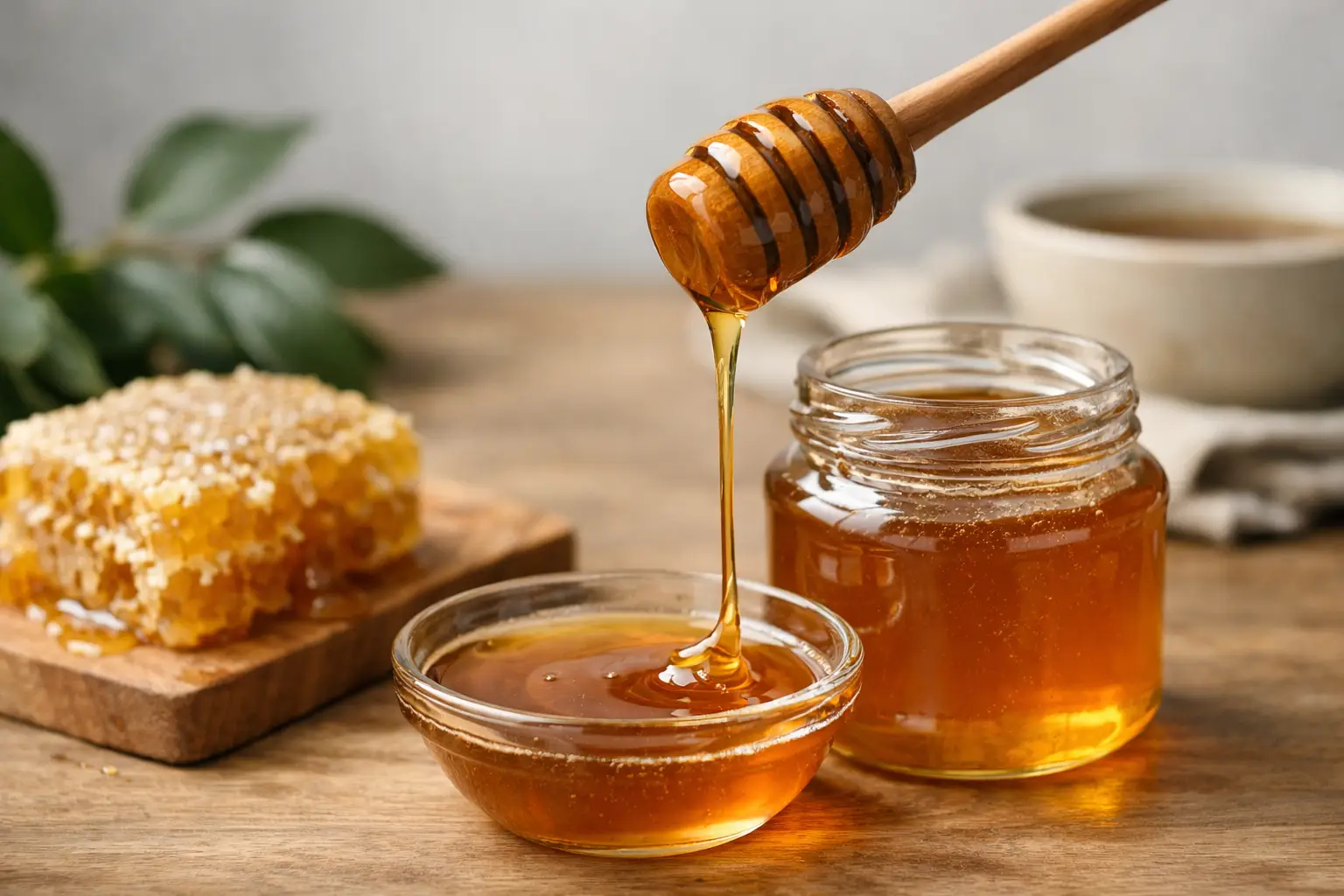
A jar of genuine Yemeni Sidr honey should never feel like an ordinary supermarket sweetener. Real Sidr honey texture is often one of the first details people notice: it may pour slowly in a thick, glossy ribbon, settle densely in the spoon, and leave a rich, lingering coat on the palate. That unmistakable body is part of what makes Sidr honey, Nature’s Gold from Yemen, so treasured.
Still, texture is not a fixed formula. One harvest can be more fluid than another, and both can be authentic. Understanding what influences the consistency of Sidr honey helps you enjoy it with confidence, store it properly, and avoid judging a precious natural product by a single visual test.
What Real Sidr Honey Texture Feels Like
Authentic Sidr honey is commonly dense, smooth, and luxuriously thick. When lifted with a spoon, it tends to fall in a steady stream rather than splashing or running like thin syrup. It has a satisfying weight and a velvety, almost buttery feel in the mouth, although it should not feel gritty when freshly liquid.
Its color is usually deep golden amber to dark brown, often with warm reddish or caramel tones. The surface may shine, but it does not need to look perfectly uniform. Pure, unprocessed honey is a product of flowers, weather, bees, and place. Small natural differences are part of its character, not a defect.
Sidr honey comes from bees that forage on the blossoms of the Sidr tree, also known as the jujube tree. In Yemen’s rugged landscapes, these ancient trees produce nectar with a distinctive depth. The result is honey known for a full-bodied texture, fragrant aroma, and complex taste that can carry notes of caramel, dried fruit, herbs, and warm earth.
Why Sidr Honey Consistency Can Vary
It is tempting to expect every jar to pour exactly the same way. But real honey is not manufactured to a uniform thickness. Its consistency naturally changes from one harvest to the next.
Nectar, season, and region matter
The nectar available to bees can shift with rainfall, temperature, elevation, and the flowering season. Yemen has diverse landscapes, and even Sidr trees growing within the same broader area may yield nectar with slightly different moisture and sugar profiles. Those details affect whether a particular batch feels especially thick, moderately fluid, or quick to crystallize.
A darker, denser jar is not automatically better than a lighter, more flowing jar. Both can be beautiful examples of authentic Sidr honey when they are sourced with care and kept free from additives.
Temperature changes the way honey pours
Honey becomes thicker in cooler conditions and more fluid when gently warmed. A jar that seems almost solid on a cold winter morning may loosen naturally in a warm kitchen. This is normal.
For that reason, texture should be judged at room temperature, not immediately after delivery during extreme heat or cold. If your honey arrived chilled, give it time to rest indoors before deciding how it normally pours. If it arrived warm, allow it to settle away from direct sunlight.
Moisture affects flow, but not in a simple way
Honey with lower moisture content often has a thicker body. Yet texture alone cannot tell you the full quality story. A seller could alter thickness through processing, blending, or added ingredients, which is why origin transparency and a commitment to purity matter far more than a single spoon test.
At Yemen Honey Store, the focus is on genuine Yemeni Sidr honey that is 100% natural, unprocessed, and free from additives. That allows the honey’s true character to remain intact, including the small variations that make each harvest special.
Does Real Sidr Honey Crystallize?
Yes. Real Sidr honey can crystallize, and crystallization does not mean the honey is fake, spoiled, or unsafe to enjoy. It is a natural process in which glucose forms tiny crystals over time. Some jars remain liquid for a long period, while others become cloudy, grainy, or softly set sooner.
The speed and appearance of crystallization depend on the honey’s natural sugar balance, storage temperature, and the presence of tiny particles such as pollen. Pure, minimally handled honey may crystallize in a way that looks less uniform than heavily filtered commercial honey. That is often simply evidence that the honey has retained more of its natural identity.
Crystallized Sidr honey can be especially enjoyable. It may become spreadable, creamy, or lightly textured, making it wonderful on warm toast, stirred into oatmeal, or enjoyed by the spoonful. Its flavor remains rich and comforting.
How to soften crystallized Sidr honey
If you prefer a smoother, flowing consistency, place the tightly closed jar in a bowl of warm water. Let it sit gently and replace the water as it cools until the crystals soften. Avoid boiling water, microwaving the jar, or exposing honey to high heat for long periods. Excessive heat can diminish the delicate aroma and natural qualities that make premium Sidr honey so special.
Patience is the better approach. Treat it as the rare food it is, straight from the heart of Yemen.
Texture Alone Cannot Prove Authenticity
A thick texture is appealing, but no honest guide should claim that thick honey is always real Sidr honey. Thickness can be influenced by temperature, moisture, processing, and even intentional blending. Likewise, a more fluid Sidr honey is not automatically inferior or inauthentic.
Instead, look at the complete picture: clear origin, a trustworthy seller, a product described as pure and additive-free, and flavor that feels naturally layered rather than flatly sugary. Genuine Sidr honey is valued not only for how it looks in the jar but also for the heritage behind it. It reflects traditional beekeeping, the Sidr tree’s distinctive nectar, and Yemen’s remarkable natural landscape.
A real jar should also have a memorable aroma. Depending on the harvest, you may notice floral, woody, fruity, or lightly medicinal notes. The taste should have depth and a long finish. While every palate is different, authentic Sidr honey usually feels more nuanced than a standard clover or blended honey.
The Best Way to Store Sidr Honey
Store Sidr honey at room temperature in a tightly sealed jar, away from sunlight, moisture, and strong heat. A cool pantry or kitchen cabinet is ideal. Refrigeration is usually unnecessary and may encourage the honey to thicken or crystallize faster.
Always use a clean, dry spoon. Introducing water into the jar can affect the honey over time, so avoid dipping in a wet utensil. Keep the lid closed after each use to protect its aroma and preserve that beautiful natural texture.
If your home runs warm, do not place the jar near the stove, a sunny windowsill, or another heat source. Gentle, stable conditions help honey keep its flavor and consistency. Sidr honey has a naturally long shelf life, but its finest taste is best enjoyed when it is cared for well.
Enjoy the Texture, Not Just the Sweetness
The texture of Sidr honey is part of the experience. Let it drizzle slowly over Greek yogurt, fold into warm tea after the drink has cooled slightly, or spoon it onto bread with tahini. Its dense body makes even a small amount feel generous, while its deep flavor can turn an everyday ritual into something more meaningful.
When you open a jar of Yemeni Sidr honey, allow room for nature to be nature. Whether it arrives flowing, thickens with the season, or develops soft crystals over time, its changing texture is often a sign of a living, minimally processed food. Keep it with care, taste it slowly, and let every spoonful carry a little of Yemen’s timeless heritage into your home.