
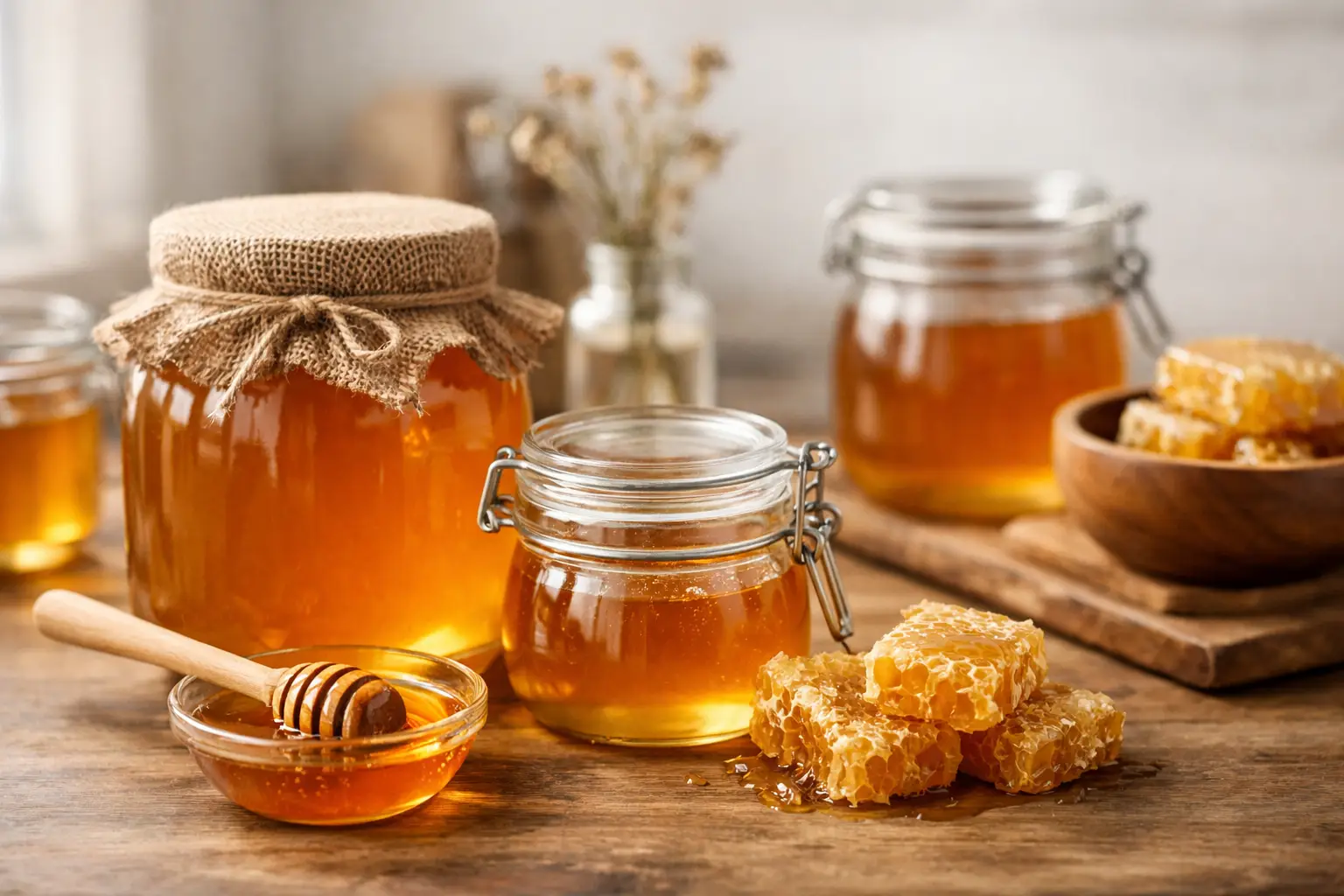
A jar of genuine raw honey deserves a place in the pantry, not a complicated preservation routine. Knowing how to store raw honey helps protect the qualities that make it special: its deep aroma, naturally rich taste, golden color, and the heritage held in every spoonful. With a few simple habits, premium honey such as authentic Yemeni Sidr honey can remain beautiful and enjoyable for a very long time.
The Best Place to Store Raw Honey
Raw honey is naturally shelf-stable. Its low water content and naturally acidic environment make it remarkably resilient when kept properly. The ideal home is a cool, dry, dark cabinet or pantry, away from the stove, dishwasher, oven, and sunny windowsill.
For most homes, room temperature is right. A range around 50 to 70°F is especially comfortable for honey, though ordinary indoor temperatures are generally fine. The goal is consistency. Repeated shifts from a cold kitchen in winter to intense heat in summer can change honey’s texture faster than steady storage conditions.
Keep the jar away from direct sunlight. Sunlight does not make honey unsafe overnight, but long exposure can gradually affect its color, fragrance, and delicate flavor notes. This matters with rare varietals like Sidr honey, valued for their distinctive, complex character. A closed pantry preserves that natural luxury far better than an open countertop.
Keep the Lid Tightly Sealed
Honey attracts moisture from the air. That is one reason a tightly sealed lid matters so much. When excess water enters the jar, it can dilute the honey at the surface and, under unfavorable conditions, raise the risk of fermentation.
Always replace the lid promptly after serving. If honey has collected around the rim, wipe it clean with a dry cloth before closing the jar. A clean rim helps the lid seal properly and keeps the jar looking as refined as the honey inside.
Use a clean, dry spoon every time. A wet spoon, a knife with food residue, or a utensil that has just stirred tea can introduce unwanted moisture and crumbs. This is a small detail, but it is one of the most practical ways to care for raw honey after opening.
Glass Is the Preferred Container
Glass jars are an excellent choice for storing raw honey. They are nonreactive, easy to clean, and do not hold odors. A quality glass jar also lets you appreciate honey’s natural color, from pale gold to the deep amber tones associated with exceptional Sidr honey.
Food-grade plastic containers can be suitable for short-term storage, particularly if the honey was packaged that way. Still, glass is usually the better long-term option for a premium honey purchase. Avoid transferring honey into unmarked containers or metals that may react over time. Stainless steel is generally fine for brief handling, but a sealed glass jar remains the classic choice.
Should You Refrigerate Raw Honey?
Usually, no. Refrigeration is not necessary for raw honey and often speeds up crystallization. Cold temperatures encourage glucose crystals to form, making the honey firmer, grainier, or more difficult to drizzle.
Crystallization is natural. It is not a sign that honey is spoiled, diluted, or low quality. In fact, raw, minimally processed honey may crystallize sooner than heavily filtered commercial honey because it retains more of its natural pollen and particles. The rate depends on the floral source, temperature, and the honey’s natural balance of sugars.
If you live in a very hot climate or your kitchen stays unusually warm, choose the coolest dark cabinet available rather than placing the jar in the refrigerator. Honey stored near constant high heat can lose some of the sensory qualities that make it worth savoring.
How to Store Raw Honey After It Crystallizes
A crystallized jar can still be enjoyed as it is. Many people love its spreadable, creamy texture on warm bread, toast, or crackers. It can also be measured into recipes or stirred into foods where a thicker consistency is welcome.
If you prefer a smooth, pourable texture, warm the honey gently. Place the closed glass jar in a bowl or pan of warm water and allow it to sit until the crystals soften. Refresh the water as it cools, and stir the honey with a clean, dry utensil if needed.
Do not boil the honey or place the jar in a microwave. High, direct heat can damage its nuanced flavor and may reduce the value of the naturally occurring components that make raw honey so treasured. Gentle patience is the better approach.
It also helps to avoid leaving the jar near a radiator, on top of an appliance, or in a hot car. A quick warm-water bath is controlled and temporary. Constant heat is not.
Pantry Storage Mistakes to Avoid
Raw honey is forgiving, but a few common habits can shorten its best-quality window. The following practices are worth avoiding:
- Leaving the jar open while cooking or serving
- Dipping in wet or used utensils
- Storing honey beside a hot stove or in direct sun
- Refrigerating it unless there is a specific reason to do so
- Heating it aggressively to reverse crystallization
- Mixing old honey with a new jar if either jar may contain crumbs or moisture
One additional point: do not judge honey solely by its appearance. Pure honey can vary widely in color, thickness, and crystallization pattern. A darker, richer honey may remain liquid longer or crystallize differently from a lighter floral variety. These differences reflect the nectar source and season, not a loss of authenticity.
How Long Does Raw Honey Last?
When stored in a sealed container under good pantry conditions, raw honey can last for years. Honey has an extraordinary natural staying power, which is part of why it has been valued across cultures for generations.
For the most vivid flavor and aroma, enjoy a premium jar while it is at its best and follow the packaging guidance provided by the producer. Over a long period, honey may darken slightly, grow thicker, or develop crystals. Those changes are common and do not automatically mean it has gone bad.
A fermented smell, visible foam, or an unusually sour flavor can indicate that too much moisture entered the jar. This is uncommon when the lid stays sealed and only dry utensils are used. If you notice those signs, it is best not to consume the honey.
Special Care for Rare Sidr Honey
Authentic Yemeni Sidr honey is more than a pantry sweetener. Harvested from the nectar of ancient Sidr trees, it carries a bold, naturally luxurious profile that many families reserve for daily wellness rituals, meaningful gifts, and special meals. Proper storage honors both the honey and the traditional craft behind it.
Keep your jar in a shaded cabinet where it is easy to reach but protected from heat. Use it with intention, whether you enjoy a spoonful in the morning, add it to warm water after it has cooled slightly, or pair it with bread, yogurt, nuts, and fruit. For a premium honey with a remarkable origin, simple care goes a long way.
A Note for Families
Honey is a natural food, but it should not be given to children under 12 months old. For everyone else, store it safely out of reach of young children and keep the exterior of the jar clean to prevent sticky pantry shelves and ants.
A well-kept jar of raw honey asks very little: a dark shelf, a secure lid, and a dry spoon. Give Nature’s Gold that care, and each serving can continue to bring the pure, memorable taste of Yemen to your table.