
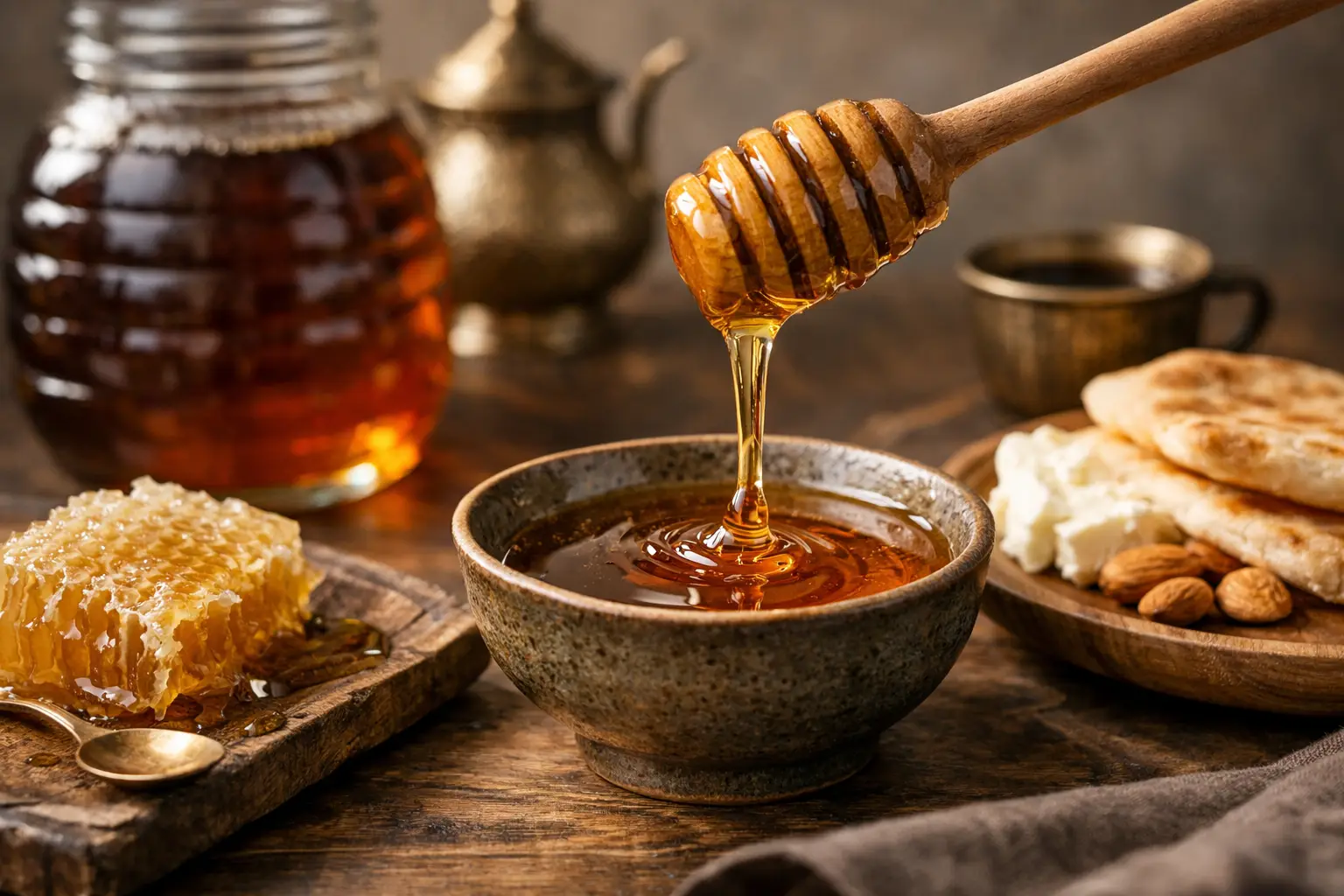
A jar of authentic Yemeni Sidr honey deserves more than a quick squeeze into tea. Its aroma is deep and earthy, its sweetness carries notes of caramel and dried fruit, and its texture can be beautifully dense. Learning how to eat Yemeni honey begins with slowing down long enough to taste what makes it special: Nature’s Gold, gathered from the Sidr trees of Yemen and enjoyed much as it has been for generations.
How to Eat Yemeni Honey: Begin With a Spoonful
The purest way to enjoy Yemeni honey is straight from the jar. Take a small spoonful, let it rest on your tongue for a moment, and notice how its flavor develops. Premium Sidr honey is not meant to taste like a one-note table sweetener. Depending on its harvest and region, it may offer a bold, lightly woody character with a lingering richness.
Start with about one teaspoon. That is enough to appreciate the honey without overwhelming your palate or turning a treasured ingredient into an everyday afterthought. A wooden spoon is traditional and gentle, but a clean stainless-steel spoon is perfectly fine. What matters most is keeping the jar dry and free from food crumbs or moisture.
If your Sidr honey has a thick, almost creamy consistency, that is not a flaw. Real, unprocessed honey naturally varies in color and texture. Some jars pour slowly, while others need to be scooped. These small differences are part of what makes honey sourced straight from the heart of Yemen so distinctive.
Enjoy It in the Morning
For many people, morning is the most natural time to eat Yemeni honey. A spoonful before breakfast offers a satisfying, naturally sweet start to the day. Others prefer it alongside warm water, lemon, or a favorite herbal tea as part of a calm morning routine.
Keep the water warm rather than boiling. Very high heat can flatten the delicate aroma and nuanced flavor that make Sidr honey worth savoring. Stir it in after the drink has cooled slightly, then sip slowly.
Make Yemeni Honey Part of Everyday Food
Yemeni honey is luxurious enough to enjoy on its own, yet versatile enough for the foods already in your kitchen. The key is to use it where its flavor will be noticed, not buried.
Drizzle a little over plain Greek yogurt with walnuts, pistachios, or sliced almonds. The tang of yogurt and the gentle bitterness of nuts give the honey room to shine. It is also excellent over oatmeal, chia pudding, or warm farina when you want breakfast to feel more nourishing and less processed.
For a simple afternoon bite, spread soft cheese on warm toast and finish it with a light ribbon of Sidr honey. Goat cheese, labneh, ricotta, and cream cheese all work beautifully. Add a few cracked black peppercorns or a pinch of flaky salt if you enjoy the contrast of sweet and savory.
Fresh fruit is another natural match. Try Yemeni honey with apple slices, pears, figs, bananas, or berries. Its deeper profile is especially good with fruits that have a little tartness or texture. A drizzle over roasted peaches or grilled pineapple can turn a simple dessert into something that feels worthy of guests.
Pair It With Heritage-Rich Flavors
Sidr honey has a proud place in Middle Eastern food traditions, so it pairs naturally with ingredients that honor that heritage. Spoon it over labneh with sesame seeds, serve it alongside dates and nuts, or use it to finish a plate of warm flatbread with tahini.
It can also bring a memorable touch to a cheese board. Set out a small bowl of honey with aged cheddar, feta, manchego, or creamy brie. Add toasted nuts and dried apricots. Because Yemeni honey has such a pronounced identity, use a small amount and let each guest add more as they like.
Use It in Tea, But Do Not Hide Its Flavor
Tea is one of the most familiar ways to eat honey, and Yemeni honey brings more character to the cup than ordinary supermarket blends. It is especially good in black tea, mint tea, ginger tea, and caffeine-free herbal blends.
Still, tea should complement the honey rather than disguise it. A strongly flavored tea with several spices may cover the finer notes of Sidr honey. If you are tasting a new jar for the first time, try a small spoonful plain before adding it to a drink. You will better understand its natural flavor, then know how much to use.
For a comforting cup, combine warm water with fresh lemon and a teaspoon of honey. For a richer option, stir a small amount into warm milk or a dairy-free alternative with cinnamon. These are simple rituals, but they make a premium pantry staple feel intentional.
Cook With Yemeni Honey Carefully
You can cook with Yemeni honey, but the trade-off is clear: prolonged high heat can soften the flavor that makes it exceptional. For everyday baking or sauces that need a large amount of sweetener, another honey may be the more practical choice. Save your finest Sidr honey for recipes where it is added near the end or used as a finishing ingredient.
Try brushing a little over roasted carrots or sweet potatoes during the final minutes of cooking. Whisk it into a vinaigrette with olive oil, lemon juice, and a pinch of salt. A small amount can also balance savory marinades for chicken, salmon, or roasted vegetables.
When using it in baking, replace only part of the sugar rather than all of it. Honey adds moisture and browns quickly, so recipes may need a slightly lower oven temperature or closer attention. In simple foods such as cornbread, muffins, or homemade granola, Sidr honey can add a warm, distinctive sweetness without needing much else.
A Note on Daily Wellness Routines
Many families enjoy pure honey as part of a wholesome daily routine. It is a natural source of carbohydrates and a flavorful alternative to refined sugar in certain foods and drinks. Its traditional reputation is one reason Yemeni Sidr honey has been valued for centuries.
However, honey is still a concentrated sweetener, so serving size matters. Enjoy it thoughtfully, especially if you are watching your sugar intake. Children under one year old should never be given honey. If you have a medical condition or follow a specific nutrition plan, ask a qualified healthcare professional how honey fits your needs.
Store Your Sidr Honey the Right Way
Proper storage protects both the flavor and the beauty of your honey. Keep the jar tightly sealed in a cool, dry cupboard away from direct sunlight. There is no need to refrigerate it. Refrigeration can encourage the honey to become firmer and harder to scoop.
Natural crystallization may happen over time, particularly when temperatures are cooler. This does not mean the honey has gone bad or lost its authenticity. It is a normal change in real honey. If you prefer a softer texture, place the sealed jar in a bowl of gently warm water for a short time. Avoid microwaving or overheating it.
Always use a clean, dry spoon. Introducing water into the jar can affect the honey over time, and strong food odors nearby can distract from its naturally rich scent.
Let the Honey Set the Pace
The best way to eat Yemeni honey depends on what you want from the moment. A morning spoonful highlights its purity. A drizzle over yogurt or cheese makes an ordinary meal feel elevated. A small serving with tea invites you to pause and enjoy a tradition shaped by Yemen’s ancient Sidr trees.
There is no need to use a lot. Authentic Sidr honey carries itself with confidence, and a little goes a long way. Keep it where you can see it, reach for it when a meal needs warmth or depth, and let every spoonful be a small taste of Yemen’s enduring natural heritage.