
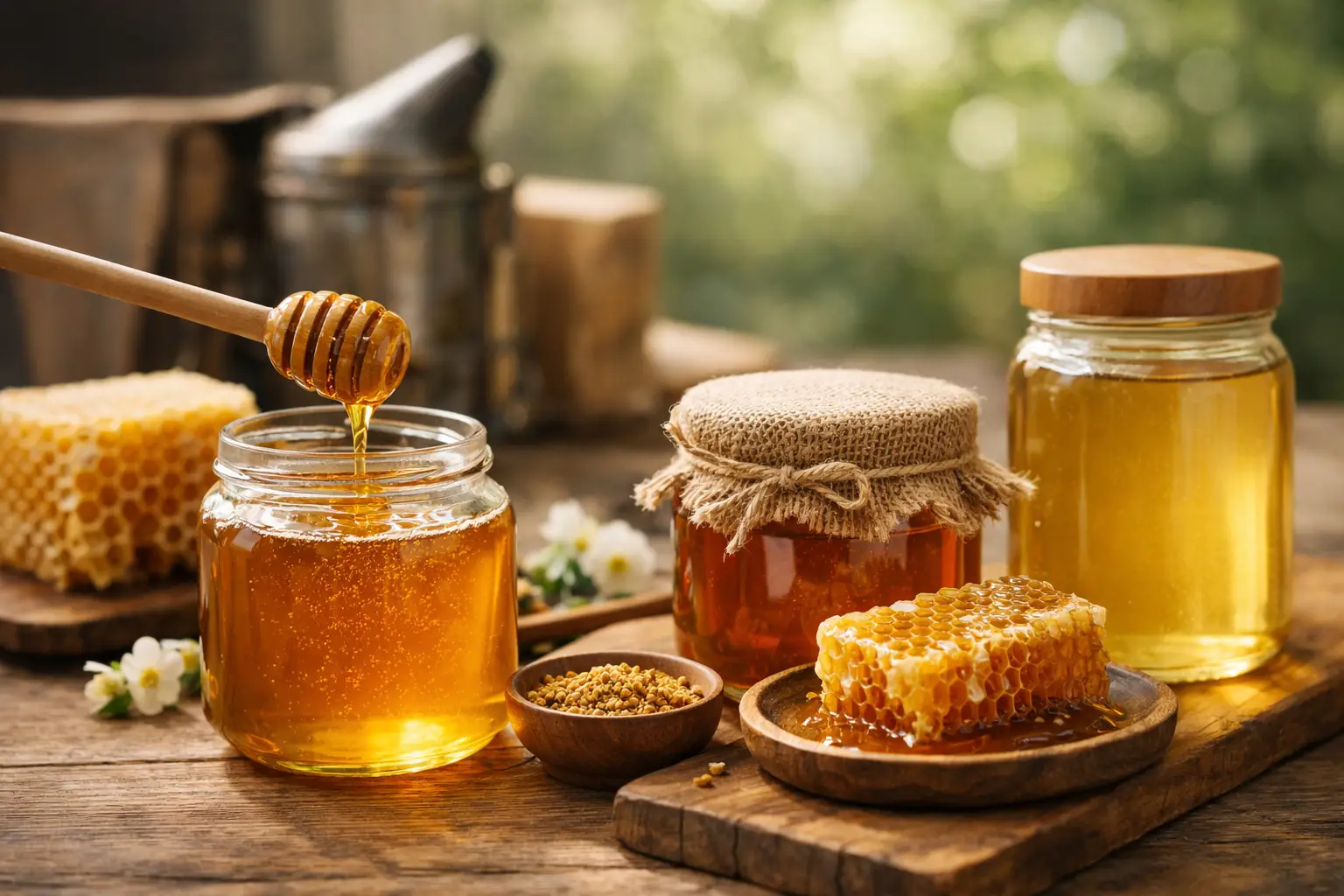
A beautiful jar can make almost any honey look exceptional. The real difference is revealed in what is on the label, who harvested it, and whether the seller can clearly explain its journey from hive to jar. This guide to buying raw honey is for shoppers who want more than a sweet pantry staple. It is for those seeking true purity, remarkable flavor, and Nature’s Gold with a story worth bringing home.
Raw honey is not a single flavor or a universal grade. Its color, aroma, texture, and intensity are shaped by the flowers bees visit, the local climate, the season, and the careful handling of the harvest. A pale, mild wildflower honey and a deep, richly aromatic Yemeni Sidr honey can both be genuine, yet offer entirely different experiences. Knowing what to look for helps you choose with confidence.
What Raw Honey Should Mean
At its simplest, raw honey is honey that has not been heavily heated or extensively filtered after harvesting. Gentle straining may remove natural hive debris such as wax particles, but raw honey should retain the character that processing often strips away: its natural pollen, enzymes, aroma, and distinct floral profile.
The term can be used loosely, so do not rely on the word “raw” alone. Look beyond the front label. A trustworthy seller should describe how the honey is handled and confirm that the ingredient list contains only honey. There should be no corn syrup, cane sugar, artificial flavoring, preservatives, or vague sweetener blends hiding behind polished packaging.
Raw does not necessarily mean unstrained, cloudy, or wild-looking. Some premium raw honeys are carefully strained for a clean, elegant presentation while remaining unheated and unadulterated. What matters is respectful handling, not a deliberately rustic appearance.
Start With Origin, Not Just the Label
The most meaningful question when buying raw honey is simple: where did it come from? Honey’s origin is not a minor detail. It is the source of its taste, rarity, and identity.
A label that simply says “imported honey” or “a blend of honeys” leaves too much unanswered. Blends may combine honey from multiple regions and seasons, making it difficult to know what is actually in the jar. This does not automatically make them unsafe, but it does make them less transparent for buyers seeking a specific floral source or traditional harvest.
Instead, look for a clear country of origin and, when possible, a specific region or nectar source. Single-origin honey offers a closer connection to place. Yemeni Sidr honey, for example, comes from bees that forage around the revered Sidr tree in Yemen’s rugged landscapes. Its deep amber color, warm caramel-like richness, and distinctive herbal notes reflect that landscape and its long beekeeping heritage.
For many families, origin also carries cultural meaning. A jar of authentic honey can recall a familiar tradition, become part of a morning wellness ritual, or make a thoughtful gift that feels far more personal than an ordinary sweetener.
Ask the Questions a Good Seller Can Answer
You do not need to become a beekeeper before making a purchase. You do deserve answers to a few basic questions. A reputable source should be able to explain the honey’s country of origin, floral source or regional character, harvesting approach, and ingredient integrity.
If the product is presented as Sidr honey, the seller should clearly identify Yemen as its source rather than using “Sidr” as a vague flavor description. True Sidr honey is valued because of its place, not because the word sounds premium. Specificity is a sign of respect for both the customer and the tradition behind the honey.
Read the Ingredient List Carefully
One ingredient is the gold standard: honey.
This may sound obvious, but it is worth checking every time, especially when shopping online. Product names can be persuasive, while the ingredient list tells the more useful story. Avoid products that contain added sweeteners, flavorings, fillers, or unexplained blends if your goal is pure raw honey.
Also pay attention to marketing language that overpromises. Honey is a natural food with a long history in kitchens and traditional wellness practices, but no jar should be treated as a cure-all. Its appeal is already substantial: naturally occurring sugars for quick energy, a beautifully complex flavor, and small amounts of naturally present compounds that vary according to floral source and handling.
For daily enjoyment, choose honey because it is pure, delicious, and thoughtfully sourced. That is a stronger standard than chasing exaggerated claims.
Use Color, Aroma, and Texture as Clues
There is no single “correct” color for raw honey. Honey can range from nearly clear gold to mahogany brown. Darker honey is not automatically better, and lighter honey is not automatically less pure. Color often reflects the nectar source, as well as seasonal conditions.
Aroma is often more revealing. Open the jar and notice whether the scent feels natural and distinct. Depending on the variety, you may detect floral, fruity, woody, caramel, or gently herbal notes. Authentic specialty honey should have personality. It should not smell like plain sugar syrup.
Texture is equally variable. Some raw honey pours freely, while other varieties are dense and spoonable. Sidr honey is often appreciated for its luxurious body and lingering finish. Temperature can also change consistency. A cool kitchen may make honey seem thicker, while warm weather can make it flow more easily.
Crystallization deserves special attention because it is frequently misunderstood. Real honey can crystallize over time, particularly when it contains more natural glucose or is stored in a cool environment. Crystals do not mean the honey has gone bad or been adulterated. In many cases, they are simply a natural sign that the honey has not been aggressively processed.
If you prefer it smooth, place the sealed jar in warm water and allow it to loosen gradually. Avoid microwaving or high heat, which can dull the delicate aroma and character you chose raw honey for in the first place.
A Practical Guide to Buying Raw Honey Online
Shopping online gives American consumers access to rare regional honeys that may never appear in a neighborhood grocery store. It also means you must evaluate the seller as carefully as the product.
Begin with product details. Look for direct language about sourcing, purity, and ingredients rather than generic phrases that could describe any honey. Clear photographs of the jar and label are helpful, but transparent descriptions matter more. The product page should make it easy to understand what you are buying, not leave you guessing about the country of origin or whether additives are included.
Consider the packaging, too. A well-sealed glass jar is a classic choice for premium honey because it protects flavor without introducing competing odors. Check that the seller provides sensible storage guidance and handles shipping with care, especially during very hot or cold months.
Price can offer context, though it should not be the only measure of quality. Authentic, origin-specific raw honey often costs more than supermarket blends because harvesting may be seasonal, supplies may be limited, and careful sourcing requires real work. A remarkably low price for a rare honey should invite a closer look at the product’s origin and ingredient details.
Match the Honey to How You Will Enjoy It
The best raw honey for your home depends partly on how you plan to use it. A mild variety may suit tea, baking, or children who prefer gentle sweetness. A bold, dark honey may be better savored by the spoonful, drizzled over yogurt, paired with cheese, or stirred into warm water with lemon.
Premium Yemeni Sidr honey is especially suited to moments when flavor matters. Its rich profile can elevate a simple breakfast, bring depth to a cheese board, or become a meaningful part of a family’s daily routine. Because it is so distinctive, many people prefer using it in ways that let its character remain at the center rather than burying it under intense cooking heat.
Store your honey tightly sealed in a cool, dry cupboard away from direct sunlight. Refrigeration is usually unnecessary and may encourage crystallization. Honey’s naturally low moisture content gives it an impressive shelf life when stored properly, although its aroma is always best appreciated while it is fresh and vibrant.
Choose Honey With a Story You Can Taste
Buying raw honey is ultimately an act of discernment. Choose a jar with a clear origin, a single honest ingredient, careful handling, and a flavor that reflects the land where bees gathered its nectar. Those details turn honey from a generic sweetener into something far more memorable.
When a spoonful carries the warmth of ancient Sidr trees and the heritage of Yemen’s traditional beekeepers, it offers more than sweetness. It brings a small, golden connection to a place, a people, and a standard of purity worth keeping close.