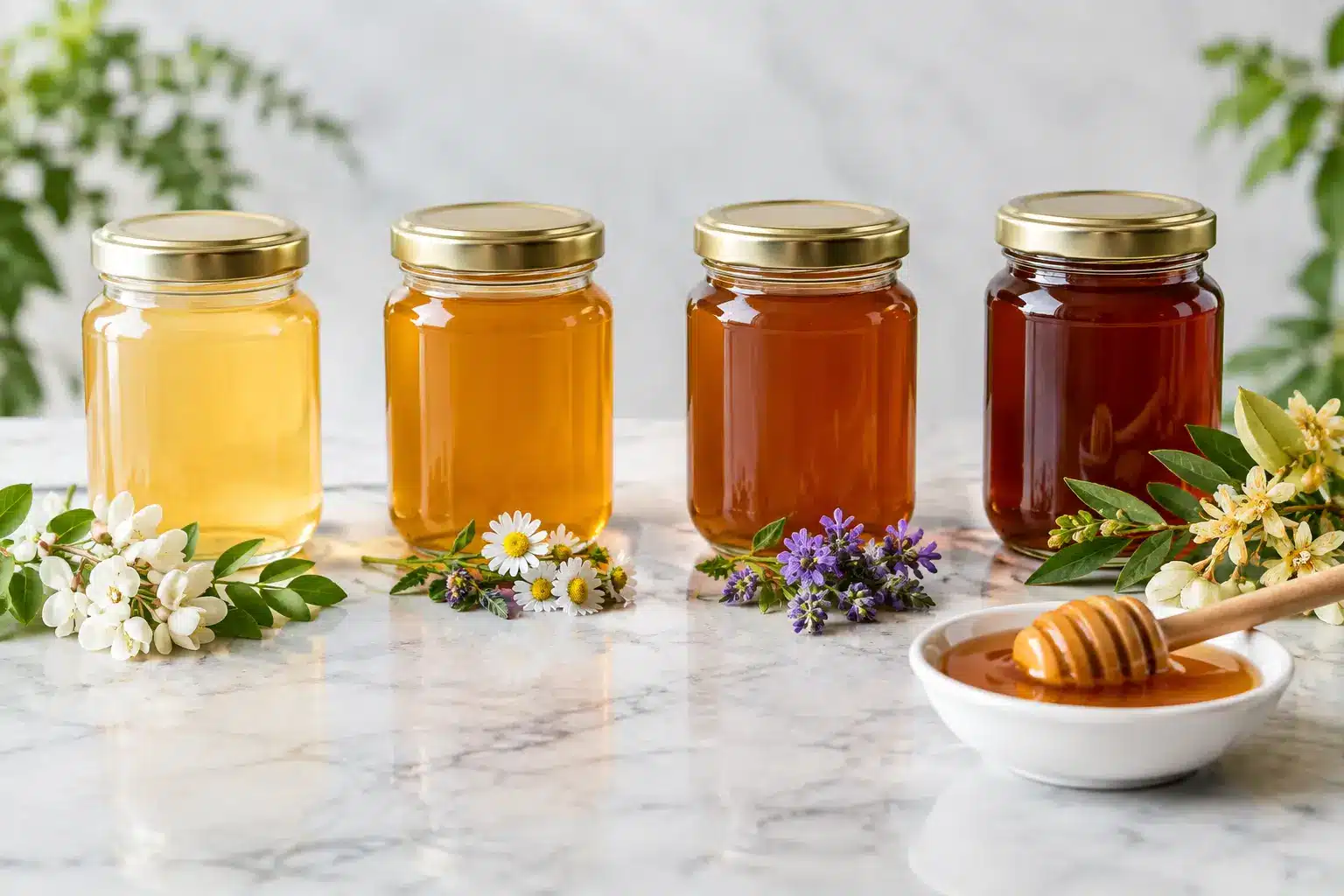
A jar of honey can look golden and beautiful, yet its story may be entirely different from the jar beside it. In a meaningful monofloral honey comparison, the question is not simply which honey tastes sweetest. It is where the bees foraged, how carefully the honey was harvested, whether its floral origin is credible, and what character that landscape gives to every spoonful.
For those who choose food with intention, monofloral honey offers something more distinct than an everyday pantry sweetener. It carries the imprint of a dominant flower source. Yemeni Sidr honey, gathered from the nectar of Sidr trees in Yemen’s rugged, untouched landscapes, is one of the most treasured examples. Its deep flavor, rich color, and heritage make it a natural choice for people seeking purity with a sense of place.
What “Monofloral” Really Means
Monofloral honey is produced when bees collect most of their nectar from one main type of flowering plant during a particular bloom. It does not usually mean that every drop of nectar comes from a single flower. Bees move freely, and natural landscapes contain many plants. Instead, the term describes honey with a dominant floral source that shapes its aroma, color, taste, and composition.
That distinction matters. A true monofloral honey should have a clear botanical identity supported by responsible harvesting, seasonal knowledge, and, when needed, pollen or laboratory testing. Labels alone are not the full story. A honey called “pure” may still be a blend of different floral sources, while a carefully sourced monofloral honey tells you far more about its origin.
Wildflower honey is often wonderfully flavorful, but it is different by nature. Its nectar comes from many blooms, so the flavor can change dramatically from season to season and region to region. Monofloral varieties offer a more recognizable profile, although nature always leaves room for subtle variation.
Monofloral Honey Comparison: Sidr, Manuka, Acacia, and Clover
Each variety has its own place at the table. The right choice depends on whether you value bold flavor, delicate sweetness, a specific origin, or a particular texture.
Yemeni Sidr Honey: Deep, Rare, and Rooted in Heritage
Sidr honey is made from the nectar of the Sidr tree, also known as the lote tree. In Yemen, these ancient trees grow in landscapes where traditional beekeeping knowledge has been passed through generations. The result is a honey admired for its amber to dark golden color, full-bodied texture, and layered taste that can feel warm, rich, and lightly caramel-like.
Its appeal goes beyond flavor. Authentic Yemeni Sidr honey is valued because the source is rare, the harvest is limited, and the connection to place is unmistakable. When it is raw, unprocessed, and free from additives, it offers honey in its most natural form – just as the bees made it.
Sidr is especially suited to those who want a luxurious daily honey. Enjoy it by the spoonful, stir it into warm water or tea after the drink has cooled slightly, drizzle it over yogurt, or use it to bring depth to cheese, oats, and simple desserts. Its bold profile can be lost in heavily spiced cooking, so it shines best where its character has room to speak.
Manuka Honey: Earthy and Grade-Focused
Manuka honey comes primarily from the nectar of the manuka bush in New Zealand and Australia. It is known for an earthy, sometimes medicinal flavor and a thick consistency. Many shoppers recognize it through grading systems that focus on naturally occurring compounds associated with manuka nectar.
Manuka can be a good fit for someone specifically looking for a graded product and who enjoys its distinctive taste. However, grades can make comparisons confusing, and a higher number does not automatically mean it will be the most enjoyable honey for every kitchen or every palate. It is often expensive, and its strong profile is not for everyone.
Sidr and manuka are both premium, origin-led honeys, but they offer very different experiences. Manuka is frequently selected for its grade and functional reputation. Sidr is chosen for its exceptional taste, cultural heritage, and the rare purity of honey straight from the heart of Yemen.
Acacia Honey: Light, Floral, and Mild
Acacia honey, often sourced from black locust blossoms, is pale in color and gently floral. Its mild flavor makes it easy to use in drinks, dressings, and baking when you want sweetness without a strong honey presence. It also tends to remain liquid longer than many other varieties.
That subtlety is its strength, but it can feel too delicate for those seeking a rich, memorable spoonful. Acacia is the quiet companion in a cup of tea. Sidr is the honey you notice immediately, with more depth, warmth, and a lingering finish.
Clover Honey: Familiar and Everyday
Clover honey is one of the most common choices in American kitchens. It is usually light, sweet, and approachable, making it an easy substitute for sugar in recipes. Its availability and gentle taste are practical advantages.
The trade-off is distinction. Commercial clover honey can vary widely in sourcing and processing, especially when sold as a large-scale blend. It may be perfectly suitable for baking or an everyday squeeze bottle, but it rarely delivers the traceable heritage or concentrated flavor experience that makes Yemeni Sidr honey special.
Why Origin Matters More Than Color
Honey color can offer a clue about flavor, but it is not a reliable measure of quality on its own. Light honey is not automatically purer, and dark honey is not automatically stronger or better. The real markers are floral source, harvest practices, handling, and transparency.
A premium honey should be clear about what it is and where it came from. Look for a named floral source, a specific country or region of origin, and a simple ingredient statement: honey. Avoid products that are vague about their source or make dramatic promises without explaining their standards.
For Sidr honey, Yemen is not a decorative detail on a label. It is central to the product’s identity. The terrain, Sidr trees, bloom season, and traditional harvesting practices all contribute to the honey’s character. That is why authentic provenance deserves more attention than a generic claim of “natural.”
Purity, Rawness, and Crystallization
Pure honey contains no syrups, artificial flavors, colors, or unnecessary additives. For many families, that straightforward ingredient integrity is the first reason to choose specialty honey.
Raw or minimally processed honey is handled with care to preserve its natural aroma, flavor, and naturally occurring qualities. That does not mean every raw honey will look identical. Seasonal shifts, storage temperature, and floral source can create differences in color, thickness, and crystal formation.
Crystallization is normal, not a sign that honey has gone bad. Some honeys crystallize quickly, while others stay smooth for longer. If a jar becomes grainy, place it in gently warm water and allow it to soften gradually. Avoid high heat, which can diminish the delicate flavor that makes a premium honey worth choosing.
Choosing the Right Honey for Your Routine
Choose clover or acacia when you want a mild, versatile sweetener that fades into the background. Choose wildflower honey when you enjoy seasonal surprise and local variation. Choose manuka when a recognized grading system is your main priority and you appreciate a more earthy taste.
Choose Yemeni Sidr honey when you want the opposite of ordinary: a single-origin treasure with a bold, elegant flavor and a story that begins among Yemen’s ancient Sidr trees. It is a beautiful fit for a morning wellness ritual, a thoughtful gift, or a pantry reserved for foods that deserve to be savored rather than rushed.
At Yemen Honey Store, authentic Sidr honey is offered as Nature’s Gold: 100% natural, unprocessed, and sourced for those who want confidence in every spoonful.
The finest honey is not necessarily the rarest label or the darkest jar. It is the one whose origin you trust, whose flavor you look forward to, and whose purity you feel good sharing at your own table.