
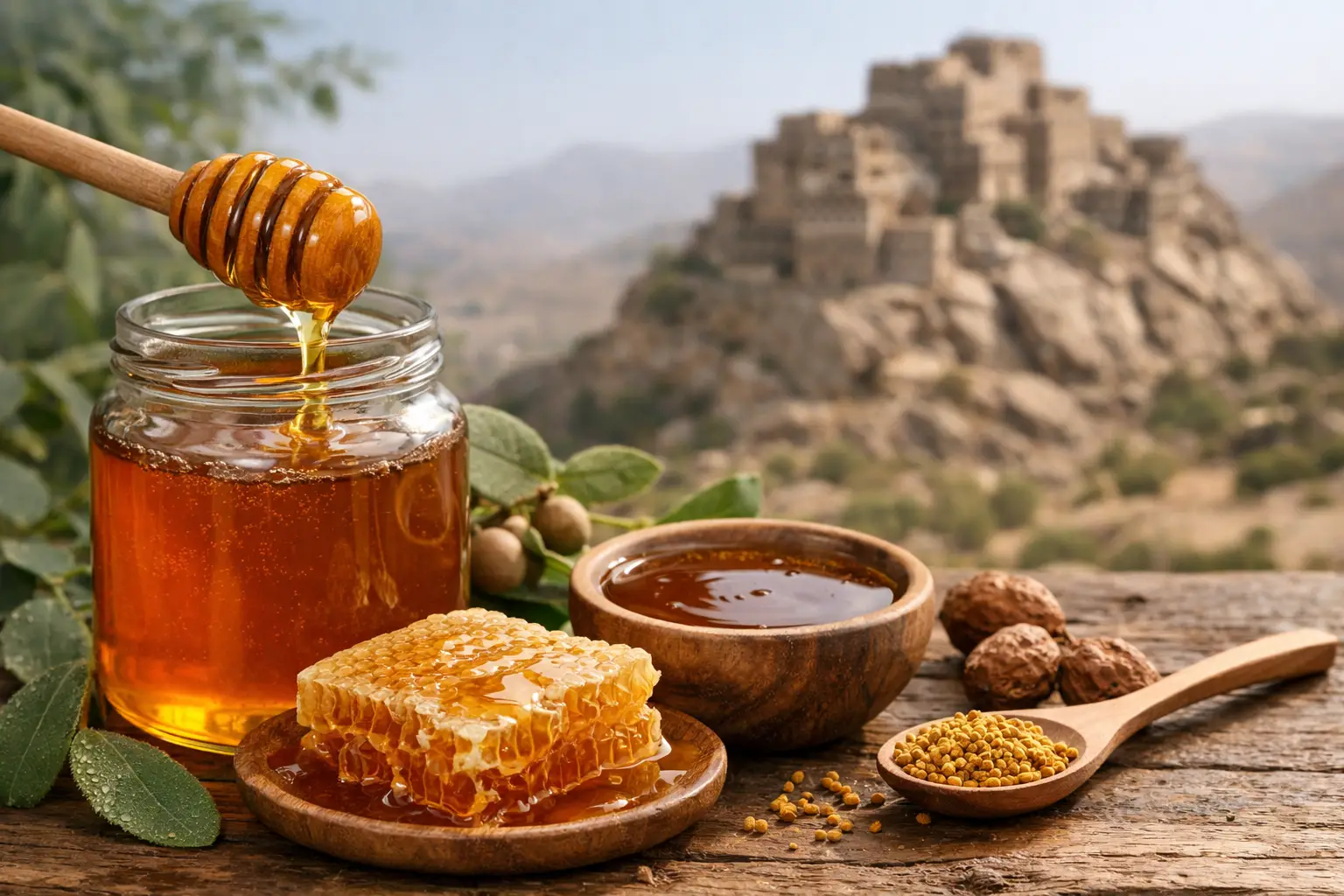
A jar of Sidr honey should make an impression before the first spoonful. Its color is often deeper than everyday clover honey, its aroma can carry warm floral and caramel-like notes, and its taste has a satisfying richness that lingers rather than disappearing into pure sweetness. This authentic Yemeni Sidr honey review looks at what gives this treasured honey its reputation, what a buyer should realistically expect, and how to recognize a product worthy of Yemen’s heritage.
For many families, Sidr honey is more than a pantry staple. It is Nature’s Gold: enjoyed by the spoonful, stirred into warm drinks, paired with bread and cheese, or given as a meaningful gift. Its value comes from a particular tree, a particular landscape, and the patient work behind a traditional harvest.
What Makes Yemeni Sidr Honey Different?
Sidr honey is made from nectar gathered around the blossoms of the Sidr tree, also known as the lote tree. These ancient trees grow in parts of Yemen where the dry climate, rugged terrain, and seasonal flowering create a distinctive environment for bees. The result is not simply honey with a different label. It is a single-origin food shaped by place.
Genuine Yemeni Sidr honey is prized for its full body and naturally complex flavor. Depending on the harvest and exact region, it may range from amber to dark golden brown. Some jars lean toward a buttery, floral sweetness; others have a deeper, almost molasses-like character with a gentle herbal finish. Variation from one harvest to another is not necessarily a flaw. It is often part of what makes a natural, minimally handled honey feel alive and regional.
The texture is usually dense and smooth, often thicker than supermarket honey. That thickness should not be confused with an artificial syrupy consistency. Pure honey naturally changes with temperature. A cool kitchen can make it firmer, while gentle warmth makes it more fluid.
Authentic Yemeni Sidr Honey Review: Flavor, Purity, and Value
The best way to review Sidr honey is to look beyond dramatic claims and focus on qualities that can be experienced or verified: flavor, ingredients, sourcing, handling, and transparency.
Flavor that earns its premium status
A high-quality Sidr honey should taste layered, not flat. It is sweet, of course, but refined sweetness is only part of the experience. Look for a rounded mouthfeel and a finish that suggests flowers, dried fruit, caramel, or mild spice. It should feel substantial on the palate without tasting burnt or overly processed.
Because flavor is personal, Sidr honey is not the right choice for every use. If you want an inexpensive honey for a large batch of baking, a standard pantry honey may make more financial sense. Sidr is best appreciated where its character remains clear: on toast, in a teaspoon before breakfast, over yogurt, alongside tahini, or in a cup of tea that is warm rather than boiling.
Purity is the first standard
The ingredient list should be uncomplicated: honey. Authentic Sidr honey does not need corn syrup, sugar, artificial flavoring, coloring, or filler ingredients to look attractive or taste sweet. A premium jar should be clear about what it contains and avoid vague language that hides a blended origin.
Raw or unprocessed positioning also deserves a practical reading. Honey is often strained to remove natural bits of wax or hive material, and that does not automatically make it less authentic. What matters is whether it has been heavily diluted, flavored, or subjected to unnecessary processing that reduces the qualities customers seek from a natural specialty honey.
Origin should be specific, not decorative
“Yemeni-style” and “Sidr-inspired” are not the same as honey sourced from Yemen. When authenticity matters, look for straightforward origin information and a seller that treats Yemen as a real source with a real harvesting tradition, not merely a marketing image.
A trustworthy specialty seller should be able to state that the honey comes from Yemen and explain its commitment to pure, additive-free honey. Yemen Honey Store is built around this origin-first standard, bringing authentic Yemeni Sidr honey to US customers who want a closer connection to its source. That focused approach matters because Sidr honey is too distinctive to be treated like an anonymous commodity.
Signs a Jar Deserves Your Trust
Price alone cannot prove authenticity. Genuine Yemeni Sidr honey is rare, carefully sourced, and often costly, so an unusually cheap jar deserves questions. Still, a higher price is meaningful only when it is paired with clarity about ingredients and origin.
Pay attention to the product’s presentation. A detailed description should identify the honey as Yemeni Sidr, describe its natural character without promising miracles, and make its ingredient integrity easy to understand. Be cautious of products that make sweeping medical promises or suggest that one spoonful can replace professional care. Honey can be a nourishing addition to a balanced routine, but it is not a cure-all.
Crystallization is another point that causes unnecessary concern. Pure honey can crystallize over time, especially in cooler conditions. This is a natural change in texture, not automatic evidence of spoilage or adulteration. If you prefer a smoother pour, place the sealed jar in warm water and let it loosen gradually. Avoid overheating, which can diminish the delicate aroma and flavor that make Sidr honey special.
How to Enjoy Sidr Honey at Home
Sidr honey rewards simple use. Take a small spoonful when you want a naturally sweet moment of energy, or let it stand on its own as part of a quiet morning ritual. Its depth also works beautifully in foods where a lesser honey would disappear.
Try it over Greek yogurt with walnuts, spread on warm flatbread with a little tahini, or drizzled over oatmeal. In tea, wait until the drink is comfortably warm before adding honey. This protects its nuanced flavor and prevents the cup from tasting one-dimensionally sweet.
For families, remember that honey should never be given to children under 12 months old. Everyone else should enjoy it in portions that fit their dietary needs. Sidr honey contains naturally occurring sugars, so its premium quality does not remove the need for moderation.
Is Authentic Yemeni Sidr Honey Worth Buying?
For a buyer who values pure ingredients, cultural heritage, and a flavor with real identity, the answer is often yes. The premium is not just for sweetness. It reflects limited geography, traditional beekeeping knowledge, careful sourcing, and a product that cannot be easily replicated by a generic blend.
It also depends on what you want from your honey. If your priority is volume and the lowest possible price, Sidr honey may feel extravagant. If you want a meaningful daily food, a distinctive culinary ingredient, or a gift that carries the warmth of Yemen’s landscapes, it offers value that goes beyond the jar.
The most rewarding Sidr honey is one you can enjoy slowly and trust fully. Choose a source that respects the land and tradition behind it, then let each spoonful be a small taste of Yemen’s enduring natural treasure.